

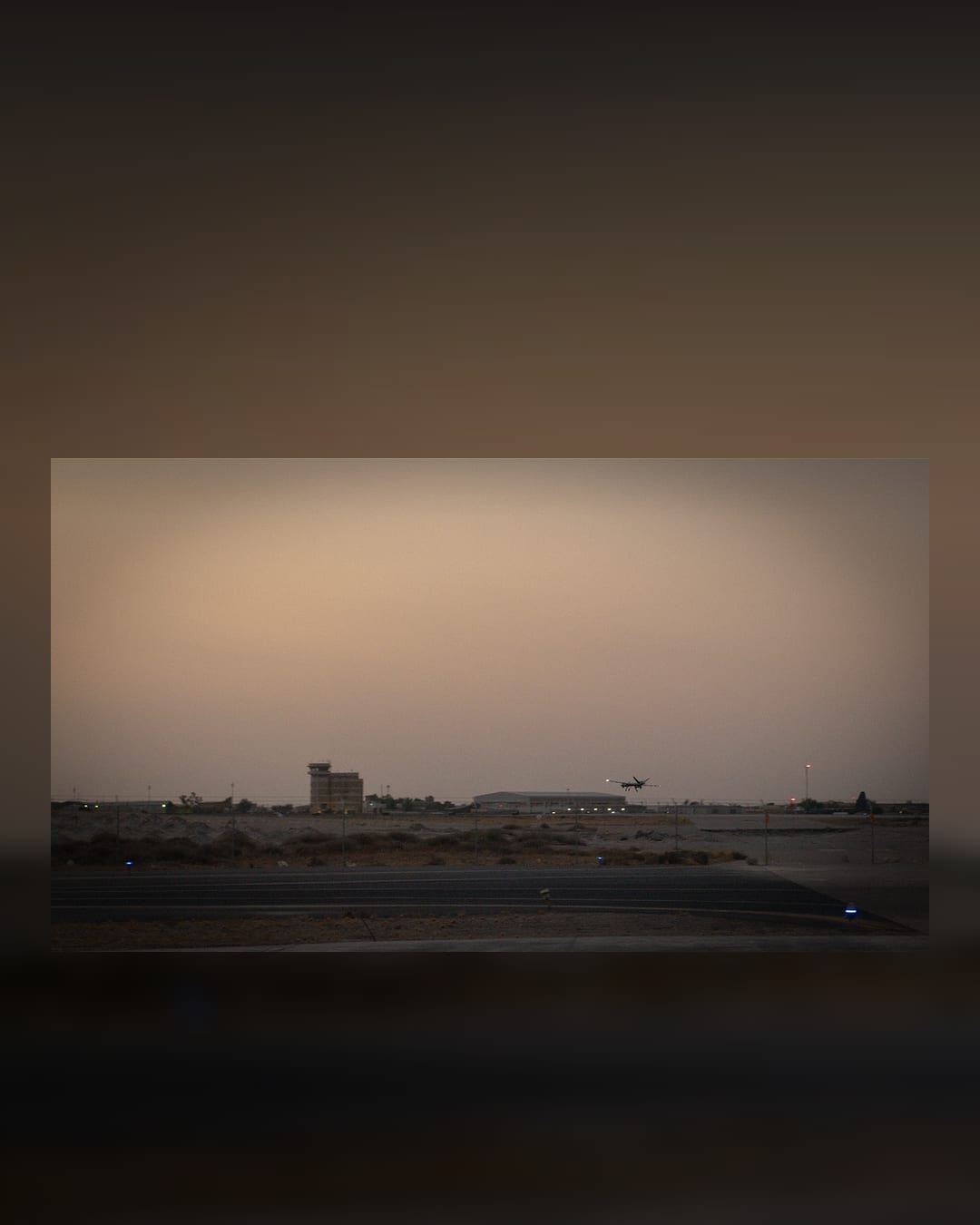
 Image: U.S. Air Force MQ-9 Reaper landing at Ali Al Salem Air Base, Kuwait - Tech. Sgt. Michael Mason / 386th Air Expeditionary Wing / DVIDS, public domain.
- Bloomberg reports that debris from an intercepted Iranian ballistic missile hit Ali Al Salem Air Base in Kuwait within the past 24 hours.
- The report says about five Americans, including contractors and active-duty personnel, suffered minor injuries.
- It also says one MQ-9 Reaper was destroyed and at least one more was seriously damaged; CENTCOM has not publicly confirmed those damage details.
A new Bloomberg report adds a sharper damage picture to the Kuwait missile incident that CENTCOM first framed as an Iranian ceasefire violation.
According to Bloomberg, Kuwaiti air defenses intercepted a Fateh-110 ballistic missile, but falling debris struck Ali Al Salem Air Base. A person with direct knowledge told the outlet that about five people were lightly injured and that two MQ-9 Reaper drones were seriously affected, including one destroyed.
What is confirmed
CENTCOM publicly said on May 28 that Iran launched a ballistic missile toward Kuwait at 10:17 p.m. ET on May 27 and that Kuwaiti forces successfully intercepted it. The command called the launch an "egregious ceasefire violation" and linked it to other Iranian drone activity near the Strait of Hormuz.
Kuwait's public record also supports the hostile-air-attack context. Arab News carried the Kuwait Army X post saying air defenses were dealing with hostile missile and drone attacks, and Kuwait Times, citing KUNA, reported that Kuwaiti air defenses intercepted and destroyed hostile drones and missiles.
Those official and state-linked records confirm the missile-and-drone interception context. They do not, at least in the public material cited here, confirm injuries, debris damage, the base location or the MQ-9 losses reported later by Bloomberg.
What Bloomberg adds
Bloomberg's report says the strike affected Ali Al Salem Air Base, a major Kuwait military installation that hosts U.S. activity. The reported injuries were minor and involved both contractors and active-duty personnel. The report also says one MQ-9 Reaper was destroyed and another was seriously damaged, noting the drones cost about $30 million each.
That makes the story materially different from a clean interception. If the report holds, the missile did not need to hit its intended target directly to create U.S. casualties and expensive aircraft damage.
 Image: Seal of United States Central Command - U.S. Department of Defense / Wikimedia Commons, public domain.
About the ceasefire line
The careful wording is important. CENTCOM describes Iran's missile launch toward Kuwait as the ceasefire violation. Bloomberg also notes that both sides have carried out attacks during the fragile ceasefire period, and that the latest strike came as Washington was considering an extension deal.
So the strongest source-backed version is not simply "Iran struck after a U.S. ceasefire violation." It is: the U.S. says Iran violated the ceasefire with the Kuwait-bound missile; Bloomberg reports the same incident caused minor American injuries and MQ-9 damage; both sides have continued military actions during the ceasefire period.
Why it matters
The operational risk is obvious. A missile can be intercepted and still produce casualties if debris lands inside a base perimeter. For a ceasefire negotiation, that kind of incident is politically combustible: no deaths, but American personnel injured, high-value drones damaged, and both governments under pressure to show they are not absorbing attacks without response.
The next things to watch are whether CENTCOM updates its public casualty or equipment-damage assessment, whether Kuwait releases debris or base-impact details, and whether Iran acknowledges, denies or reframes the missile launch.
NoDechev rating: official missile/drone interception context, reported casualties and equipment damage. CENTCOM, Kuwait Army/X and KUNA-backed reporting support the attack and interception context; the five-injured and MQ-9 damage details currently rest on Bloomberg's source-based report.
Read the earlier brief
This follow-up adds the reported injury and MQ-9 damage details to CENTCOM's earlier public attribution.
Read the CENTCOM Kuwait missile brief