

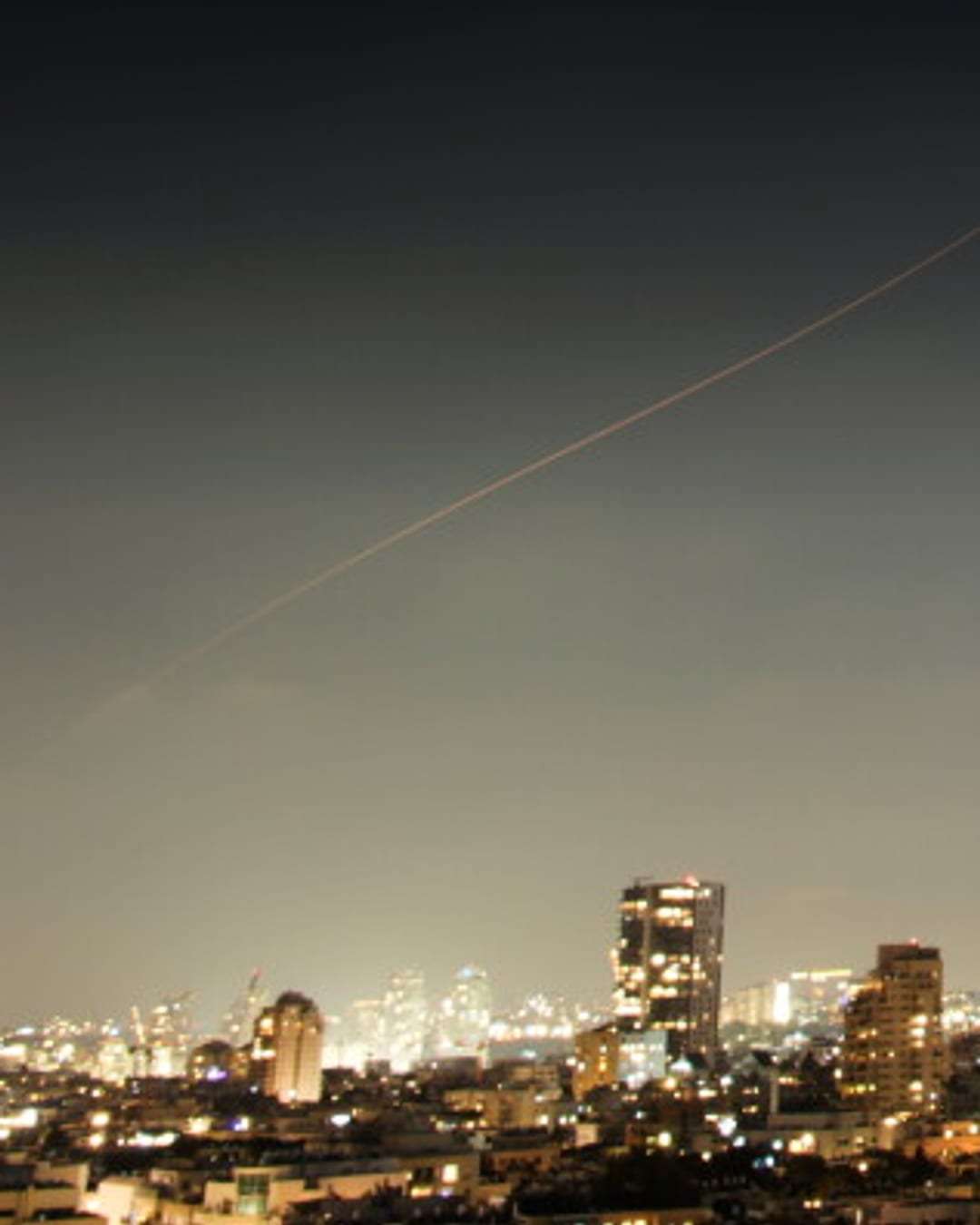
 Image: A projectile over central Israel during an Iranian missile attack, June 7, 2026 — AP Photo / Ohad Zwigenberg.
- Israel says it struck military targets in western and central Iran early Monday after Iranian missile fire toward Israel.
- AP reported explosions heard in Isfahan, Karaj, Tabriz and Tehran; Iran also closed airspace around Tehran's main airport.
- The escalation followed Israeli strikes on Beirut's southern suburbs and Iranian warnings that further Lebanon attacks would draw a response.
Israel says it carried out airstrikes against Iranian military targets early Monday, June 8, after Tehran fired missiles toward Israel in the first direct Iranian bombardment since the fragile April ceasefire.
The Israeli military described the targets only in broad terms, saying the air force struck military sites belonging to Iran in western and central Iran. AP reported that Iranian state television said explosions were heard in Isfahan, Karaj, Tabriz and Tehran, without immediately identifying what had been hit.
The clean read: the strike is confirmed by Israel and reported by major outlets, but the specific target list, damage assessment and casualty picture are still not public.
What happened
The chain began with fighting around Lebanon. Israel struck Beirut's southern suburbs on Sunday after what Israeli officials described as Hezbollah missile fire toward northern Israel. Axios reported that Israel notified the Trump administration ahead of the Beirut strike, while U.S. officials publicly backed Israel's right to self-defense and warned Hezbollah to stop firing.
Iran had warned that attacks on Beirut could trigger retaliation. Later Sunday, Iranian missiles were launched toward Israel. Axios reported that Israeli officials said four missiles were fired from Iran and that air defenses were operating; Iranian state media described additional waves, while Israeli officials said the launches had been intercepted at that stage.
By dawn in Iran, Israel said it had begun striking back. AP reported that Tehran's Imam Khomeini International Airport airspace was closed after the Israeli attack.
What the sources say
AP framed the Monday strikes as attacks that threatened to pull the wider Middle East back toward regional war. The same report said missile alert sirens sounded in Saudi Arabia's Al Kharj governorate, home to Prince Sultan Air Base, which hosts U.S. forces. Saudi state media later said the missile danger had passed.
Axios reported that President Donald Trump had called Prime Minister Benjamin Netanyahu and urged him not to retaliate immediately for Iran's missile attack. A senior U.S. official told AP that Trump believed he had convinced Netanyahu to wait, but Israel's Monday morning strike showed the restraint window was short or had collapsed.
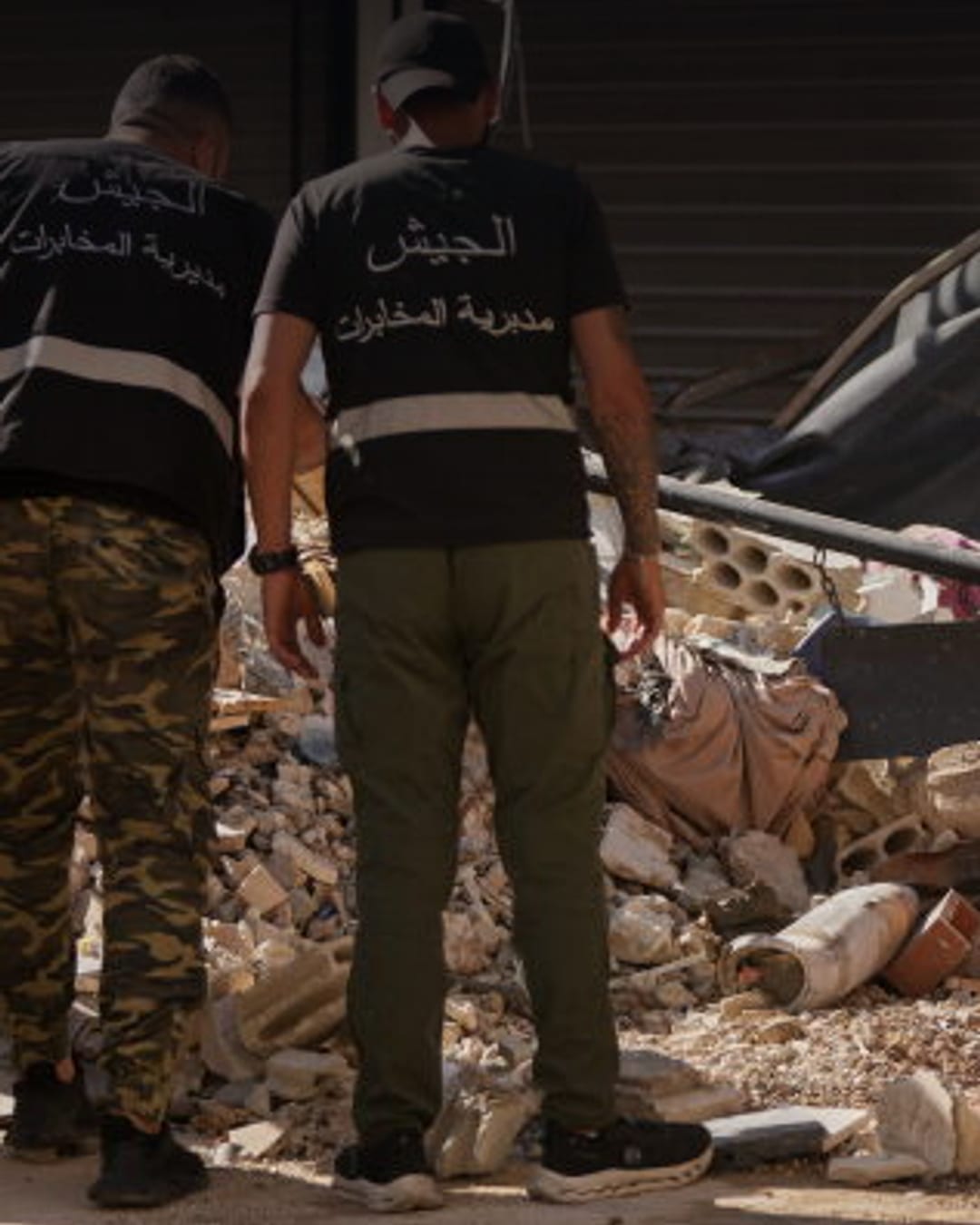 Image: Lebanese intelligence officers inspect an unexploded missile after an Israeli airstrike in Dahiyeh, Beirut, June 7, 2026 — AP Photo / Hassan Ammar.
What is confirmed
Confirmed: Israel says it struck military targets in western and central Iran. Confirmed: Iran fired missiles toward Israel after Israel struck Beirut's southern suburbs. Confirmed: the exchange happened while U.S.-Iran ceasefire diplomacy was already under strain from Lebanon, Hezbollah activity and wider Gulf security incidents.
Also confirmed: the public information is still thin. Israel has not released a full target list. Iran had not immediately provided a detailed damage report in the early AP account. That means early claims about destroyed facilities, casualty counts or U.S. coordination should be treated as unverified until stronger sourcing appears.
Why it matters
The April ceasefire had already looked narrow: it reduced direct Iran-Israel fighting, but it did not settle Lebanon, Hezbollah, the Strait of Hormuz, U.S.-Iran incidents or the nuclear negotiation. Monday's strike shows how quickly one track can pull the others back into the same war logic.
For Israel, the message is deterrence after Iranian missile fire. For Iran, the message is that Beirut and Hezbollah remain connected to the broader conflict. For Washington, the problem is that every strike makes the negotiation table smaller.
What to watch next
The next useful signals are whether Iran launches another wave, whether Israel publishes target details, whether U.S. forces report any regional defensive actions, and whether Trump publicly criticizes or supports Netanyahu's response.
For now, the story is not "full war has resumed." It is more precise, and more dangerous: the ceasefire is being tested by direct missiles and retaliatory strikes before mediators have repaired the Lebanon file.
NoDechev rating: confirmed escalation, incomplete damage picture. The strike and missile sequence are sourced; the target-level outcome is still developing.
Ready social post
Israel says it struck military targets in western and central Iran after Iranian missile fire. The hard fact is the exchange; the unknowns are target damage, casualties and whether the April ceasefire track can survive the Lebanon-Iran linkage.
Read next: how ceasefire violations are verified