

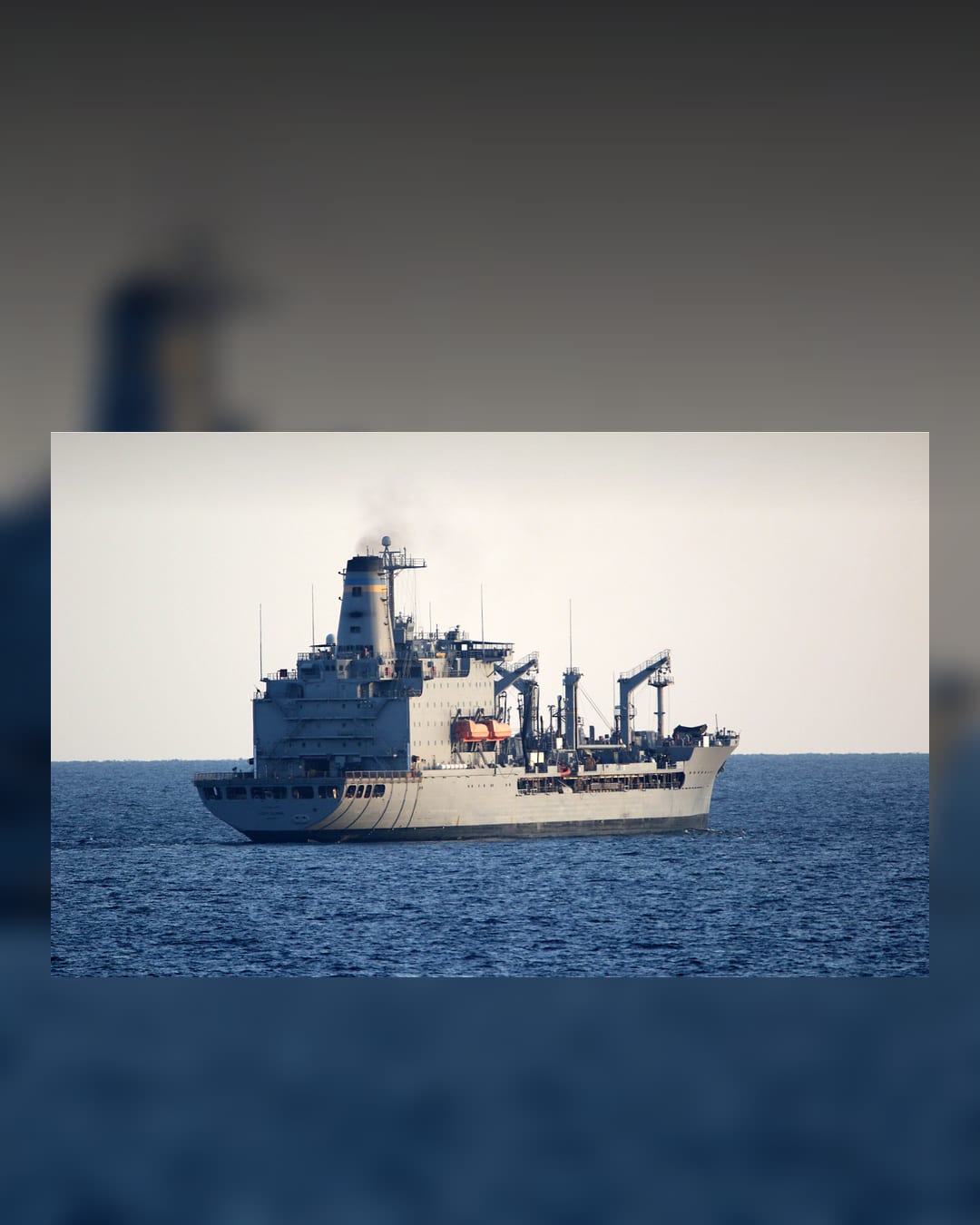
 Image: Wikimedia Commons. USNS Leroy Grumman transits the Strait of Hormuz, used as Gulf maritime context.
- CENTCOM says U.S. forces disabled M/V Lian Star in the Gulf of Oman on May 29 while it was attempting to sail toward an Iranian port.
- The command says a U.S. aircraft fired a Hellfire missile into the vessel’s engine room after more than 20 warnings.
- The confirmed fact is the U.S. military’s stated action; independent details on the vessel, cargo and crew are still sparse.
U.S. Central Command says American forces disabled a cargo ship in the Gulf of Oman after it attempted to sail toward an Iranian port in violation of the U.S. blockade.
The vessel was identified by CENTCOM as M/V Lian Star, a Gambia-flagged maritime vessel. According to the command, U.S. forces observed it transiting international waters toward an Iranian port on May 29 and issued more than 20 warnings before using force.
What happened
In a May 30 public release, CENTCOM said a U.S. aircraft fired a Hellfire missile into the ship’s engine room after the crew failed to comply. The command said the ship was no longer transiting to Iran after the strike.
The Associated Press reported the vessel remained adrift in the Gulf of Oman and that U.S. forces had not boarded it, citing a U.S. official familiar with the operation. Stars and Stripes also reported the action as a U.S. military disabling strike tied to blockade enforcement.
This makes the core event stronger than a rumor: it is a formal U.S. military statement, with AP and military press pickup. What remains incomplete is everything beyond the U.S. account.
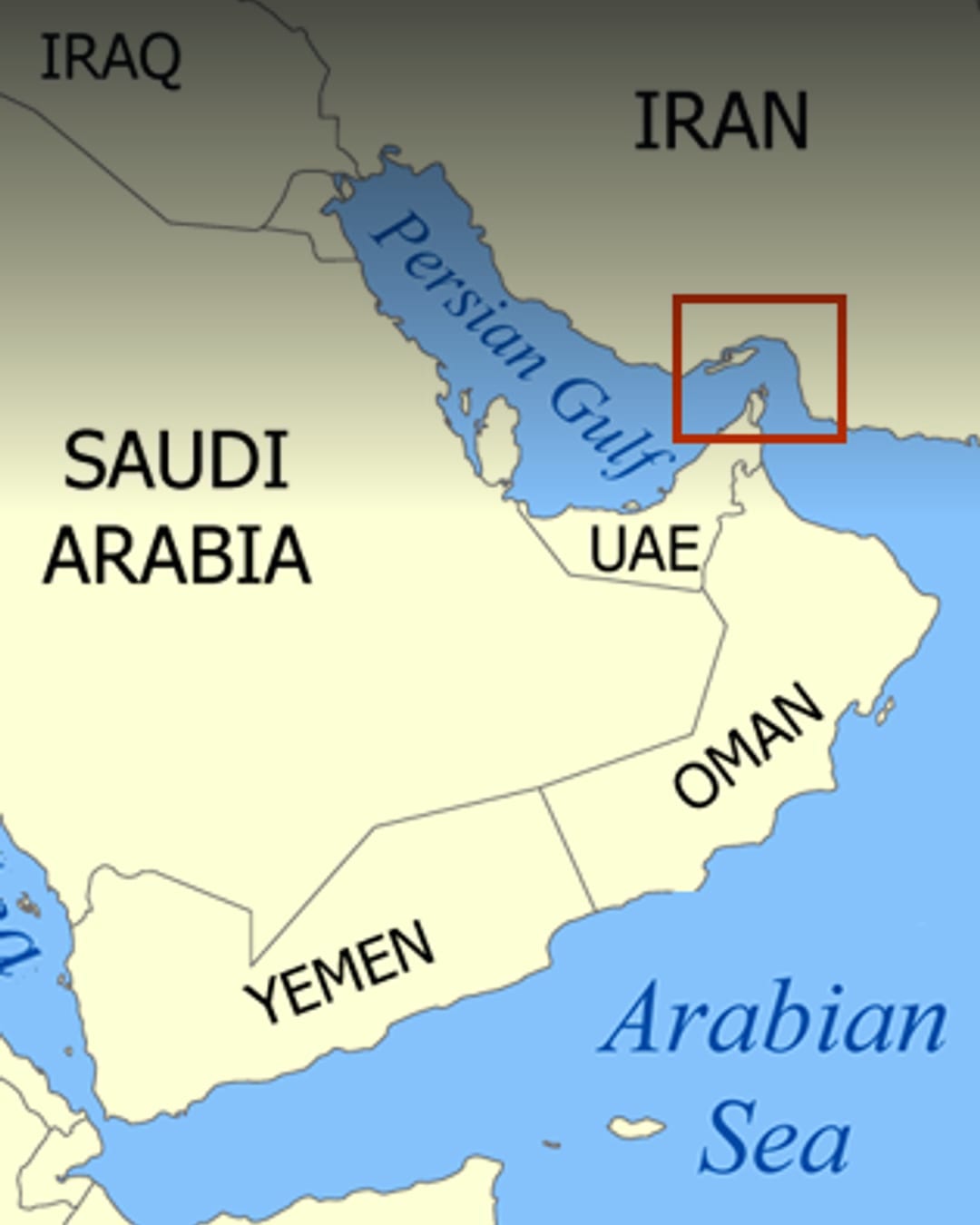 Image: Wikimedia Commons. Map of the Strait of Hormuz, used as regional maritime context.
What is confirmed
It is confirmed that CENTCOM publicly says U.S. forces disabled Lian Star while enforcing blockade measures in the Gulf of Oman. The command says the ship was Gambia-flagged, was headed toward an Iranian port, ignored more than 20 warnings and was stopped by a Hellfire missile strike into the engine room.
CENTCOM also said U.S. forces have disabled five commercial vessels and redirected 116 as part of the blockade while a ceasefire with Iran remains in effect.
What is not confirmed
The public record does not yet establish what cargo Lian Star was carrying, who owned or operated it, how many crew were aboard, whether anyone was injured, or whether the vessel’s operators dispute the U.S. version.
It is also important not to overread the phrase “blockade violation.” The U.S. is presenting the operation as enforcement of its blockade against Iranian ports. Whether other governments, shipping insurers or maritime-law experts accept that framing is a separate question that needs more sourcing.
Why it matters
This is a sharper escalation signal than ordinary ship redirection. Redirecting vessels is one thing; firing into a commercial ship’s engine room is a more forceful enforcement step, even if the U.S. describes the strike as disabling rather than destructive.
The incident also shows that the Gulf of Oman remains an active pressure zone even after ceasefire language around Iran. That matters for energy markets, shipping insurance and the broader question of whether traffic near the Strait of Hormuz is normalizing or merely moving under military permission.
What to watch next
The next useful signals are AIS and maritime tracking updates for Lian Star, any statement from the ship’s owner or flag state, Iranian reaction, casualty information, and whether U.S. forces board or tow the vessel.
Until then, the clean headline is narrow: CENTCOM says U.S. forces disabled a Gambia-flagged cargo ship trying to reach Iran. The strike is confirmed as a U.S. military claim; the full maritime picture is not yet public.
NoDechev rating: confirmed U.S. military statement, incomplete independent record. CENTCOM’s action claim is public and specific; cargo, crew, ownership and legal context still need confirmation.
Also Read
More source context on traffic moving through the Strait of Hormuz under pressure.
Read: Iran’s IRGC Says 20 Ships Crossed Hormuz With Tehran’s Permission