
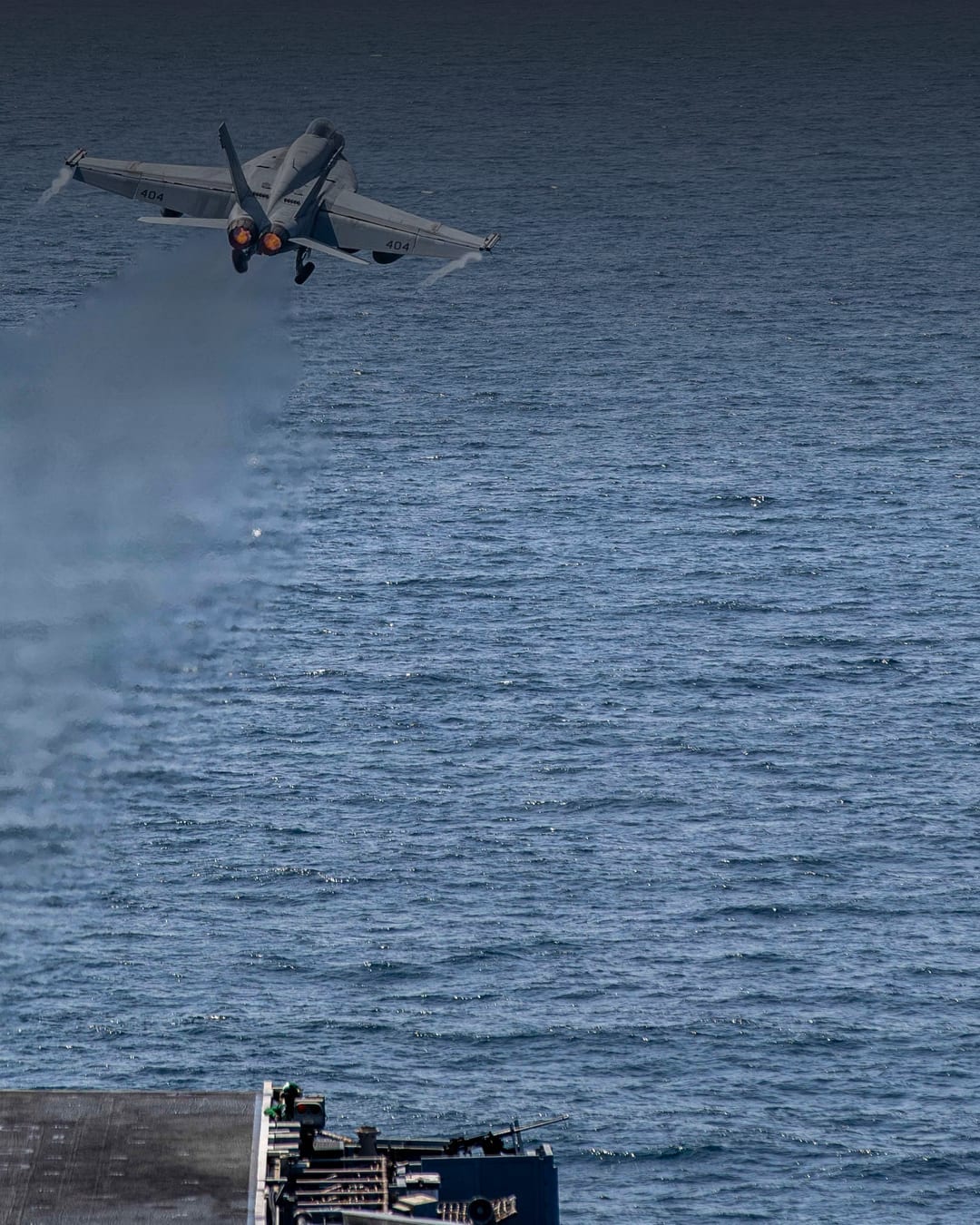
 Image: U.S. Navy F/A-18E Super Hornet launches from USS Abraham Lincoln during Operation Epic Fury - U.S. Navy / Wikimedia Commons.
- CENTCOM says the Palau-flagged M/T Marivex was disabled in the Gulf of Oman on June 8 while heading toward Iran.
- The command says an F/A-18 from USS Abraham Lincoln fired a precision munition into the ship's engineering and steering spaces.
- India's embassy in Muscat says all 24 Indian crew members were rescued by Omani authorities after a fire incident.
U.S. forces disabled another tanker in the Gulf of Oman on Monday, escalating the pressure around Washington's blockade of Iranian ports and again putting civilian mariners in the middle of the enforcement zone.
U.S. Central Command said the Palau-flagged M/T Marivex was unladen and was transiting international waters toward Iran when it failed to comply with U.S. directions. CENTCOM said an F/A-18 Super Hornet from USS Abraham Lincoln fired a precision munition into the vessel's engineering and steering spaces, leaving it no longer sailing to Iran.
The clean read: the U.S. strike is confirmed by the U.S. military, and the crew rescue is confirmed by Indian and Omani-linked reporting. What is still incomplete is the full damage picture, the legal dispute over blockade enforcement, and whether the fire was a direct result of the strike or a separate onboard consequence.
What happened
CENTCOM's June 8 statement, republished by Seapower, says Marivex attempted to sail to an Iranian port despite the ongoing blockade against Iran. The command identified the ship as Palau-flagged and said it was unladen at the time.
Reuters, carried by StreetInsider, reported that U.S. forces disabled the tanker in the Gulf of Oman and that India's shipping ministry said 24 Indian crew members were aboard. The ministry said a fire had been reported but all crew members were safe.
The Indian Embassy in Muscat publicly thanked Omani authorities for rescuing all 24 Indian nationals aboard MT Marivex. Times of Oman carried the embassy's statement and described the incident as taking place off the coast of Oman.
What the sources say
The U.S. military version is specific: Marivex was moving toward Iran, failed to comply with directions, and was disabled by a munition fired from an F/A-18. CENTCOM also said that since the blockade began on April 13, U.S. forces had disabled seven non-compliant vessels, redirected 134 compliant ships, and allowed 42 humanitarian-aid vessels to pass.
The crew-safety version comes from Indian and Omani-side reporting. India's shipping ministry said the tanker was carrying 24 Indian seafarers and that all were safe. The embassy in Muscat thanked Omani authorities for the rescue, while UKMTO-linked reports described a tanker fire and crew evacuation northeast of Masirah, Oman.
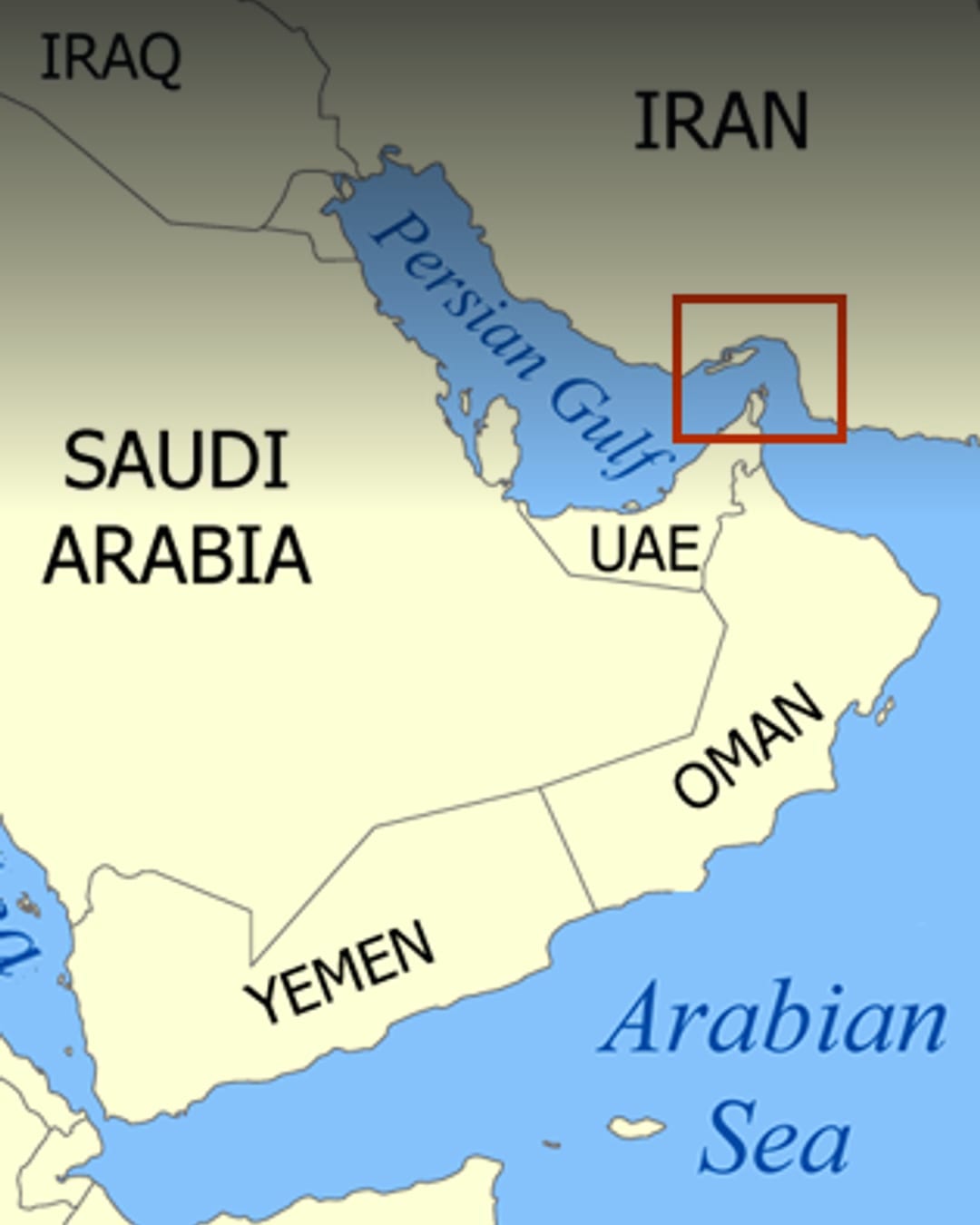 Image: Map of the Strait of Hormuz and Gulf of Oman - Wikimedia Commons, used as regional maritime context.
What is confirmed
Confirmed: CENTCOM says U.S. forces disabled M/T Marivex on June 8. Confirmed: the command says the tanker was heading toward Iran and was stopped by an F/A-18-launched precision munition. Confirmed: Indian authorities say 24 Indian crew members were involved and all were safe after the fire incident.
Also confirmed: this is not the first disabling action under the blockade. NoDechev previously covered CENTCOM's May 30 statement that U.S. forces fired a Hellfire missile into M/V Lian Star's engine room after that ship allegedly tried to reach Iran.
What is not confirmed
Not confirmed: the full cause-and-effect chain between the U.S. strike and the fire. The public sources align on the strike and the fire, but they do not yet provide a full forensic account of how the fire started, how extensive the damage was, or whether the vessel can be repaired or towed safely.
Also not fully settled in the public record: the ship's exact flag and ownership trail. CENTCOM describes Marivex as Palau-flagged. Some early Indian reports described a different foreign flag. That kind of discrepancy is common in fast maritime incidents and should be treated as a data point to verify, not a reason to ignore the confirmed strike.
Why it matters
This is a stronger signal than a boarding or redirection. A fighter jet firing into a commercial tanker's engineering and steering spaces is a kinetic enforcement step, even when the U.S. frames it as disabling rather than destroying.
It also creates diplomatic pressure around crew nationality. The ship was not Indian-owned according to Indian-side reporting, but all 24 seafarers were Indian nationals. That matters because blockade enforcement is no longer only a U.S.-Iran story; it touches labor-supplying countries, flag states, insurers, port authorities and rescue services.
For energy markets, the operational question is whether more ships test the blockade or whether this strike deters them. For maritime law and diplomacy, the question is whether governments accept the U.S. blockade framing or challenge the targeting of commercial vessels in international waters.
What to watch next
Watch for a direct CENTCOM page, a UKMTO warning update, AIS movement for Marivex, a statement from the ship owner or flag registry, and any formal comment from India's foreign or shipping ministries beyond the crew-safety update.
The next important distinction is whether Marivex becomes a one-day rescue story or a precedent for more air-launched disabling strikes on ships approaching Iranian ports.
NoDechev rating: confirmed U.S. strike and confirmed crew rescue; damage chain still developing. The vessel was stopped, but the full maritime and legal record is not complete yet.
Ready social post
U.S. Central Command says an F/A-18 disabled the Palau-flagged tanker Marivex after it tried to sail to Iran under the blockade. Indian authorities say all 24 Indian crew members were rescued after a fire. The strike is confirmed; the damage chain and legal fallout are still developing.
Read next: CENTCOM's Lian Star strike