

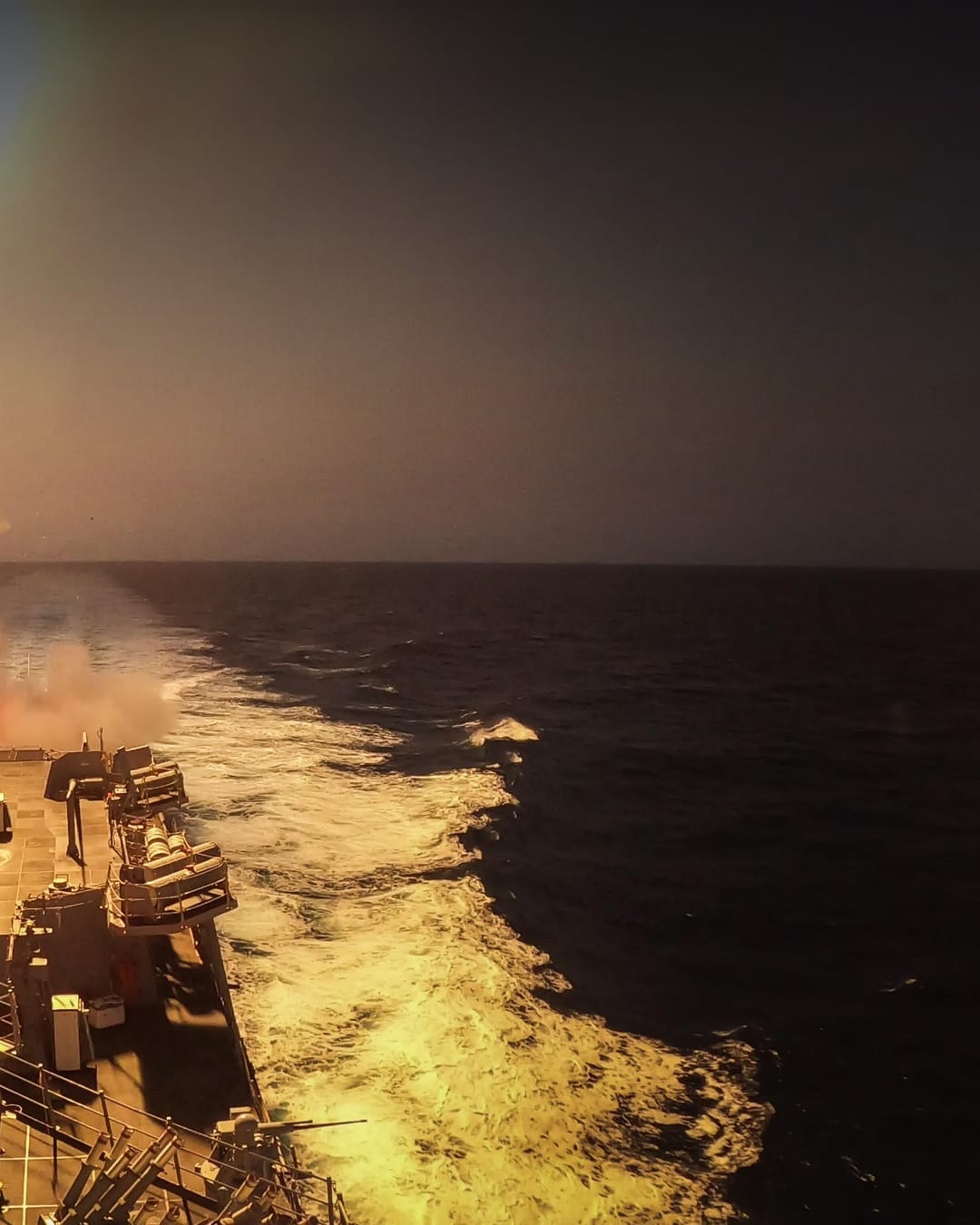
 Image: USS Carney defeats Houthi missiles and unmanned aerial vehicles in the Red Sea, Oct. 19, 2023 - U.S. Navy / Wikimedia Commons.
- AP says Yemen's Houthis claimed an attack on Israel and said Israel-affiliated vessels would again be targets in the Red Sea.
- Breaking accounts circulated a stronger formulation: a complete ban on Israeli maritime navigation in the Red Sea.
- The operational risk is the Bab el-Mandeb corridor, where Houthi attacks previously sank ships, killed mariners and disrupted Suez traffic.
Yemen's Houthis have announced a renewed ban on Israeli shipping in the Red Sea, according to same-day reporting and a statement attributed to Houthi military spokesman Brig. Gen. Yahya Saree.
The strongest reliable public confirmation so far comes from AP, which reported Monday that the Houthis claimed an attack on Israel and said Israel-affiliated vessels would again be a target in the Red Sea. Breaking accounts on X circulated a sharper line from the statement, describing a complete ban on Israeli maritime navigation and warning that enemy movements would be considered military targets from the moment of the announcement.
The clean read: the Houthi threat is real and public. The exact enforcement threshold still needs watching, especially whether the group targets only Israeli-owned or Israeli-flagged vessels, ships bound for Israeli ports, or wider company fleets with Israel links.
What happened
The announcement landed while Israel and Iran were trading strikes in the most serious exchange since the April ceasefire. AP reported that Israeli strikes hit Iran after Iranian missile fire, while the Houthis also claimed involvement by launching toward Israel.
That matters because the Houthis had not been fully central to the Iran war track. Their entry shifts the map from direct Israel-Iran fire to a wider regional pressure system: missiles toward Israel, Lebanon-linked retaliation, Gulf base alerts, and now the Red Sea shipping corridor.
What the sources say
AP said the Houthi statement was broadcast on the group's al-Masirah satellite channel and that Israel-affiliated vessels would again be targeted. The same AP report noted the danger this creates for the Red Sea, Gulf of Aden and Bab el-Mandeb Strait.
U.S. maritime guidance already treats the area as high risk. MARAD's current Red Sea advisory says vessels with Israeli, U.S. or U.K. associations, and vessels in company fleet structures linked to port calls in Israel, can face terrorism or hostile action from the Houthis while transiting the southern Red Sea, Bab el-Mandeb and Gulf of Aden.
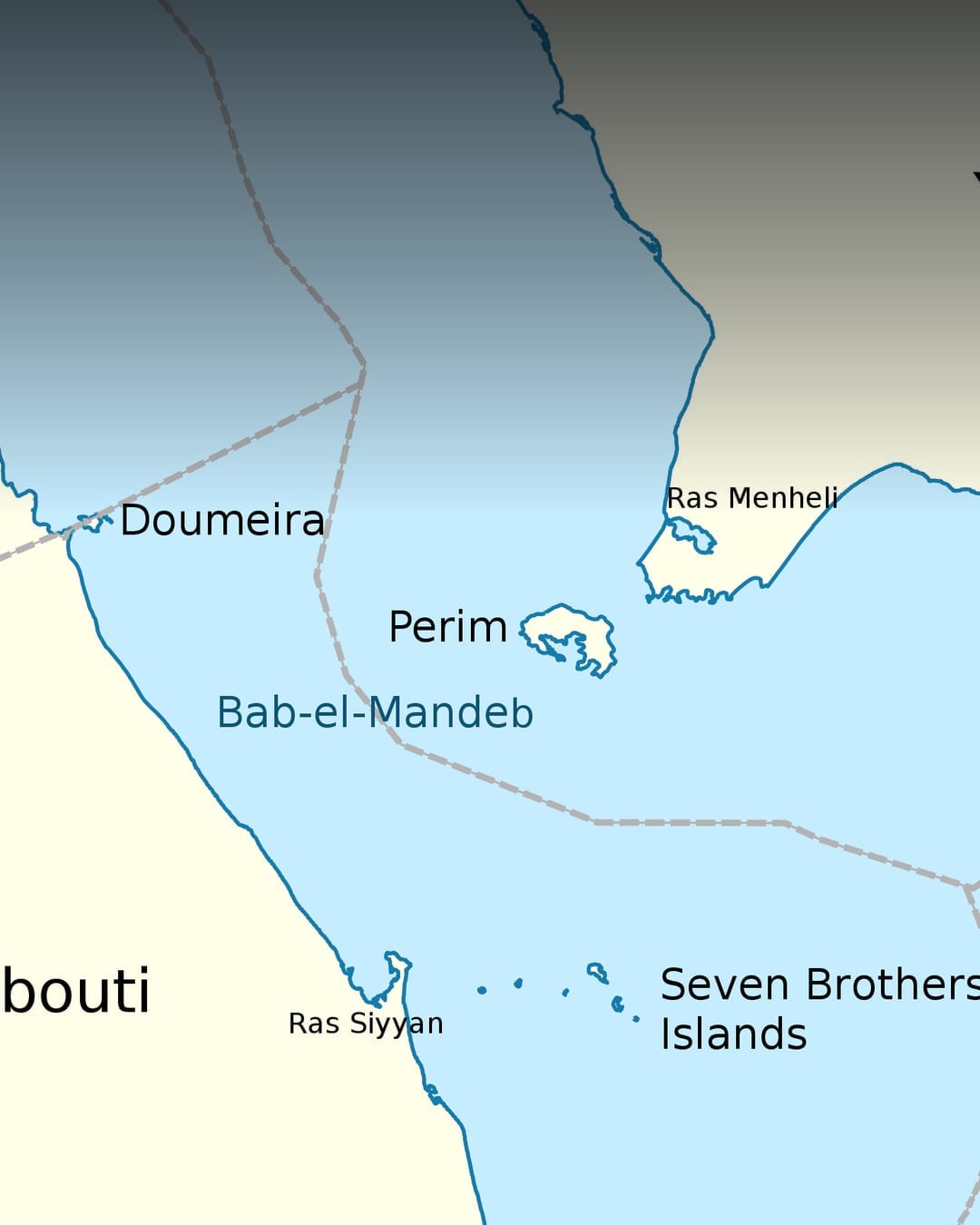 Image: Map of Bab el-Mandeb, the narrow passage linking the Red Sea and Gulf of Aden - Archer90 / OpenStreetMap / Wikimedia Commons.
What is confirmed
Confirmed: the Houthis publicly threatened Israeli-affiliated shipping again. Confirmed: the statement came after a Houthi-claimed attack on Israel and during direct Israel-Iran crossfire. Confirmed: the Red Sea route has already been a major target zone for Houthi missiles, drones, armed boats and attempted seizures.
Also confirmed: this is not a theoretical chokepoint. Before the war, the Red Sea-Suez route carried a large share of Asia-Europe trade. AP says Houthi attacks during the Gaza war killed at least nine mariners, sank four ships and disrupted a route through which about $1 trillion in goods passed each year before the war.
What is not confirmed
Not confirmed: that every Israeli-linked vessel is physically blocked right now. A declared ban is a military threat and insurance signal; actual closure depends on follow-on attacks, naval responses, routing decisions by shipowners and warnings from maritime agencies.
Also not confirmed: whether the Houthis will apply the wording narrowly to Israeli-flagged and Israeli-owned ships or broadly to ships connected to companies trading with Israel. Their past targeting record was often wider than the slogan, which is why shipping firms and insurers treat the wording carefully.
Why it matters
This is the part of the Israel-Iran escalation that can hit global commerce fastest. Missiles over Israel and Iran are already a war-risk story. Red Sea threats add freight, insurance, rerouting and Suez Canal exposure.
If ships avoid Bab el-Mandeb, many Asia-Europe routes have to sail around the Cape of Good Hope. That adds time, fuel cost and capacity strain. It also makes the political problem harder for Washington, because protecting the route may pull U.S. and allied naval forces back into a conflict the White House is trying to keep from widening.
What to watch next
Watch for a fresh UKMTO, MARAD, CENTCOM or EU Aspides warning; a named vessel incident; new Houthi video or target claim; and whether insurers widen war-risk pricing for Red Sea transits.
The fair headline is not that the Red Sea is fully closed. It is that the Houthis have reopened the Israeli-shipping threat at the exact moment Israel and Iran are testing the ceasefire with direct fire.
NoDechev rating: confirmed Houthi threat, enforcement still developing. The statement is real; the practical shipping impact depends on whether attacks follow.
Ready social post
The Houthis say Israeli-affiliated ships are again targets in the Red Sea. The important distinction: this is a confirmed threat and insurance signal, not yet proof that every Israeli-linked vessel is physically blocked.
Read next: Israel strikes Iran after missile fire