

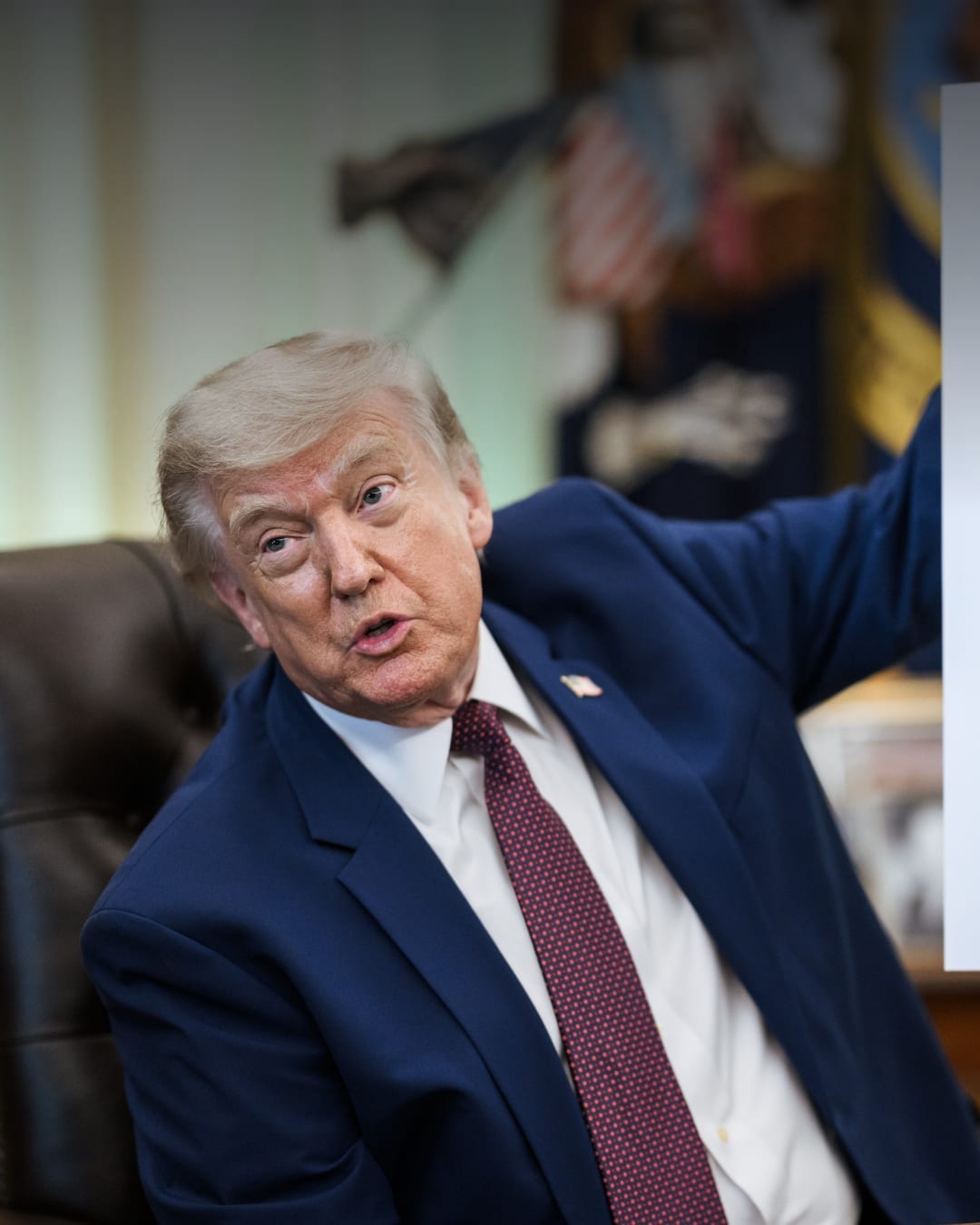
 Image: President Donald Trump answers questions in the Oval Office - The White House, public domain.
- Trump said the U.S. had made a settlement to end the war with Iran and suggested a signing could happen soon.
- Iran has not confirmed a final deal; Fars reported that no initial MOU text had been approved.
- The most careful read is conditional de-escalation: cancelled strikes, an unsigned MOU track, and unresolved Hormuz and nuclear terms.
President Donald Trump said on June 11 that the United States had made what he called a settlement to end the war with Iran, but the claim should not be treated as a confirmed peace agreement yet.
The statement is confirmed. CBS News reported that Trump told reporters an agreement had been reached and that a signing could happen in Europe within days. The White House also posted a short video clip of Trump saying that a deal would prevent Iran from having a nuclear weapon.
The missing piece is equally important: Iran has not publicly confirmed the same deal. CBS reported that Iranian foreign ministry spokesman Esmaeil Baqaei said Iran had not reached a final conclusion. The same CBS live file said Iran's semi-official Fars News Agency quoted a source close to the negotiating team saying no initial memorandum text with the United States had been approved.
What happened
Trump first said he was cancelling scheduled strikes and bombings against Iran, citing progress in high-level discussions. He wrote that final points and concepts had been approved by the United States and multiple regional governments, while the naval blockade would remain in force until the transaction was finalized.
Later, speaking in the Oval Office, Trump went further. He said a settlement had been made, suggested documents were close to final form, and said the Strait of Hormuz would reopen when the settlement was signed.
That is a major political and market signal. It is also not the same thing as a signed agreement. CBS, citing two sources familiar with the diplomatic effort, framed the likely next step as a letter of intent or memorandum of understanding, probably early next week. That would open a negotiation window rather than complete the entire settlement.
What the sources say
The strongest version of Trump's claim is that the parties have a framework. The weakest version, from Tehran-linked reporting, is that Washington is overselling an unfinished process.
CBS reported that a possible MOU would start 60 days of talks and could include steps on freedom of trade through Hormuz, demining, nuclear restrictions, and phased financial relief tied to compliance. The report also said Trump called the memorandum "a little bit conceptual," which matters because the hardest details are exactly where past Iran talks have broken down.
 Image: Iran Ministry of Foreign Affairs central building in Tehran - GTVM92 / Wikimedia Commons, CC BY-SA 4.0.
What is confirmed
Trump made the public claim. He cancelled planned strikes for the evening. The White House amplified the nuclear-weapons line through its official video page. Multiple news organizations reported the same basic sequence: threat of new strikes, sudden cancellation, then a claim of a pending settlement.
It is also confirmed that Iran had not matched Trump's certainty in the public record at the time of publication. The Indian Express live file led with the same caveat, saying Tehran had yet to confirm a deal, and reported that Fars said no initial MOU text had been approved.
What is not confirmed
No signed final agreement has been publicly released. No joint U.S.-Iran text has been published. No shared timetable has been confirmed by both sides. It is not yet clear whether Iran's supreme leadership has accepted the exact same language Trump is describing.
That distinction matters because "ended the war" is a political claim, while an enforceable settlement would require a text, signatories, sequencing, verification, and compliance steps. Hormuz access, enriched uranium, enrichment infrastructure, missile limits, sanctions relief and frozen funds are all still sensitive enough to break the process.
Why it matters
If the MOU track holds, this could be the first real off-ramp after days of renewed strikes, threats and shipping pressure around the Strait of Hormuz. Oil markets, Gulf security, U.S. force protection and Israel's war planning would all respond quickly to even a partial de-escalation.
If it collapses, Trump's public certainty could become another flashpoint. The U.S. had threatened fresh strikes hours before the cancellation. Iran-linked sources were still pushing back against the idea that a text had been accepted. That is why the clean headline is not "war over." It is: Trump says it is ending, while Tehran has not confirmed the deal.
What to watch next
The first test is whether both sides acknowledge the same memorandum. The second is whether the naval blockade changes. The third is whether Hormuz shipping becomes freer in practice, not just in statements.
The fourth is the nuclear language. If there is a public text, watch whether it bans enrichment, removes enriched material, dismantles infrastructure, or simply opens talks on those points. Those are very different outcomes.
NoDechev rating: confirmed Trump claim, unconfirmed final settlement. Treat this as a conditional diplomatic breakthrough until Iran and the U.S. publish or acknowledge the same agreement.
Also Read
The claim follows days of rapid U.S.-Iran escalation around Hormuz, strike threats, and disputed diplomatic signals.
Read the Iran Musk-linked assets target-list brief