

 Image: U.S. Army AH-64D Apache Longbow helicopter - Wikimedia Commons.
- Trump says Iran shot down a U.S. Apache near the Strait of Hormuz and that Washington will respond.
- CENTCOM says two crew members were rescued within roughly two hours and are in stable condition.
- The key caveat: the military's public statement confirms the incident and rescue, but says the cause remains under investigation.
President Trump has turned a U.S. helicopter crash near the Strait of Hormuz into a direct escalation claim, saying Iran shot down the aircraft and that the United States will respond.
The hard facts are narrower. U.S. Central Command says a U.S. Army AH-64 Apache went down near the coast of Oman while patrolling regional waters on June 8. The two crew members were rescued by American forces within about two hours and were listed in stable condition. CENTCOM's public line, as carried by multiple outlets, is that the cause of the incident is still under investigation.
That distinction matters. If the shootdown is confirmed, it becomes a direct U.S.-Iran military incident in one of the world's most sensitive waterways. If the aircraft went down because of a mechanical failure or another cause, the political risk is still serious, but the trigger is different.
What happened
The Apache went down Monday near the Strait of Hormuz, close to Oman's coast, while U.S. forces were operating around the Gulf of Oman and the blockade zone around Iran. The incident came after another U.S. enforcement action in which CENTCOM said an F/A-18 disabled the Iran-bound tanker Marivex.
Trump first told reporters the pilots were fine and that a report would follow. Later, according to Axios, he said Iran had shot down the helicopter and pledged a U.S. response. That changed the story from a military aviation incident into a potential retaliation trigger.
Washington Post reporting, citing CENTCOM, says both crew members were recovered and stable. The Post also reported that it was not clear from the public record whether the helicopter had been shot down, suffered a mechanical failure, or experienced another problem.
What the sources say
Axios reported Trump's stronger claim: Iran downed the U.S. Apache and the United States must respond. That is the political headline and the reason this is now moving quickly across social feeds.
CBS News and Washington Post reporting provide the operational detail: the crew was rescued after the helicopter went down near Oman's coast, and U.S. officials described the rescue as involving a Navy surface drone from Task Force 59. CBS framed it as a first-of-its-kind sea-drone rescue for the U.S. military.
ABC News and Jerusalem Post both carried the more cautious line: Trump confirmed the crew was safe, while officials had not yet publicly established whether Iranian fire, mechanical failure, or another factor brought the Apache down.
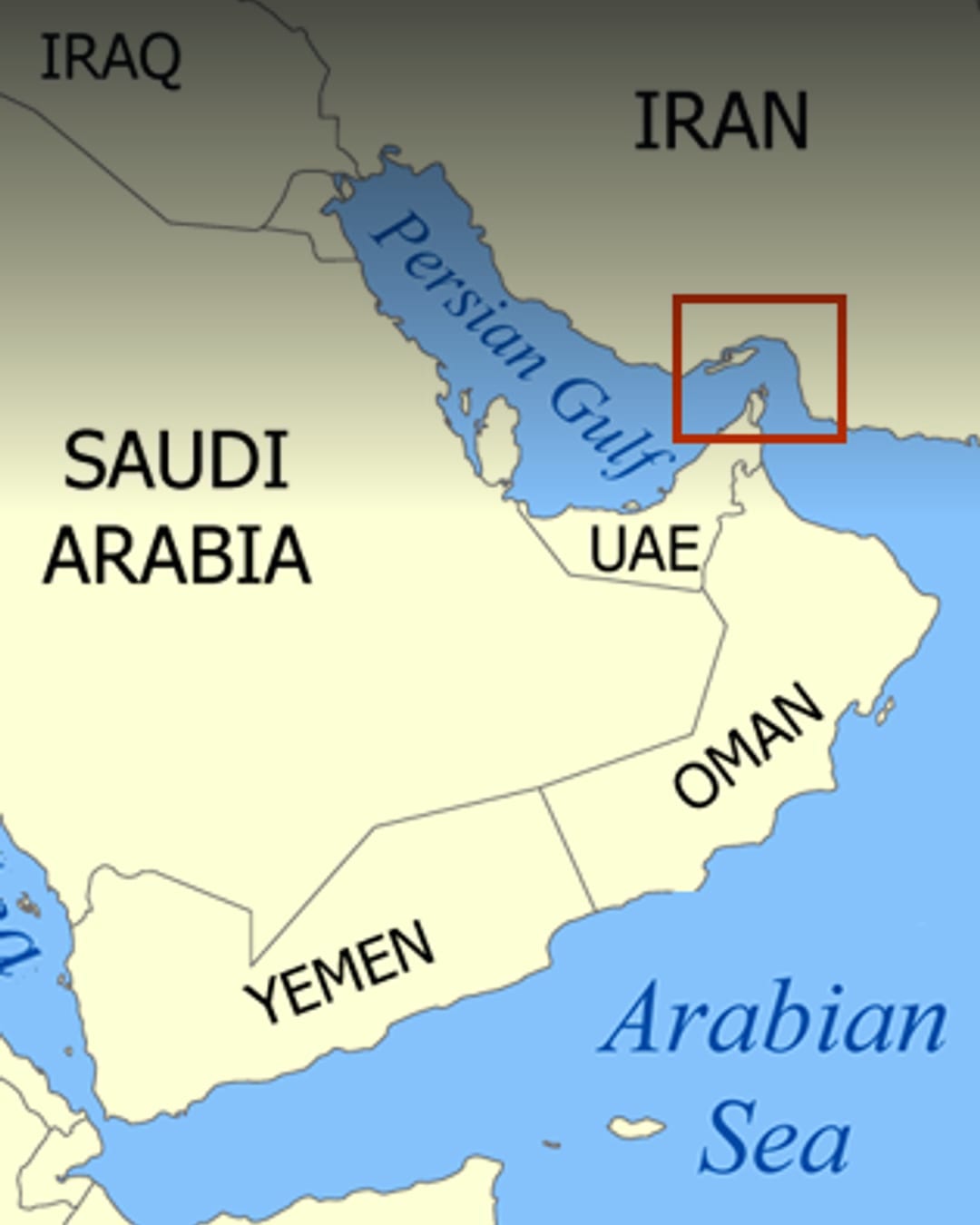 Image: Map of the Strait of Hormuz and Gulf of Oman - Wikimedia Commons, used as regional context.
What is confirmed
Confirmed: a U.S. Army AH-64 Apache went down near the Strait of Hormuz on June 8. Confirmed: both crew members survived, were recovered within roughly two hours, and were stable afterward. Confirmed: U.S. forces used assets tied to Naval Forces Central Command, the 82nd Airborne Division, Air Force and Navy units, including the 5th Fleet's Task Force 59, in the rescue.
Also confirmed: Trump is publicly treating the incident as an Iranian shootdown and is promising a response. That statement alone raises the temperature, even before the final incident report is released.
What is not confirmed
Not confirmed from CENTCOM's public statement: the exact cause of the helicopter loss. The available public record does not yet show a released damage assessment, missile-tracking account, Iranian claim, or forensic report proving the Apache was shot down.
That does not mean Trump's claim is false. It means NoDechev should label the story correctly: Trump says Iran shot it down; CENTCOM has confirmed the crash and rescue; the cause remains officially under investigation until the report lands.
Why it matters
The Strait of Hormuz is not just another operating area. It is the chokepoint for a large share of global oil and LNG flows, and it has been at the center of the U.S.-Iran blockade fight since April. A confirmed Iranian shootdown of a U.S. attack helicopter there would pressure Trump to answer militarily while talks over the wider war remain active.
The rescue detail is also important. A drone boat recovering the crew shows how the U.S. is using unmanned systems not only for surveillance and targeting, but for personnel recovery in contested maritime zones. That lowers risk to additional crews, but it also signals a more automated U.S. presence around Hormuz.
What to watch next
Watch for CENTCOM's formal incident report, any Iranian military claim or denial, radar or missile-tracking details, and whether Trump's promised response is limited, symbolic, or kinetic. Also watch whether this affects the separate U.S.-Iran negotiation track that Trump has been saying could produce a deal within days.
NoDechev rating: incident and crew rescue confirmed; Trump shootdown claim developing. Treat "Iran shot down the Apache" as the president's claim until CENTCOM releases the cause.
Ready social post
Trump says Iran shot down a U.S. Apache near the Strait of Hormuz and says the U.S. will respond. CENTCOM confirms the Apache went down and both crew members were rescued, but the official cause is still under investigation.
Read next: Why Hormuz matters