

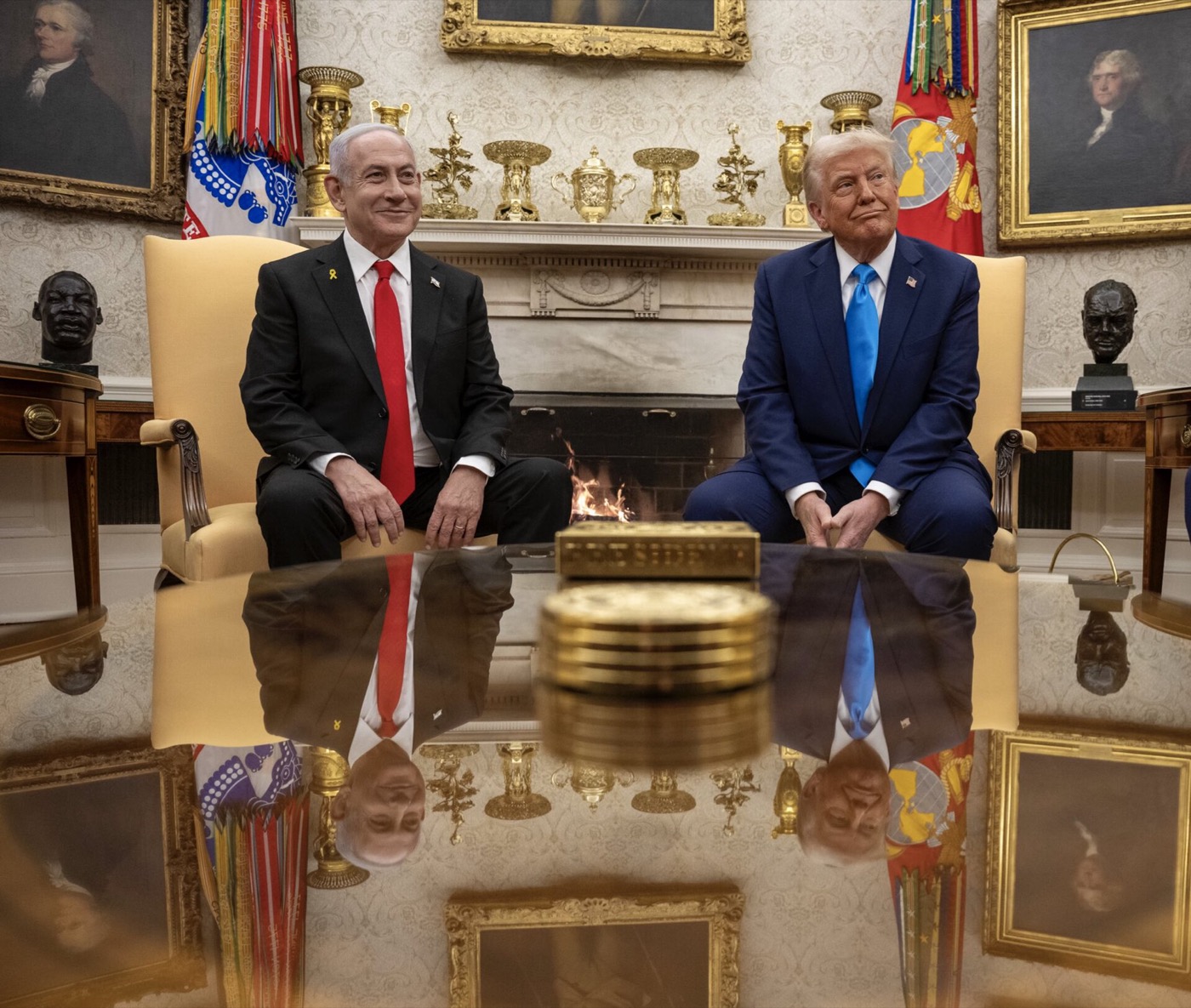
 Image: President Donald Trump meets Israeli Prime Minister Benjamin Netanyahu at the White House in 2025 - White House photo.
- Trump told ABC News that U.S.-Iran talks are still active and that officials are trying to “finish it up.”
- He framed the talks in hard leverage terms, saying the side with power wins and “we have all the power.”
- The deal is not confirmed. Axios says Trump is also trying to keep Netanyahu from pulling the U.S. back into wider war.
President Donald Trump says the United States and Iran are still negotiating terms to end the war, even as the ceasefire track is being strained by renewed Israeli and Iranian fire.
In a Monday telephone interview with ABC News, Trump said negotiations with Iran are “actively going on” and that the U.S. is trying to “finish it up.” Asked about the complexity of the talks, he rejected the idea that the issue is complicated and framed the negotiation in direct leverage terms: the side with power wins, and “we have all the power.”
The clean read: Trump is confirming an active diplomatic track. He is not confirming a signed deal, an agreed final text, or Iranian acceptance of every U.S. term.
What happened
ABC News reported the comments early Tuesday in its Iran live updates, after Trump spoke with Israeli Prime Minister Benjamin Netanyahu and warned him not to damage Washington's effort to reach a deal with Iran.
Trump said he told Netanyahu to use his judgment, but also said he did not want anything done that would hurt the deal. He also pushed back against voices calling for renewed bombing, arguing that another wide-scale U.S. campaign could lead to months of continued disruption around the Strait of Hormuz and could create a massive reconstruction bill.
The remarks came after Israel and Iran traded strikes for the first time since the April ceasefire. AP reported that the two sides appeared to pause after the exchange, but also described the situation as unstable. Axios reported that Trump had warned Netanyahu that if he went back to war, Israel could soon be fighting alone.
What the sources say
ABC has the main quote and the clearest confirmation that Trump says negotiations remain active. The president said the U.S. is trying to finish the deal and cast the talks as a test of leverage rather than a technical puzzle.
Axios supplies the behind-the-scenes pressure point. According to its reporting, Trump urged Netanyahu not to retaliate, then later warned him that Israel could lose U.S. backing if the war resumed. Axios also reported that Trump received regional calls asking him to press Netanyahu to stop.
AP gives the wider battlefield context: the April ceasefire track did not fully settle the regional war, and the latest exchange shows how quickly Lebanon, Iran, Israel, the Red Sea and Hormuz can reconnect into one crisis.
 Image: Iran nuclear talks in Vienna - Wikimedia Commons.
What is confirmed
Confirmed: Trump told ABC News that U.S.-Iran negotiations are still underway. Confirmed: he said the U.S. is trying to finish the agreement. Confirmed: he framed U.S. leverage as decisive, saying the side with power wins.
Also confirmed: the negotiation track is being tested by military events outside the negotiating room. Israel and Iran exchanged fire, and Trump spent the last 24 hours trying to keep that exchange from becoming a full-scale return to war.
What is not confirmed
Not confirmed: that Iran has accepted Trump's stated terms. Not confirmed: that Israel will stop all actions that could undermine the talks. Not confirmed: that a final settlement exists on enrichment, sanctions, uranium removal, Hormuz, reconstruction costs, Hezbollah, or the timeline for a permanent end to the war.
That distinction matters because Trump often describes deals as close before the other side publicly confirms the same thing. Axios noted that Iran's parliamentary speaker and chief negotiator has challenged recent Trump claims about what had been agreed and said Iran does not trust the other side.
Why it matters
The most important signal is not just that Trump says the talks are alive. It is that he is publicly balancing two pressures: keeping Iran at the table while limiting Israel's retaliation cycle.
If Trump truly sees the deal as close, renewed Israeli strikes become a problem for Washington, not only for Tehran. They can give Iran a reason to walk away, push regional states to demand U.S. restraint, and make any eventual agreement look like capitulation under fire.
Trump's “we have all the power” line is also a risk. It may appeal to domestic audiences and signal confidence, but it can make compromise harder for Iranian officials who have to sell any deal internally as something other than surrender.
What to watch next
Watch whether Iran publicly confirms active talks, denies Trump's version, or stays silent while mediators keep working. Silence would not prove a deal, but it would be different from a hard rejection.
Also watch Israel. If Netanyahu keeps strikes limited and Iran avoids another missile round, the diplomatic track has room. If either side resumes major attacks, Trump's leverage claim becomes less important than whether he can actually enforce restraint.
NoDechev rating: active talks confirmed by Trump, final deal not confirmed. The key test is whether military restraint holds long enough for the negotiating track to produce written terms.
Ready social post
Trump says U.S.-Iran talks are still active and that Washington is trying to finish a deal. The caveat: “we have all the power” is Trump's leverage claim, not proof that Iran has accepted final terms.
Read next: Trump tells Israel and Iran to stop shooting