

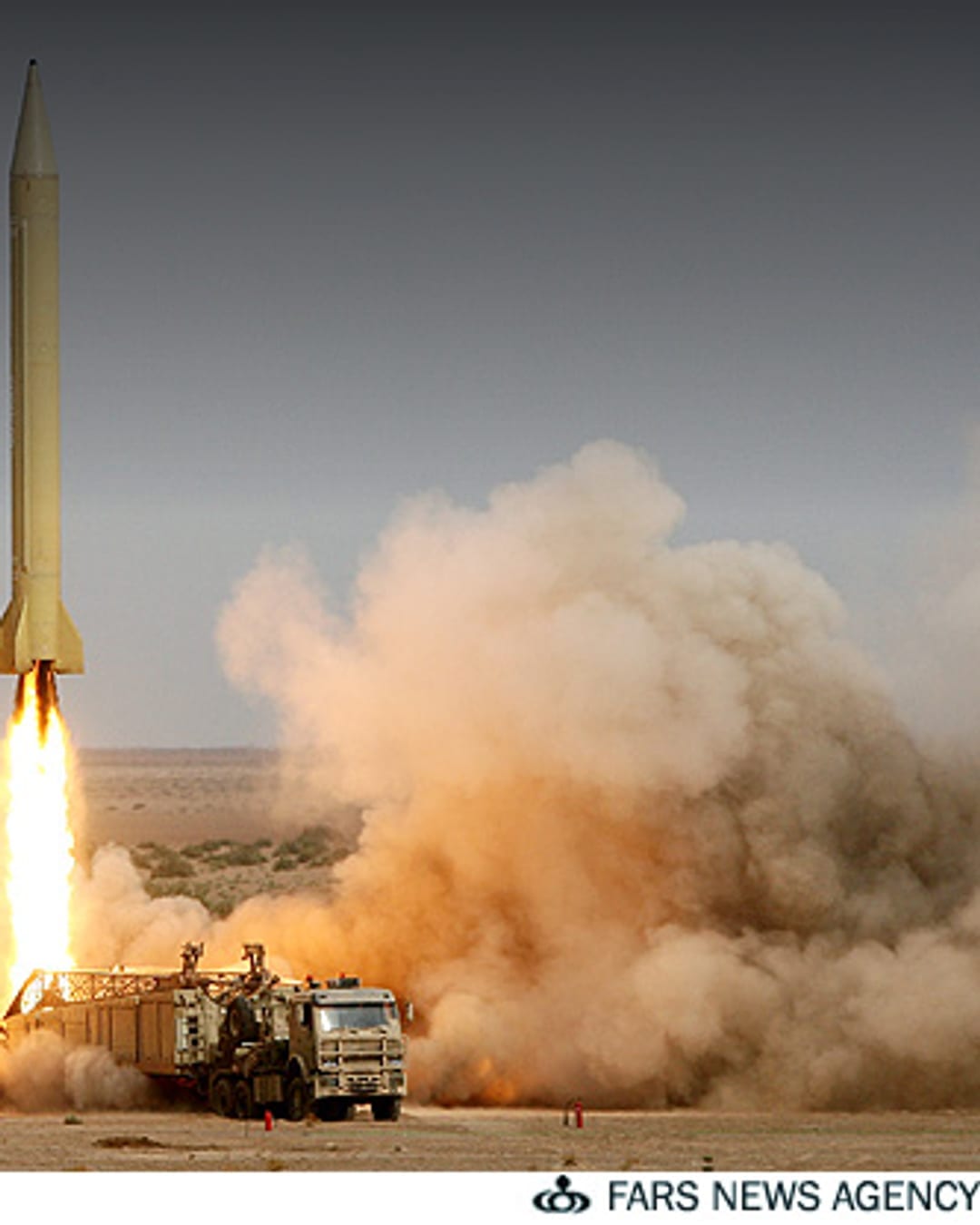
 Image: Shahab missile launch during an IRGC exercise - Satyar Emami / Fars Media Corporation / Wikimedia Commons, CC BY 4.0.
- Jordan says it intercepted Iranian missiles fired toward its territory during the latest U.S.-Iran exchange.
- The Guardian's live reporting says 20 missiles were intercepted in Jordan, with no casualties reported.
- Earlier wire reports and Iran International carried a narrower Jordanian military statement saying five missiles were shot down near Azraq.
Jordan says it shot down Iranian missiles after Tehran said it targeted U.S.-linked positions in the kingdom, adding another front to the fast-moving exchange between the United States and Iran.
The latest live reporting from The Guardian says 20 missiles were intercepted in Jordan and that no casualties were reported. Earlier Associated Press and Iran International reporting carried a more limited Jordanian military statement saying five missiles launched from Iran were intercepted near Azraq, an area associated with an air base that has hosted U.S. forces.
The clean read is this: Iran is framing the attack as retaliation against U.S. military positions; Jordan is framing the event as an air-defense interception over or toward its territory. Claims of a successful strike on a U.S. base have not been established in the public record.
What happened
The missile fire followed another round of U.S. strikes on Iranian targets and Iranian retaliation across Gulf states and Jordan. AP reported that Bahrain, Kuwait and Jordan, all countries with U.S. troop presence or U.S.-linked military infrastructure, came under Iranian fire after the U.S. launched new strikes on Iran.
Iran has said it targeted American military positions in the region. Jordan's public line is different: its forces intercepted incoming missiles, debris fell, and no casualties or material damage were reported in the earlier Jordanian statement.
The number is moving because this is a developing story. The five-missile figure came from the earlier Jordanian military statement carried by AP and Iran International. The 20-missile figure appears in later live reporting about the broader exchange.
Why Azraq matters
Azraq is sensitive because the area is tied to air-base infrastructure and has been repeatedly described in public reporting as connected to U.S. or allied military activity. That is why a missile fired toward the area instantly becomes more than a Jordan-only security incident.
For Iran, naming U.S.-linked targets lets Tehran frame the launch as retaliation against Washington rather than a direct attack on Jordan. For Jordan, the priority is sovereignty and airspace control: the kingdom has repeatedly said it will intercept projectiles that violate its territory, regardless of the wider war narrative.
 Image: U.S. Central Command seal - U.S. Central Command.
What is confirmed
Confirmed from current public reporting: Jordan intercepted missiles launched from Iran; the attack occurred during the latest U.S.-Iran strike cycle; and the targets were publicly described as U.S.-linked or U.S.-base related by Iran and regional reporting.
Also confirmed: earlier reports put the Jordanian interception count at five, while later live reporting says 20 missiles were intercepted in Jordan with no reported casualties. NoDechev is treating the 20 figure as the latest reported count, not as a final audited military tally.
What is not confirmed
Not confirmed: that Iranian missiles successfully hit a U.S. base in Jordan. Not confirmed: U.S. casualties or major base damage tied to this Jordan incident. The available public reporting points to interceptions, debris and no reported casualties.
That verification boundary is important because social posts will compress the story into "Iran hit a U.S. base." The stronger, sourced version is narrower: Iran says it targeted U.S.-linked positions; Jordan says it intercepted the missiles; casualty and damage claims remain unproven.
Why it matters
Jordan sits in the middle of a widening regional risk map. If Iranian fire keeps moving through or toward Jordanian airspace, Amman gets pulled deeper into the U.S.-Iran conflict even while trying to frame its actions as defensive airspace protection.
The escalation risk is also cumulative. A missile that is intercepted without casualties can still trigger higher alert levels, more U.S. regional deployments, more Iranian threats, and more political pressure on Jordan, Kuwait and Bahrain.
What to watch next
Watch for a direct Jordanian Armed Forces update with a final missile count, any CENTCOM statement naming the targeted installation, and Iranian state media claims about whether the attack was intended as a one-off response or a continuing pressure campaign.
NoDechev rating: interceptions confirmed by public reporting; 20 is the latest live-reported count; successful strike or U.S. casualty claims are not confirmed.
Ready social post
Jordan says it intercepted Iranian missiles after Tehran said it targeted U.S.-linked positions in the kingdom. Latest live reporting puts the Jordan interception count at 20, with no casualties reported. Successful base-hit claims remain unconfirmed.
Read next: Bahrain damage claims disputed