
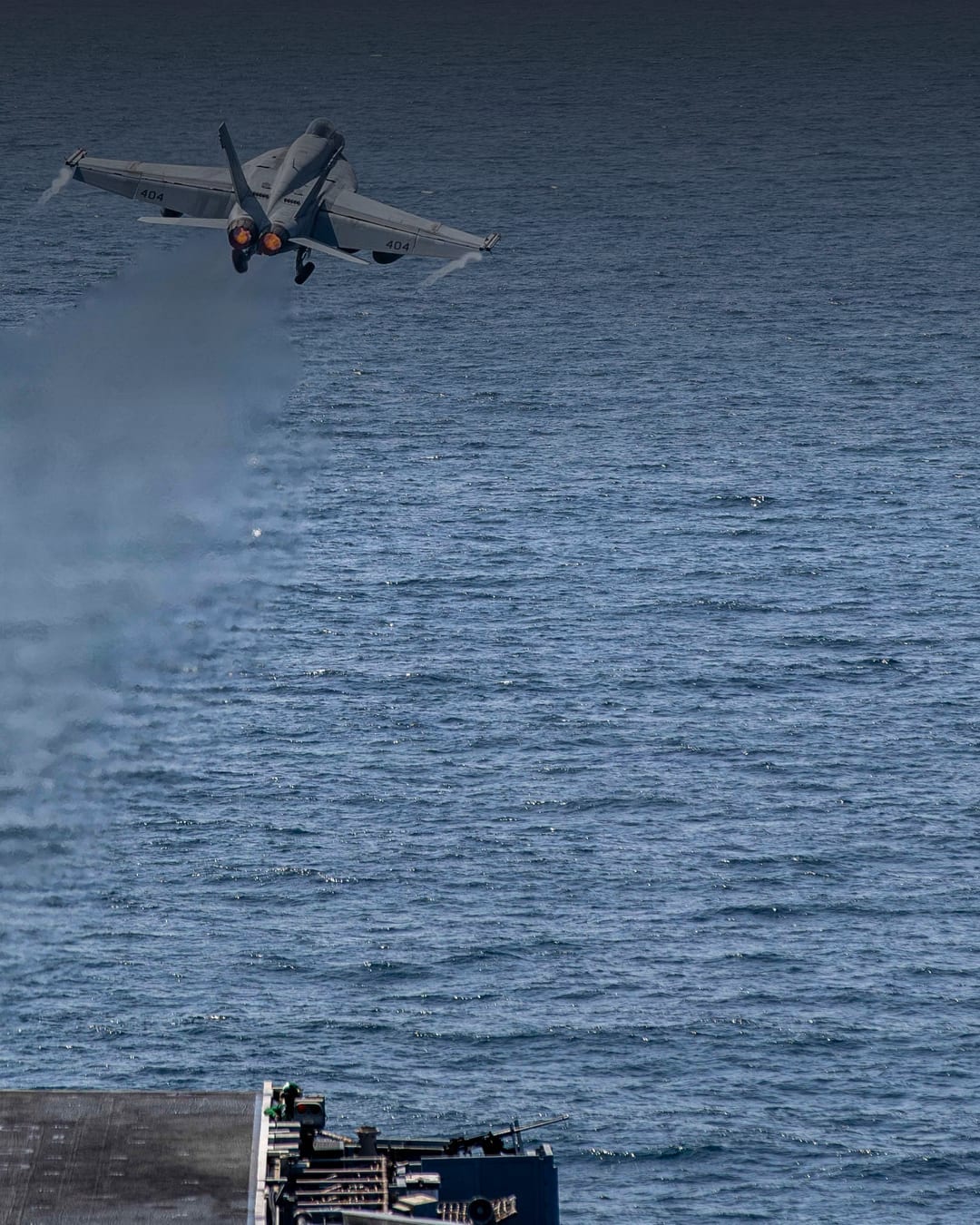
 Image: U.S. Navy F/A-18E Super Hornet launch, via Wikimedia Commons.
- Reuters reports that IRGC Quds Force contacts instructed some Iraqi militia allies to prepare secret cells for possible attacks on U.S. bases in Iraq.
- The same report says allied groups were told to identify potential targets in Bahrain, Kuwait, the UAE and Saudi Arabia if those countries or U.S. bases there are used in an attack on Iran.
- Hashd al-Shaabi said it had no official reports of Iranian-backed groups preparing to target U.S. interests; Gulf governments cited in the report did not publicly confirm the claim.
Reuters is reporting a new layer of contingency planning around Iran's regional response if the war with Israel and the United States resumes: secret cells in Iraq and target lists for Gulf countries that host U.S. military facilities.
The story should be read carefully. It is not a public IRGC declaration, and it is not independent confirmation that attacks are underway. It is a Reuters report based on two senior Iraqi security officials and two senior militia commanders describing what they say the IRGC Quds Force has instructed allied groups to prepare.
What Reuters reported
According to Reuters, the IRGC's external operations arm has expanded coordination with armed groups in Iraq during the latest escalation cycle. The report says some allied militia contacts were told to form or prepare secret cells that could attack U.S. bases in Iraq if conflict resumes.
The same Reuters account says Iran-linked contacts also asked allies to identify possible targets in Bahrain, Kuwait, the United Arab Emirates and Saudi Arabia. The condition matters: the targets were described as contingencies if those countries' militaries, or U.S. bases on their territory, become involved in an attack on Iran.
What is confirmed
Confirmed: Reuters published the report and named the source base as Iraqi security and militia figures. Confirmed: the region contains a large U.S. military footprint, including bases and facilities in Iraq and Gulf states. Confirmed: Iranian officials have publicly threatened retaliation if Iran is attacked again.
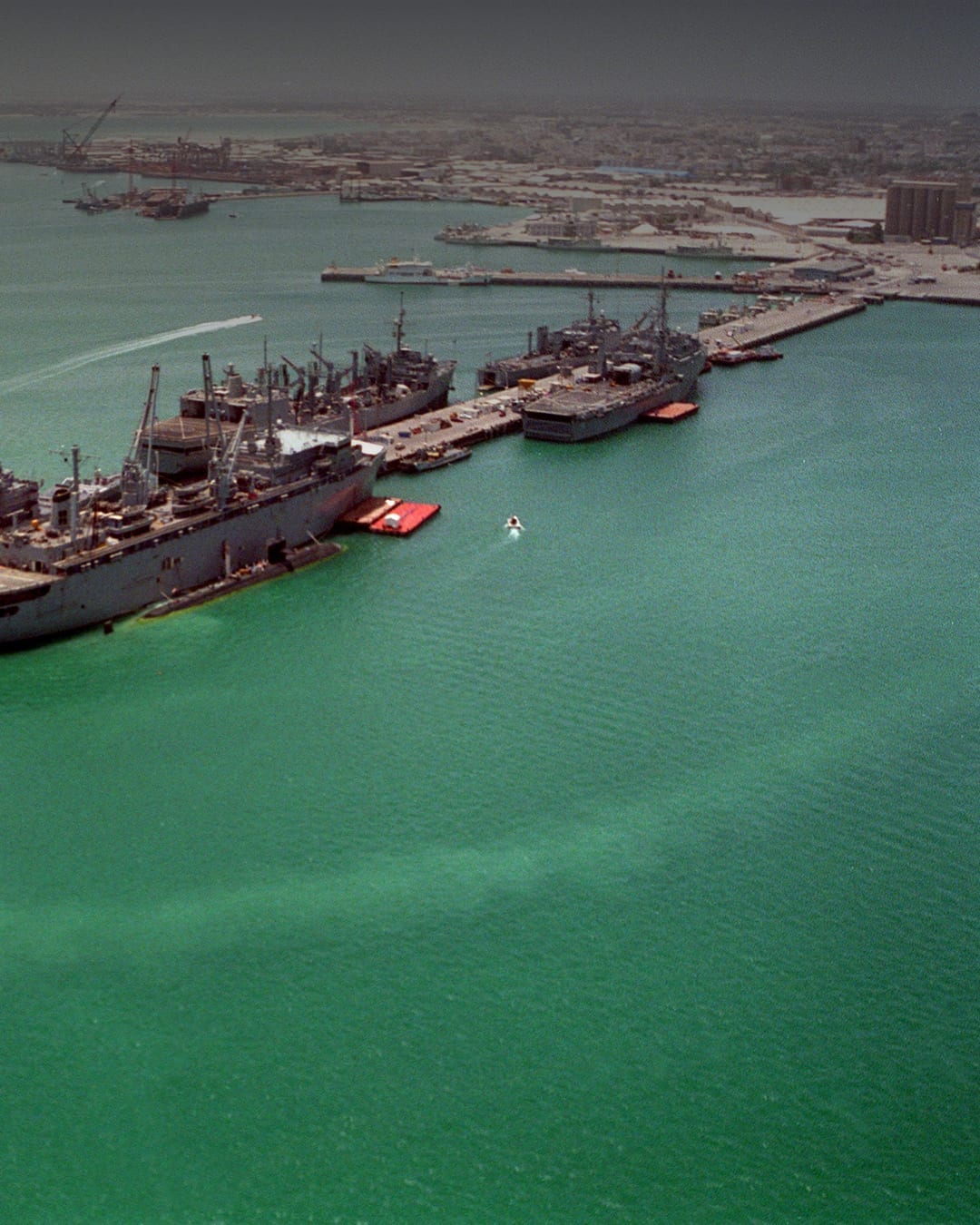
Also confirmed: U.S. bases in Bahrain, Kuwait, the UAE and Saudi Arabia have been central to previous regional security operations. That is why even reported target-identification activity matters before a missile is launched.
What is not confirmed
Not confirmed: that the IRGC publicly ordered these cells. Not confirmed: that the cells have already carried out attacks. Not confirmed: that any Gulf government has publicly verified Reuters' account. Not confirmed: that all Iraqi armed groups would follow such instructions if the order were given.
Hashd al-Shaabi, Iraq's state-linked umbrella organization for many militia forces, told Reuters it had no official reports of Iranian-backed groups planning to target U.S. interests. Saudi Arabia, the UAE, Bahrain and Kuwait did not publicly confirm the allegations in the Reuters-syndicated reports reviewed by NoDechev.
Why the Iraq angle matters
Iraq is the pressure point because Iran-backed armed groups already operate there, while U.S. forces remain present for security missions. A "secret cell" structure would be useful to any actor trying to preserve deniability, delay attribution, or hit targets without formally declaring a broader regional campaign.
That does not make every Iraqi militia an Iranian switch. Iraqi factions have their own politics, risks and incentives. But Reuters' report points to the part of the escalation ladder that is hardest to monitor: proxy preparation before a visible attack.
Why Gulf states are in the frame
The Gulf countries named in the report matter because they host, or have hosted, U.S. military infrastructure that could support regional operations. If an attack on Iran uses aircraft, logistics, surveillance or command support from those facilities, Tehran may treat the host country as part of the battlefield.
That is the strategic warning embedded in the Reuters story. Iran may not need to hit the U.S. mainland to raise the cost of another war round. It can threaten the local nodes that make U.S. operations in the Gulf possible.
What to watch next
Watch for U.S. force-protection alerts in Iraq and the Gulf, evacuation guidance for diplomatic staff, public militia statements, rocket or drone incidents near bases, and Gulf government advisories around airspace or military sites.
Also watch the political language from Washington and Tehran. If either side starts naming host countries directly, the risk moves from contingency planning toward public deterrence.
NoDechev rating: Reuters-reported contingency plan, not independently confirmed operational activity. The claim is serious because it concerns U.S. bases and Gulf host countries, but the public evidence is still source-based, not documentary.
Ready social post
Reuters reports that Iran's IRGC Quds Force told allied Iraqi militias to prepare secret cells and identify targets in Gulf countries hosting U.S. military facilities if war resumes. Big caveat: this is Reuters-sourced reporting, not a public IRGC order or confirmed attack.
Read the IRGC explainer