
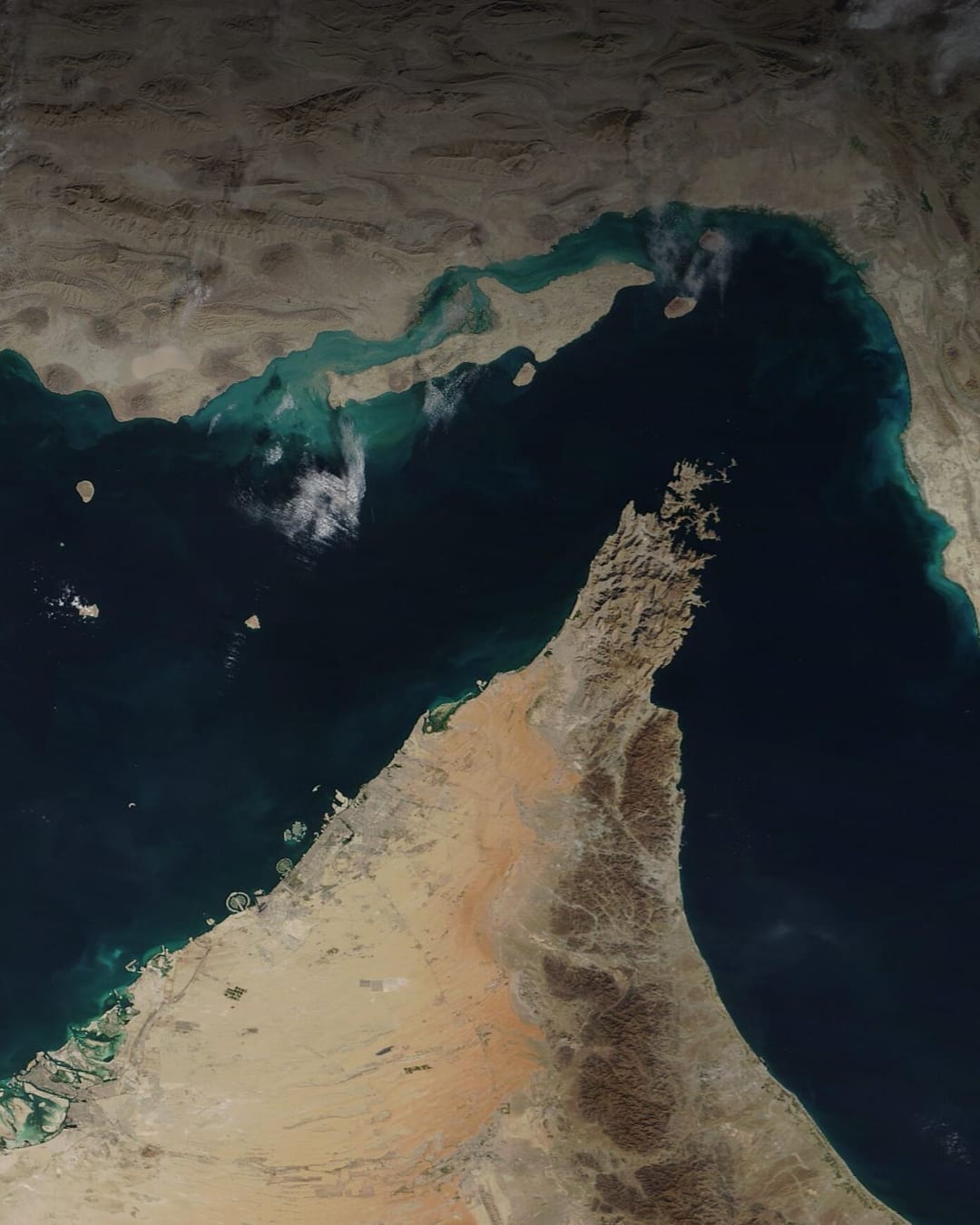
 Image: Strait of Hormuz satellite view, via Wikimedia Commons.
- CBS News says a White House official confirmed the U.S. and Iran remotely signed the memorandum and that it is now in effect.
- The deal reopens the Strait of Hormuz and creates a 60-day negotiating window around Iran's nuclear program.
- Reports describe economic incentives for Iran, including oil-sales relief, sanctions waivers and potential asset access, but implementation remains the hard part.
Trump's Iran deal is no longer just a reported framework. U.S. and Iranian officials say the interim memorandum has been signed, and CBS News reported that a White House official said the MOU is now in effect.
The headline version is simple: reopen Hormuz, reduce immediate war risk, give Iran economic incentives, and use the next 60 days to negotiate nuclear limits. The cleaner NoDechev read is more cautious: this is a signed interim MOU, not a final peace deal or a completed nuclear agreement.
What happened
ABC's Good Morning America summarized the new agreement as a deal signed by President Trump that will reopen the Strait of Hormuz, provide financial incentives to Iran, and lay the groundwork for 60 days of talks on Iran's nuclear program.
CBS News separately reported that the Trump administration released the 14-point memorandum of understanding and that a White House official confirmed the U.S. and Iran had signed it remotely. CBS said the official described the MOU as now in effect.
What the deal appears to do
The agreement is built around immediate de-escalation and a short negotiating runway. It is meant to reopen maritime traffic through the Strait of Hormuz, ease pressure on Iranian oil sales, and create a 60-day period for talks over nuclear restrictions.
Al Jazeera's breakdown of the 14-point plan says the memorandum covers Lebanon, Hormuz and uranium, but also leaves important questions unanswered. AP's explainer says the initial agreement would allow Iran to sell oil freely through sanctions waivers while Tehran works on limits around its highly enriched uranium stockpile.
The incentive side
The economic side is what makes the deal politically explosive. Reports describe sanctions waivers, oil-sales relief, financial incentives and possible access to frozen assets. Those measures are designed to make a 60-day negotiating window attractive enough for Tehran to keep the strait open and stay at the table.
But incentives are not the same as completed transfers. Watch the difference between a waiver, an authorization, a pledge, an unfrozen asset and money actually moving. Those are separate steps, and each can become a dispute.
The Hormuz problem
Reopening the Strait of Hormuz is the immediate market story. The waterway is one of the world's most important energy chokepoints, so even partial reopening can move oil, shipping and insurance expectations.
The unresolved issue is what "reopen" means in practice. Iran has already said it may charge ships after a 60-day fee-free period. That means the MOU can reduce the immediate blockade crisis while still leaving a fight over future shipping fees, enforcement and maritime rules.
What is confirmed
Confirmed: U.S. and Iranian officials say the memorandum was signed. Confirmed: CBS reports the White House described it as in effect. Confirmed: the agreement creates a 60-day period for further talks.
Also confirmed: this is not a final nuclear agreement. Trump has warned that U.S. attacks could resume if Iran violates the deal or if the follow-on talks fail.
What is not confirmed
Not confirmed: that all financial incentives will be delivered without delay. Not confirmed: that Hormuz will stay open without new fee disputes. Not confirmed: that Iran's uranium commitments will be verified smoothly by the IAEA. Not confirmed: that the Lebanon-related parts of the deal will hold.
That is the core risk: the signing lowers immediate pressure, but implementation can still break on sanctions, shipping, uranium or regional proxies.
What to watch next
Watch for the exact 14-point text, White House implementation orders, Iranian oil-sales guidance, IAEA verification steps, shipping advisories for Hormuz, and any statement from Israel or Hezbollah on the Lebanon provisions.
NoDechev rating: signed interim deal, high implementation risk. The MOU is real and reportedly in effect; the question is whether Hormuz, sanctions relief and nuclear talks survive the 60-day window.
Ready social post
Trump's Iran deal is signed and reportedly in effect. It reopens Hormuz, gives Iran economic incentives, and starts 60 days of nuclear talks. Caveat: this is an interim MOU, not a final settlement. Implementation is the real test.
Read next: Iran says Hormuz fees may come after 60 days