

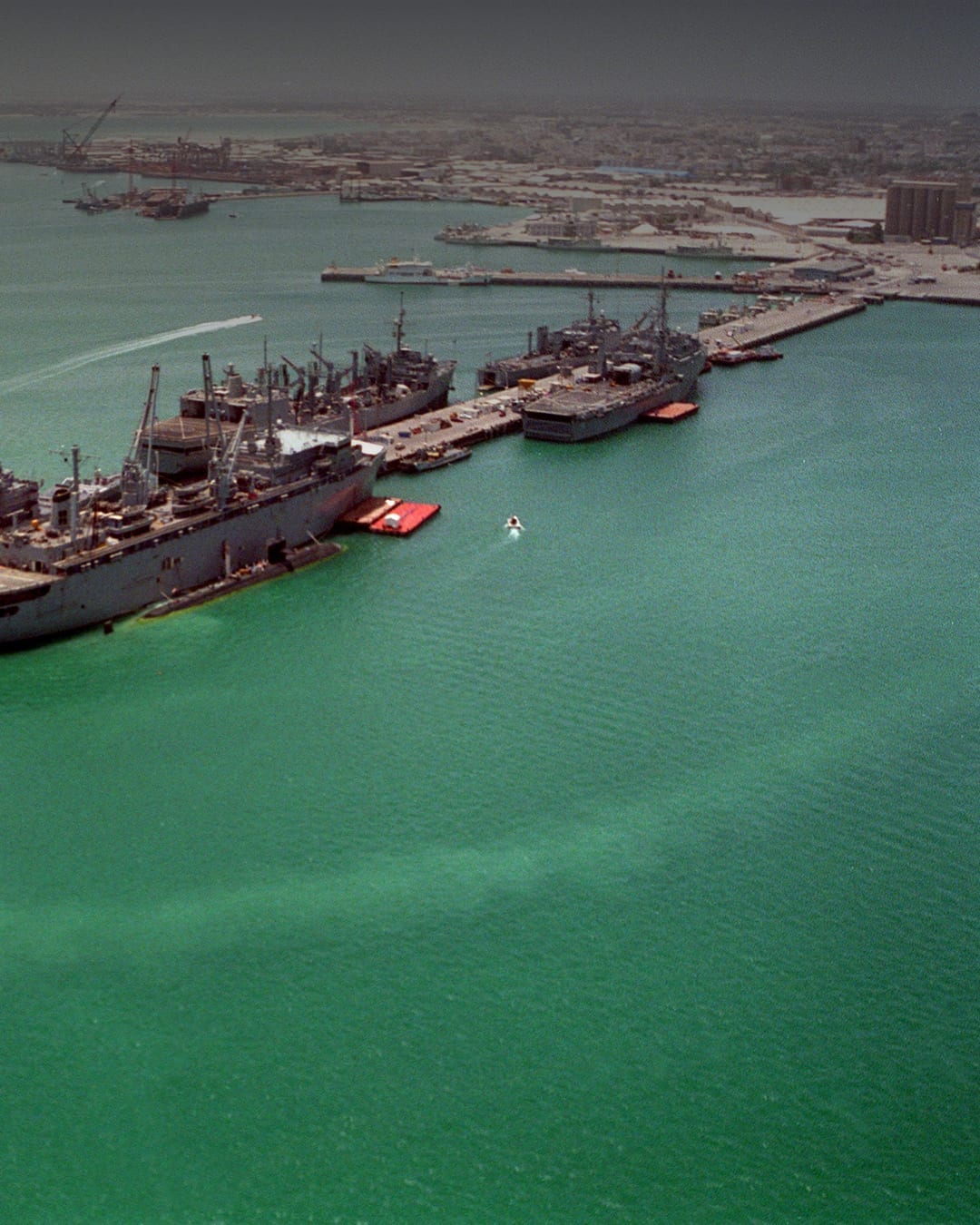
 Image: U.S. Navy ships at Naval Support Activity Bahrain, via Wikimedia Commons.
- AFP-syndicated reports say Iran repeated it will charge ships crossing Hormuz after a 60-day fee-free period in the U.S.-Iran MOU.
- Mohammad Bagher Ghalibaf said Hormuz would not return to pre-war conditions and framed the charge as a fee for services.
- The claim is about future charges after the interim period, not proof that ships are already paying today.
Iran has repeated that it plans to charge ships crossing the Strait of Hormuz after a 60-day fee-free period contained in the U.S.-Iran memorandum of understanding, according to AFP-syndicated reports carried by NDTV, Dawn and The Times of Israel.
The line matters because earlier U.S.-side framing emphasized reopening Hormuz without tolls. Tehran is now drawing a different boundary: commercial passage may be free during the interim period, but Iran says the waterway will not simply return to the pre-war status quo.
What happened
Mohammad Bagher Ghalibaf, Iran's parliament speaker, said on state television that Hormuz would remain fee-free for 60 days under the MOU.
After that, he said Iran would charge ships for services. The key wording is not that a toll has already started today. It is that Tehran is reserving a post-60-day payment mechanism and presenting it as a sovereignty issue.
The quote that matters
Ghalibaf said the Strait of Hormuz would not return to pre-war conditions and argued Iran had a sovereign right over the strait. He added that Iran would receive a fee for services.
That wording is deliberate. Calling the charge a service fee, rather than a pure toll, gives Tehran a legal and political frame. Maritime-law experts and Western officials are likely to contest that frame, especially if the charge looks like payment for ordinary transit rather than specific services actually provided to ships.

What is confirmed
Confirmed: multiple outlets carried the AFP report on June 18, 2026. Confirmed: the reported Iranian position is a 60-day fee-free period followed by charges for services. Confirmed: this comes in the context of the new U.S.-Iran MOU and the fragile ceasefire/deal track.
Also confirmed: the U.S. side has previously pushed for Hormuz to reopen without tolls. That makes the new Iranian language a direct implementation fight, not a small technical footnote.
What is not confirmed
Not confirmed: the size of the future fee. Not confirmed: whether it would apply to every ship, only some categories, or vessels using specific Iranian services. Not confirmed: whether Washington, shipping insurers or major flag states would accept the mechanism.
Also not confirmed: whether the 60-day interim period ends with a final agreement, an extension, or a new confrontation over shipping rules.
Why it matters
The Strait of Hormuz is one of the world's most important energy chokepoints. Even a limited payment system could raise shipping costs, insurance concerns and diplomatic pressure around oil and LNG flows from the Gulf.
For Trump, the issue is political as well as commercial. A deal sold as reopening Hormuz without tolls becomes harder to defend if Tehran openly says fees are coming after the interim window.
What to watch next
Watch for the written MOU language, U.S. reaction to Iran's service-fee claim, maritime advisories, shipping-industry guidance and any Iranian regulation defining the fee amount or enforcement mechanism.
NoDechev rating: confirmed Iranian position, future implementation unresolved. Iran says it will charge ships after 60 days; the fee amount, legal basis, enforcement and U.S. response remain open.
Ready social post
Iran says ships crossing the Strait of Hormuz will be fee-free for 60 days under the U.S.-Iran MOU, then face charges for services. Caveat: this is Tehran's stated future position, not proof that ships are already paying today.
Read next: U.S.-Iran ceasefire agreement signed