

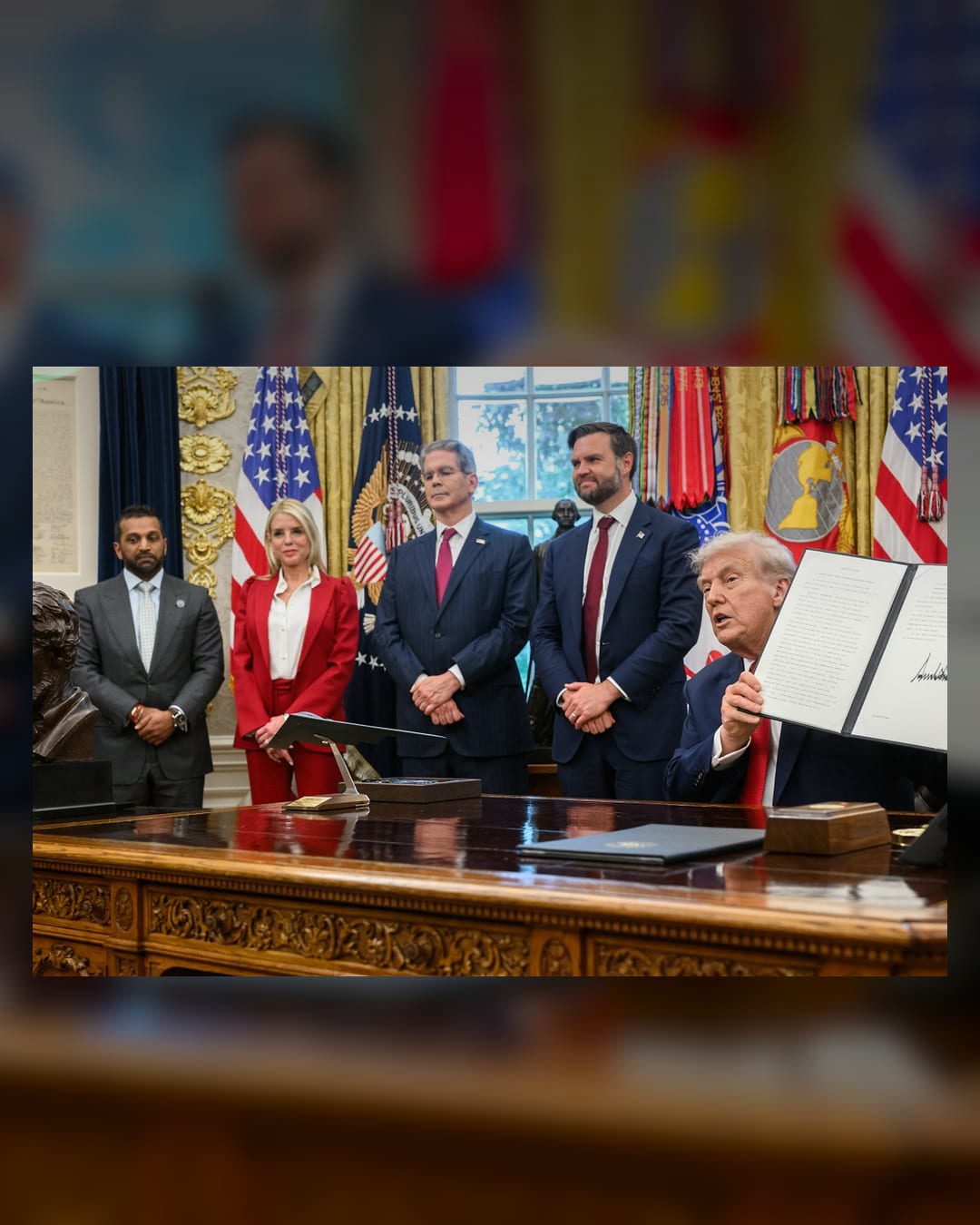
 Image: President Donald Trump holds up a signed document in the Oval Office - Official White House Photo by Joyce N. Boghosian, public domain.
- Trump said a U.S.-Iran deal was scheduled to be signed Sunday and would reopen the Strait of Hormuz.
- Iranian Foreign Ministry spokesman Esmaeil Baqaei said no agreement would be signed Sunday, according to state-media comments cited by The Washington Post.
- The clean caveat: Iran is rejecting the deadline, not necessarily ending the negotiation track.
Iran is pushing back on President Donald Trump's timeline for a U.S.-Iran deal, saying no agreement will be signed by the Sunday deadline Trump publicly set.
The dispute is about timing and confirmation. Trump and Pakistani mediators have described a deal as close. Iran has not publicly confirmed Trump's signing schedule, and its foreign ministry has said no agreement would be signed Sunday.
What Trump said
Trump said Saturday that the deal was scheduled to be signed Sunday and that the Strait of Hormuz would reopen immediately after signing. Pakistan's prime minister, Shehbaz Sharif, also said the two sides were closer than ever to a peace deal, with finalization likely expected by Sunday.
The expected framework, according to U.S.-side reporting, would extend the ceasefire, reopen Hormuz and create a 60-day negotiation window around Iran's nuclear program and sanctions relief.
What Iran is saying
The Washington Post reported that Iranian Foreign Ministry spokesman Esmaeil Baqaei said no agreement would be signed Sunday, while not ruling out a possible deal in the days ahead.
That matches Iran's broader public posture in recent weeks: talks may be moving, but Tehran does not want the final timeline dictated by Trump's public deadline or by U.S. domestic political timing.
What is confirmed
It is confirmed that Trump publicly said a Sunday signing was scheduled. It is also confirmed from multiple reports that Iranian officials have not matched that claim with their own public confirmation.
Axios reported Sunday that Trump still said the deal was on track despite Israel's strike in Beirut, but also noted that Iranian officials had not confirmed that a deal was expected to be signed that day.
What is not confirmed
There is still no published joint signed text. There is also no final public schedule showing who would sign, where the signing would happen, what legal instrument would be used, or when sanctions relief and Hormuz obligations would take effect.
That matters because "deal close," "deal agreed," "deal scheduled" and "deal signed" are different stages. The public story has moved faster than the verifiable paper trail.
Why it matters
The Trump deadline created a high-pressure political clock. A Sunday signature would let Washington claim a ceasefire-to-deal breakthrough quickly. Iran's refusal to accept that timeline signals that Tehran still wants leverage over the final terms and optics.
Markets, regional governments and shipping companies will care less about the rhetoric and more about the operational details: Hormuz access, insurance, sanctions waivers, banking channels and whether both sides publicly bind themselves to the same document.
What to watch next
Watch for matching statements from Tehran and Washington, any Pakistani or Qatari mediator readout, and a published memorandum or signing notice. Without that, the deal remains close but unfinalized.
The clean read: Iran is not saying diplomacy is over. It is saying Trump's Sunday deadline is not Iran's confirmed signing deadline.
NoDechev rating: confirmed timeline dispute. Trump's Sunday-signing claim is real; Iran's public confirmation is missing, and Iranian officials say no deal will be signed Sunday.
Ready social post
Iran says no U.S.-Iran deal will be signed by Trump's Sunday deadline. The caveat: Tehran is rejecting the timeline, not necessarily saying the negotiation track is dead.
Read next: the oil sanctions relief claim