
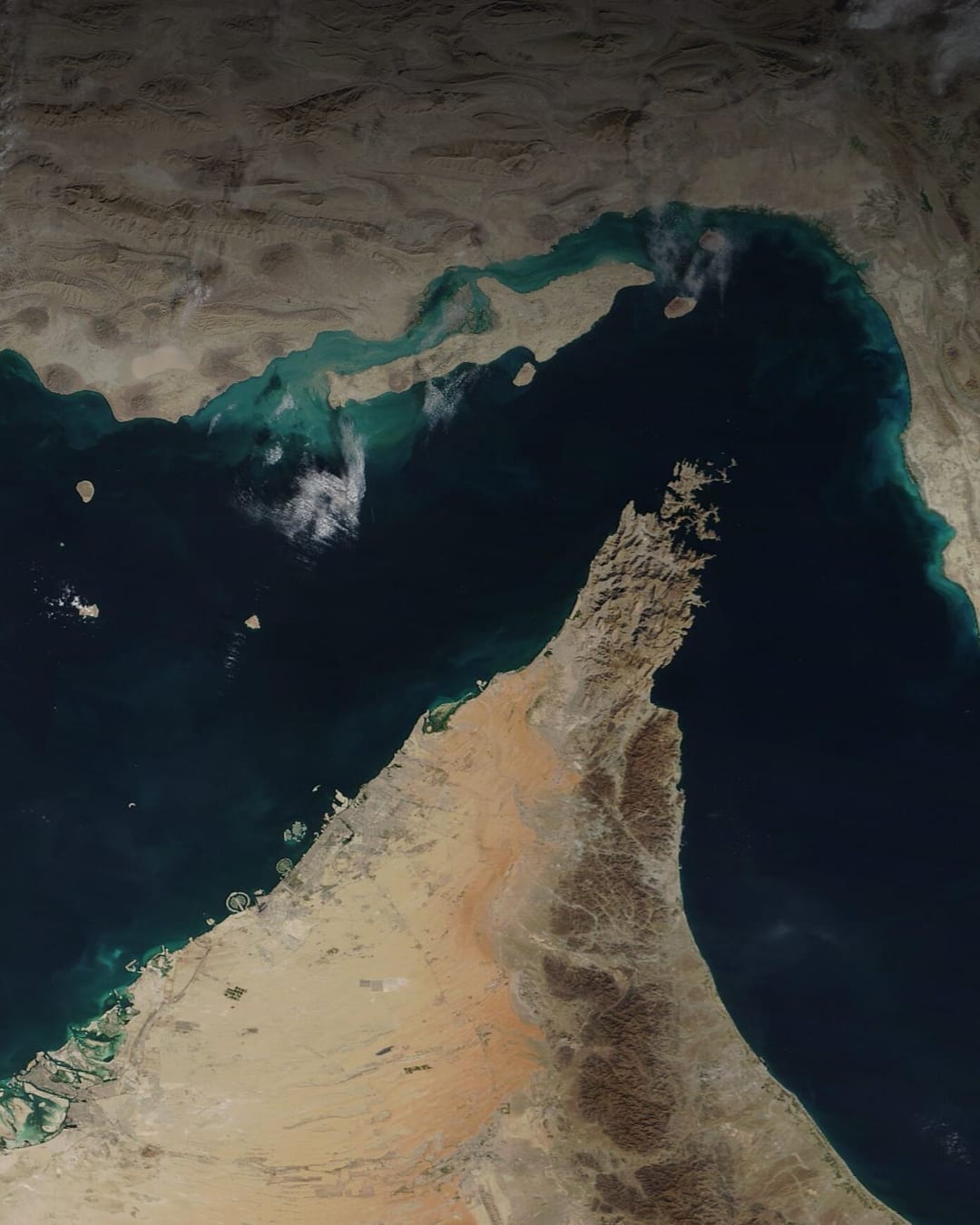
 Image: Satellite view of the Strait of Hormuz, NASA/MODIS via Wikimedia Commons, local normalized asset.
- Iran is reportedly proposing a Hormuz fee system that could generate about $40 billion a year for participating countries.
- The fees would be framed as payment for security, safety and environmental services, not a simple toll label.
- Gulf states, the U.S. and maritime-law experts are likely to fight any system that looks like mandatory payment for passage.
- The clean caveat: this is a proposal and bargaining position, not a fully accepted international regime.
Iran is pushing a plan to charge ships passing through the Strait of Hormuz for security, safety and environmental services, with Gulf neighbors potentially sharing in a system that Tehran estimates could generate about $40 billion a year, according to reports citing the Wall Street Journal.
The framing is important. Iran is not just saying, "we want a toll booth." It is trying to describe a long-term services mechanism for one of the world's most important energy chokepoints. That wording is designed to make the plan sound more like maritime management than extortion.
What Iran is proposing
The reported plan would make ships pay fees tied to services in the Strait of Hormuz: security, safety, environmental protection and possibly traffic coordination. Tehran wants Gulf states involved, which would make the system harder to dismiss as Iran acting alone.
The figure being circulated is about $40 billion a year for countries involved in the arrangement. If implemented, that would give Iran and participating neighbors a new revenue stream and a new layer of control over traffic through the Gulf's main exit.
Why this is different from the earlier 60-day fee story
Last week, Iran's position was that ships would pass fee-free for 60 days under the U.S.-Iran memorandum track, then face charges for services. This new report is the bigger version of that same idea: not a temporary post-war fee, but a long-term management model for Hormuz.
That is the escalation. Iran is no longer only reserving the right to charge after an interim period. It is reportedly shopping a regional structure that could normalize payment for passage-related services.
The legal fight
The strongest objection is simple: international waterways are not supposed to become mandatory pay-to-pass corridors. The Guardian reported that Gulf states and Western countries have warned against fees or tolls that would breach core law-of-the-sea principles.
Oman appears to be trying to keep any future arrangement closer to voluntary contributions for environmental and safety services, which is a very different legal posture from Iran forcing ships to pay before they move.
Why Gulf neighbors matter
Iran needs more than a price list. It needs legitimacy, enforcement and regional buy-in. If Saudi Arabia, Qatar, Oman and other Gulf actors reject the scheme, the plan looks like unilateral pressure. If some participate, even cautiously, it becomes a negotiation over rules rather than a rejected threat.
That is why the Gulf-neighbor angle matters. Tehran is trying to turn wartime leverage into a regional governance question: who manages Hormuz, who pays for security, and who gets to decide what "safe passage" costs.
What is confirmed
Confirmed: multiple outlets are reporting that Iran is exploring a fee plan for Hormuz services and that the projected revenue figure is about $40 billion a year. Confirmed: the discussion comes after the U.S.-Iran memorandum that included a 60-day no-fee period. Confirmed: the IMO, Oman and Gulf states are already involved in a dispute over shipping routes and future administration of the strait.
Also confirmed: U.S. officials have opposed treating Hormuz as a toll corridor. The core U.S. position remains that commercial shipping should be able to transit international waterways without coercive fees.
What is not confirmed
Not confirmed: the exact fee per ship, whether payment would be mandatory, which countries would share revenue, or whether the International Maritime Organization would accept any version of the system. Not confirmed: whether major shipping companies, insurers or flag states would comply.
Most importantly, the $40 billion number is an estimate attached to a proposal. It is not actual money being collected today.
Why it matters
The Strait of Hormuz carries a major share of global oil and liquefied natural gas flows. Even a limited fee mechanism could raise costs, increase insurance risk and give Iran a standing pressure point over energy markets.
The political signal is just as large. Iran is saying that after proving it can disrupt Hormuz, the post-war settlement should not restore the old status quo for free. The U.S. and Gulf states are trying to prevent that leverage from hardening into a permanent rulebook.
What to watch next
Watch Oman, because its version of a services system may be the compromise path. Watch the IMO, because any formal shipping-lane or safety framework needs technical legitimacy. And watch Rubio and the Gulf capitals, because their reaction will show whether this is dead on arrival or entering serious negotiation.
NoDechev rating: real proposal, unresolved implementation. Iran is reportedly pitching a Hormuz services-fee system worth up to about $40 billion a year; the legal basis, enforcement model and Gulf-state support are still open questions.
Ready social post
Iran is reportedly pitching Gulf neighbors on a Strait of Hormuz services-fee system that could generate about $40B a year. Key caveat: this is a proposal and leverage play, not an accepted toll regime or confirmed money flow today.
Read next: Iran's earlier 60-day fee position ->