
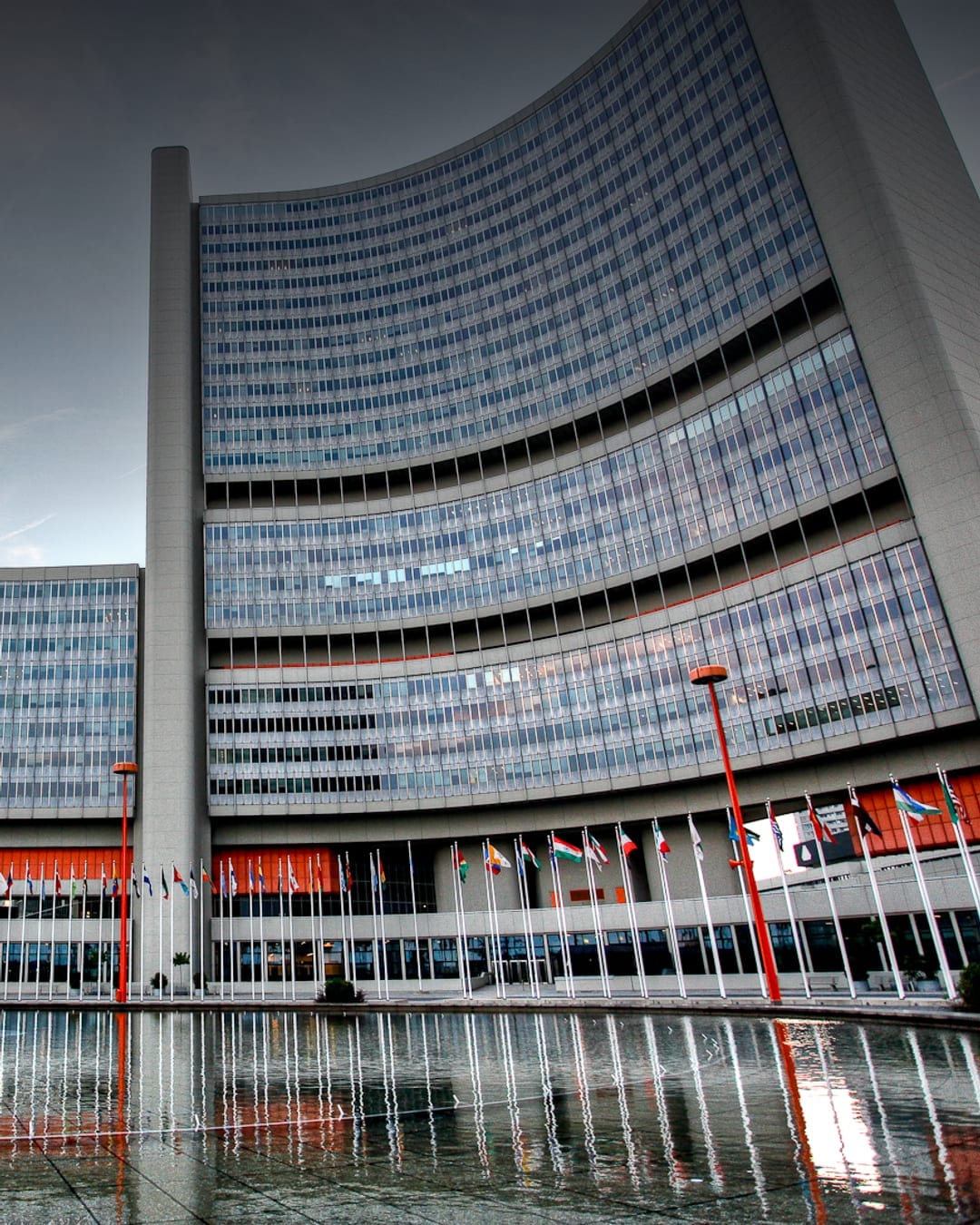
 Image: Vienna International Centre, headquarters of the International Atomic Energy Agency - IAEA Imagebank / Wikimedia Commons.
- A senior Iranian official told Reuters the final draft memorandum says Iran will neither produce nor acquire nuclear weapons.
- The same draft reportedly leaves the uranium-dilution mechanism to talks over the next 60 days.
- That makes the nuclear-weapons commitment significant, but not the same as a fully published verification regime.
Iran has reportedly accepted the clearest nuclear-weapons language yet in the emerging U.S.-Iran deal track: Tehran would neither produce nor acquire nuclear weapons under the final draft memorandum.
That is a major headline term, but it should not be confused with a finished technical nuclear agreement. The draft commitment answers the political question. The operational question - how Iran's enriched uranium is diluted, monitored and verified - is still being negotiated.
What happened
The Jerusalem Post, citing Reuters, reported that a senior Iranian official said the final draft memorandum with the United States includes a commitment that Tehran will neither produce nor acquire nuclear weapons.
The same official said the United States agreed in the draft memorandum that Iran would dilute its highly enriched uranium stockpile inside Iran, with the mechanism to be discussed over the next 60 days.
A separate Axios report says the framework extends the ceasefire, reopens the Strait of Hormuz track and gives the sides 60 days to reach a technical agreement on down-blending Iran's highly enriched uranium and monitoring its nuclear program going forward.
What the sources say
Reuters/Jerusalem Post frames the nuclear-weapons ban as a term confirmed by a senior Iranian official. That matters because earlier versions of the story leaned heavily on Trump-side announcements and mediator statements.
The Guardian's explainer is more cautious. It says the fate of Iran's nuclear program has not been resolved by the latest agreement and notes that broader nuclear talks are still expected over the next 60 days.
That is the clean synthesis: a draft commitment against producing or acquiring nuclear weapons is reported; the details that would make that commitment verifiable are still not fully public.
What is confirmed
Confirmed: Reuters-linked reporting says a senior Iranian official described the final draft memorandum as barring Iran from producing or acquiring nuclear weapons. Confirmed: the draft includes talks over diluting Iran's highly enriched uranium. Confirmed: the broader agreement track involves a 60-day window for technical negotiations.
Also confirmed: Trump and mediators are presenting the deal as a major ceasefire and de-escalation framework, while Iran-linked officials are now discussing the memorandum text instead of only denying a deal.
What is not confirmed
Not confirmed: the full signed text, the inspection rules, the exact uranium stockpile disposition, the monitoring authority, the sanctions snapback terms or what happens if Iran and the U.S. disagree over compliance.
Also not confirmed: whether the commitment is enforceable immediately or becomes binding only after the Friday signing and the follow-on technical agreement. That distinction matters because nuclear nonproliferation deals live or die on verification, not slogans.
Why it matters
The phrase "neither produce nor acquire" is stronger than a vague promise not to seek a bomb. It covers both domestic weapons production and obtaining a weapon from outside sources.
But the core dispute remains the same one that has defined Iran diplomacy for years: whether the outside world can verify that Iran's nuclear program stays civilian. That requires access, monitoring, uranium accounting, enrichment limits and a penalty structure if the deal is broken.
What to watch next
Watch the signing language first. If the final text uses the same "produce or acquire" language and attaches it to clear verification steps, the story moves from political pledge to enforceable framework.
Then watch the 60-day technical talks. The decisive details will be the uranium dilution mechanism, inspection access, monitoring continuity and whether sanctions relief is tied to measurable nuclear steps.
NoDechev rating: serious reported draft commitment, verification unresolved. The nuclear-weapons ban is important, but the final test is the published text and the 60-day technical mechanism.
Ready social post
A senior Iranian official says the final draft U.S. deal commits Iran to neither produce nor acquire nuclear weapons. The key caveat: verification, uranium dilution and enforcement still need the 60-day technical agreement.
Read next: What is enriched uranium?