
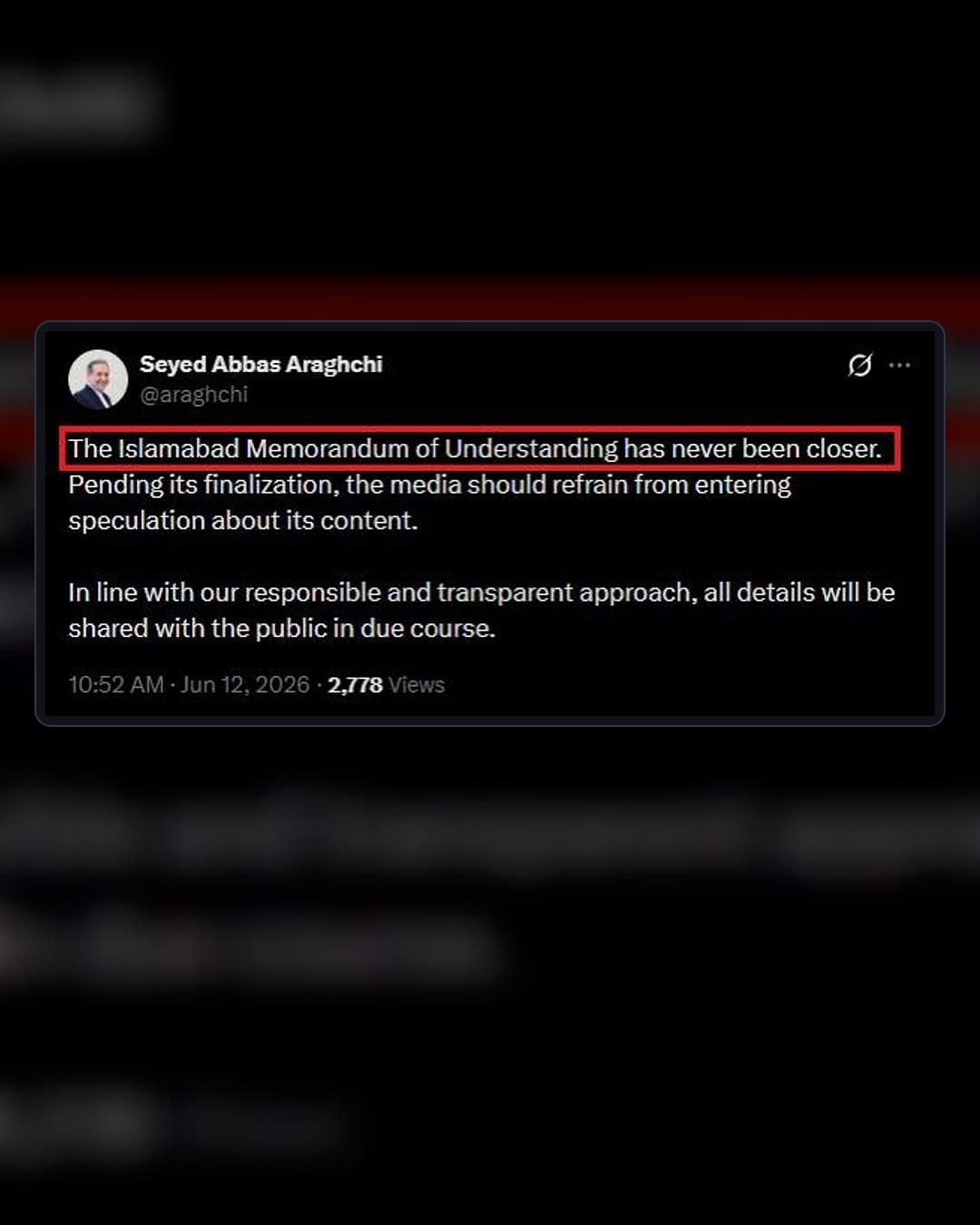
 Image: screenshot of Abbas Araghchi's public post on the Islamabad Memorandum of Understanding, supplied to NoDechev.
- Iranian Foreign Minister Abbas Araghchi says the Islamabad Memorandum of Understanding has "never been closer."
- He also urged media outlets not to speculate on the contents before finalization.
- The clean checkpoint remains unchanged: a shared public text, matching U.S.-Iran language, and clear sequencing on sanctions, shipping and security terms.
Iranian Foreign Minister Abbas Araghchi says the Islamabad Memorandum of Understanding is now close to completion, a public signal that the U.S.-Iran diplomatic track has moved beyond simple denial and into near-finalization language from Tehran.
The wording matters because it comes after a messy day of competing narratives. Earlier Iranian state-linked reporting described broad deal terms. President Donald Trump pushed back on that portrayal, saying the reported Iranian version did not match what Washington had agreed to in writing. Araghchi's new line tries to pull the story back toward process: the memorandum is close, but details should not be treated as final until they are released.
What happened
Araghchi posted that the Islamabad memorandum has "never been closer," while saying media outlets should avoid speculation until the document is finalized. He added that Iran would share details publicly in due course.
Times of Israel reported the post as a sign that the U.S.-Iran MOU to extend the fragile ceasefire and launch additional nuclear talks is on the verge of being signed. The Guardian's live file also carried the development, framing it as part of the same fast-moving dispute over deal terms.
That makes this a real update, not just a recycled claim. The prior checkpoint was that Iranian state media was describing terms. The new checkpoint is that Iran's foreign minister is publicly saying the Islamabad MOU itself is near finalization.
What is confirmed
It is confirmed that Araghchi publicly used near-finalization language for the Islamabad MOU and urged restraint on speculation about its contents. It is also confirmed that multiple outlets are treating the memorandum as part of the U.S.-Iran ceasefire and nuclear-talks track.
Axios has reported that the framework under discussion includes a 60-day ceasefire extension, reopening the Strait of Hormuz without tolls, sanctions relief tied to compliance, and further nuclear negotiations. CBS and the Guardian have reported that Trump disputed some Iranian media descriptions of the terms.
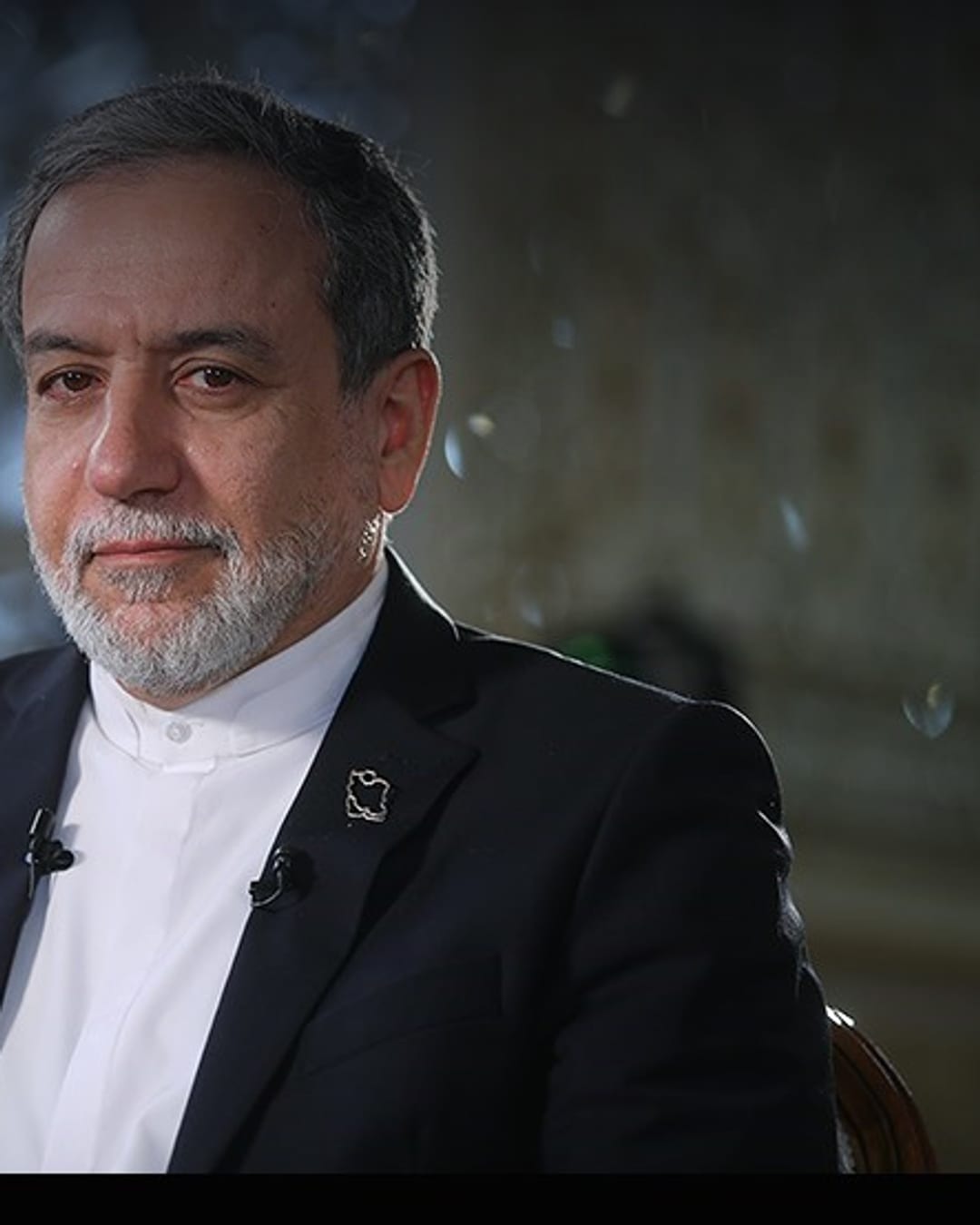 Image: Abbas Araghchi in 2024 - Tasnim News Agency / Wikimedia Commons, CC BY 4.0.
What is not confirmed
No final public text has been released in the source trail reviewed here. No shared U.S.-Iran document has been published with signatures, deadlines, enforcement language, sequencing and verification rules.
That distinction is important. "Never been closer" is a diplomatic signal. It is not the same as "signed," "implemented," or "published." The story is moving in the direction of a deal, but the public record is still missing the document that would settle the argument over terms.
Why it matters
The Islamabad MOU is now the document to watch because it appears to be the bridge between the ceasefire track and the harder questions: sanctions relief, shipping through Hormuz, U.S. military posture, frozen funds and Iran's nuclear commitments.
If the memorandum is signed and both sides use the same language, the story changes from claims and denials into a concrete diplomatic framework. If the document slips again, or if Washington and Tehran describe it differently, the "nearer than ever" signal becomes another pressure tactic rather than a settled breakthrough.
What to watch next
The next clean signals are a signing location, a public text, and matching statements from Washington and Tehran. Watch also for practical movement around Hormuz and sanctions, because those are the terms markets and regional governments will treat as real-world proof.
NoDechev rating: stronger Tehran-side signal, still not a final public deal. Treat the Islamabad MOU as near-final until both governments publish or acknowledge the same text.
Also Read
The previous brief tracked the Iranian state-media description of the possible deal terms. This update is about Araghchi's direct near-finalization signal.
Read the previous Iran deal terms brief