
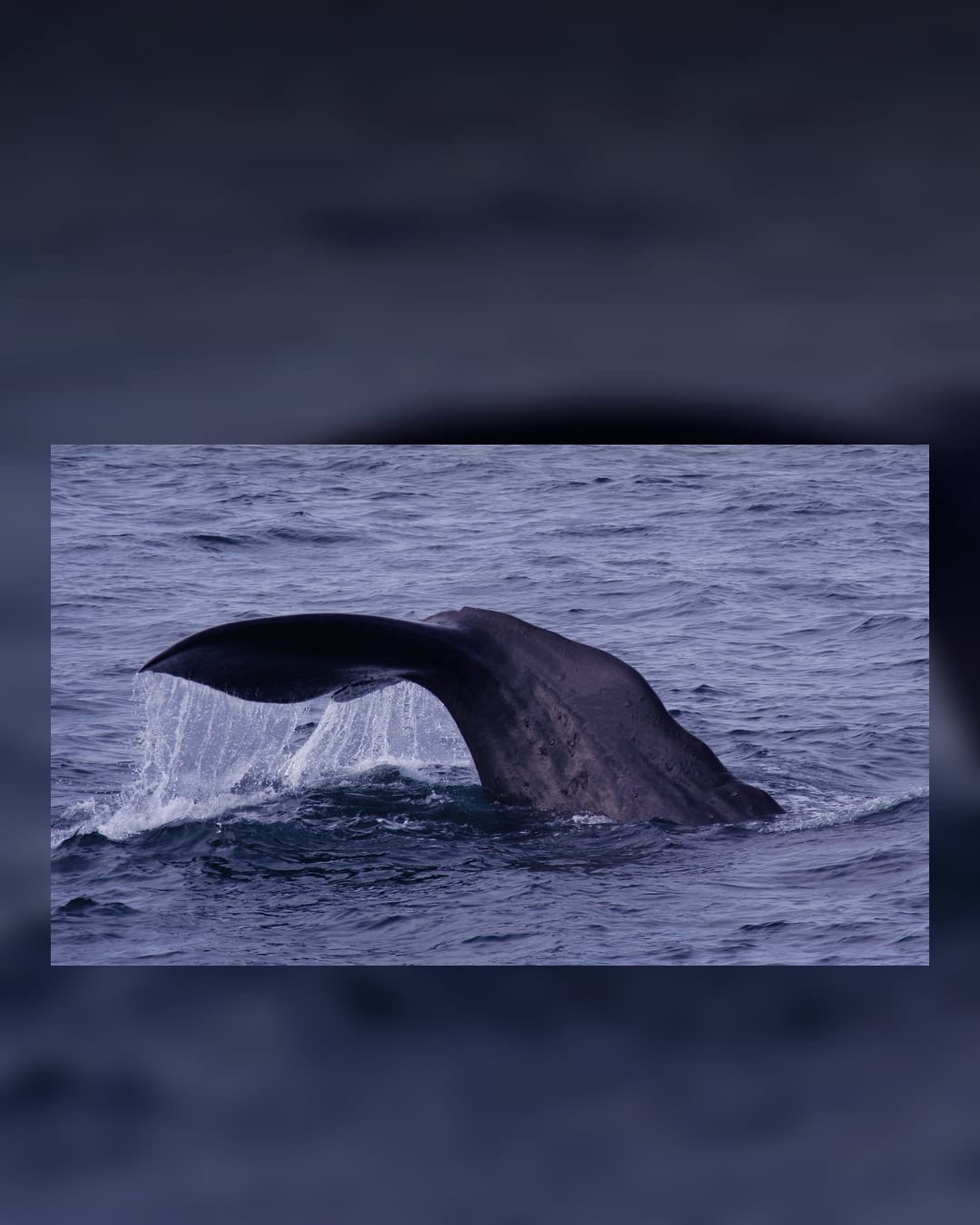
 Image: Sperm whale starting to dive - David Csepp, NOAA/NMFS/AKFSC/ABL, public domain.
- Researchers are using AI to analyze large animal sound, movement and signal datasets.
- Recent work points to complex patterns in whales, bonobos, birds, mice and other species.
- The strongest claim is pattern detection and better interpretation, not a proven universal animal translator.
- The next debate is ethical: who gets to use these tools, and whether animals could be manipulated once signals are decoded.
The viral version is easy to oversell: AI has decoded animal communication, so humans may soon talk directly with dolphins, whales, apes, birds or even cuttlefish.
The verified version is still fascinating, but narrower. AI is giving researchers better tools to detect structure in animal sounds and signals. It can cluster calls, compare sequences, connect vocalizations with behavior and process datasets too large for humans to label by hand. That is not the same as knowing what an animal “means” in the way a human sentence means something.
What happened
CNN published a June 3 science feature on the push to decode interspecies communication, pulling together work on species including mice, dolphins, great apes, birds, whales and cuttlefish. The article became a clean viral hook because it fits a familiar dream: a Dr. Dolittle machine powered by AI.
But the cautious framing matters. Nature's 2025 feature described AI as helping decode animals' speech and asked whether it could eventually let humans talk with them. It noted that vocal communication in some primates, whales and birds may approach the complexity of human language, but the headline itself remains a question, not a declaration of a finished translator.
What the science says
The strongest examples are not one single “animal language” breakthrough. They are separate advances in different species. Sperm whale research has found layered structure in click patterns. Bonobo studies have explored combinations of calls and meanings. Bird studies have shown syntax-like call combinations. Mouse vocalization work connects neural and genetic changes with squeaks humans cannot easily hear unaided.
AI is useful because animal communication is often high-volume, noisy and multimodal. A whale's click sequence, a bird's alarm call, a dolphin whistle, a mouse ultrasonic call and a cuttlefish color display are not the same kind of signal. Researchers need field observation, audio, video, behavior labels and biological context before an AI output becomes interpretation.
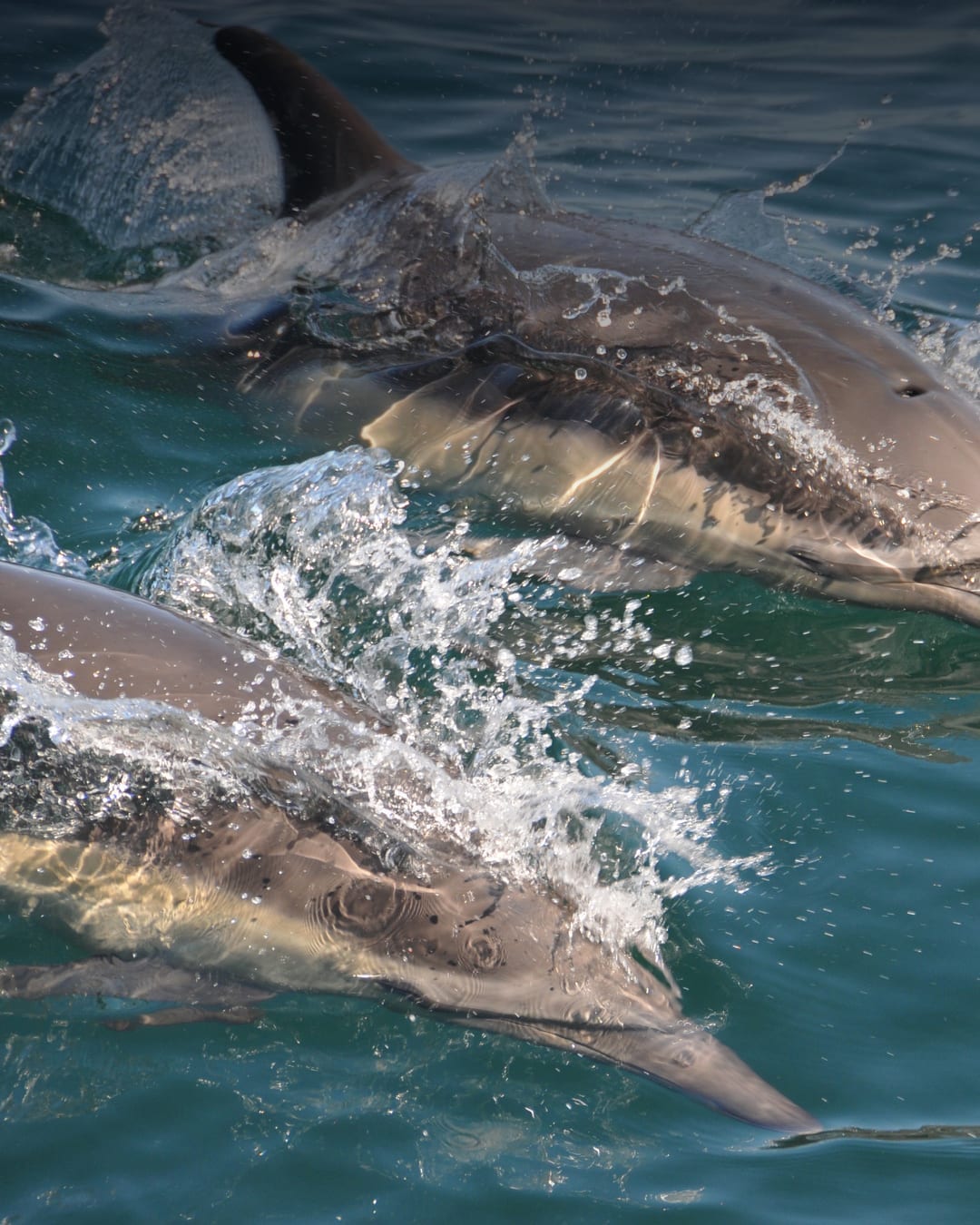 Image: Common dolphins - National Marine Sanctuaries / NOAA, public domain.
What is confirmed/not confirmed
Confirmed: AI and other computational tools are helping researchers analyze animal communication at new scale. Confirmed: major science outlets are treating the field as serious, fast-moving and ethically important. Confirmed: multiple species show richer signal structure than older human assumptions allowed.
Not confirmed: that humans can now “talk to animals” in the ordinary sense. A model that finds patterns in whale clicks or dolphin whistles has not automatically learned whale or dolphin meaning. It also does not prove that animals use language with human-like grammar, intention or abstraction.
Why it matters
The stakes are bigger than a novelty app. If AI helps researchers understand distress calls, migration signals or social coordination, it could reshape conservation. Ships, sonar, fishing, habitat loss and climate pressure all affect animals whose signals we barely understand.
TIME's ethics framing is useful here: better communication tools could strengthen animal protection, but they could also be used to manipulate animals. If humans learn which signals attract, repel, calm or confuse another species, the question becomes who controls that knowledge.
What to watch next
Watch whether researchers can link signals to behavior in repeatable field contexts, not just detect clusters in recordings. Watch sperm whale and dolphin projects, bonobo call-combination studies, mouse vocalization work and visual communication research in species such as cuttlefish.
The clean read: AI is improving the search for structure in animal communication. That is a real scientific shift. The claim that humans can already hold direct conversations with animals is still ahead of the evidence.
NoDechev status: real science trend / viral wording overstated. AI is helping decode patterns, not delivering a universal animal translator yet.
Also Read
The same rule applies across science and politics: a viral claim can be directionally real while the headline overstates what the source proves.
Read the House vote explainer