

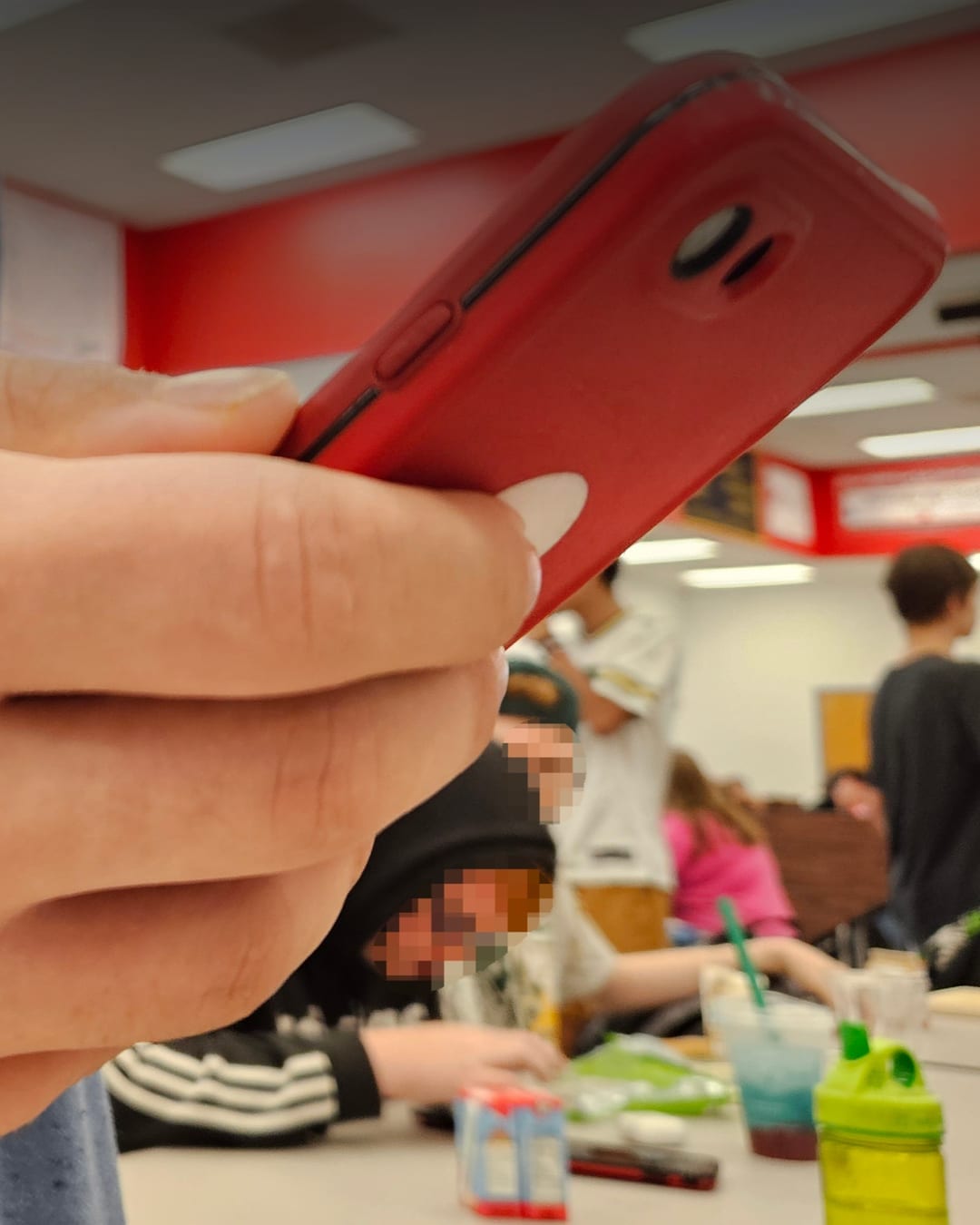
 Image: Male teenager holding a red iPhone — Wikimedia Commons / Flame, not lame, CC0
- A JAMA Pediatrics study analyzed passive smartphone data from 657 adolescents in the ABCD Study.
- Teens averaged 50.1 minutes of smartphone use between 10 p.m. and 6 a.m. on school nights.
- 52.1% used their phones between midnight and 4 a.m.; most overnight phone time was spent on social media apps such as Instagram and TikTok.
A new JAMA Pediatrics study puts a hard number on a familiar household fight: many teens are still on their phones deep into the school night.
The study, titled Smartphone Use on School Nights in the Adolescent Brain Cognitive Development Study, used passive smartphone sensing data rather than only self-reported screen-time estimates. Researchers found that adolescents averaged 50.1 minutes of phone use between 10 p.m. and 6 a.m. on school nights.
The sharper finding is not just bedtime scrolling. More than half of the teens in the analyzed sample — 52.1%, or 342 adolescents — used their phones between midnight and 4 a.m., the window when phone use is most likely to cut directly into sleep.
What the study found
The research team analyzed data from 657 adolescents, with an average age of about 15, drawn from the larger U.S. Adolescent Brain Cognitive Development Study. Participants had passive phone-sensing data available for at least two school nights.
On average, teens logged 50.1 minutes of phone activity during the overnight window. The median was lower, around 33 minutes, which matters: a portion of heavy overnight users pushed the average upward.
Researchers also looked at what teens were doing. The largest share of nighttime phone use was social media, with reporting around the study pointing to apps such as Instagram and TikTok as major examples. Other overnight use included video, streaming, gaming and communication apps.
Why midnight to 4 a.m. matters
Not all evening screen time has the same weight. A phone check at 10:15 p.m. may be less disruptive than a 2:30 a.m. TikTok session. That is why the midnight-to-4 a.m. number is the clean signal in this study.
Sleep researchers generally worry about phones at night for three overlapping reasons: time displacement, mental stimulation and light exposure. The simplest one is time. If a teen is actively using a phone at 1 a.m. before school, that time is probably not sleep.
The JAMA Pediatrics paper does not prove that phones caused worse sleep for every participant. It shows that overnight use is common and measurable in a large adolescent cohort.
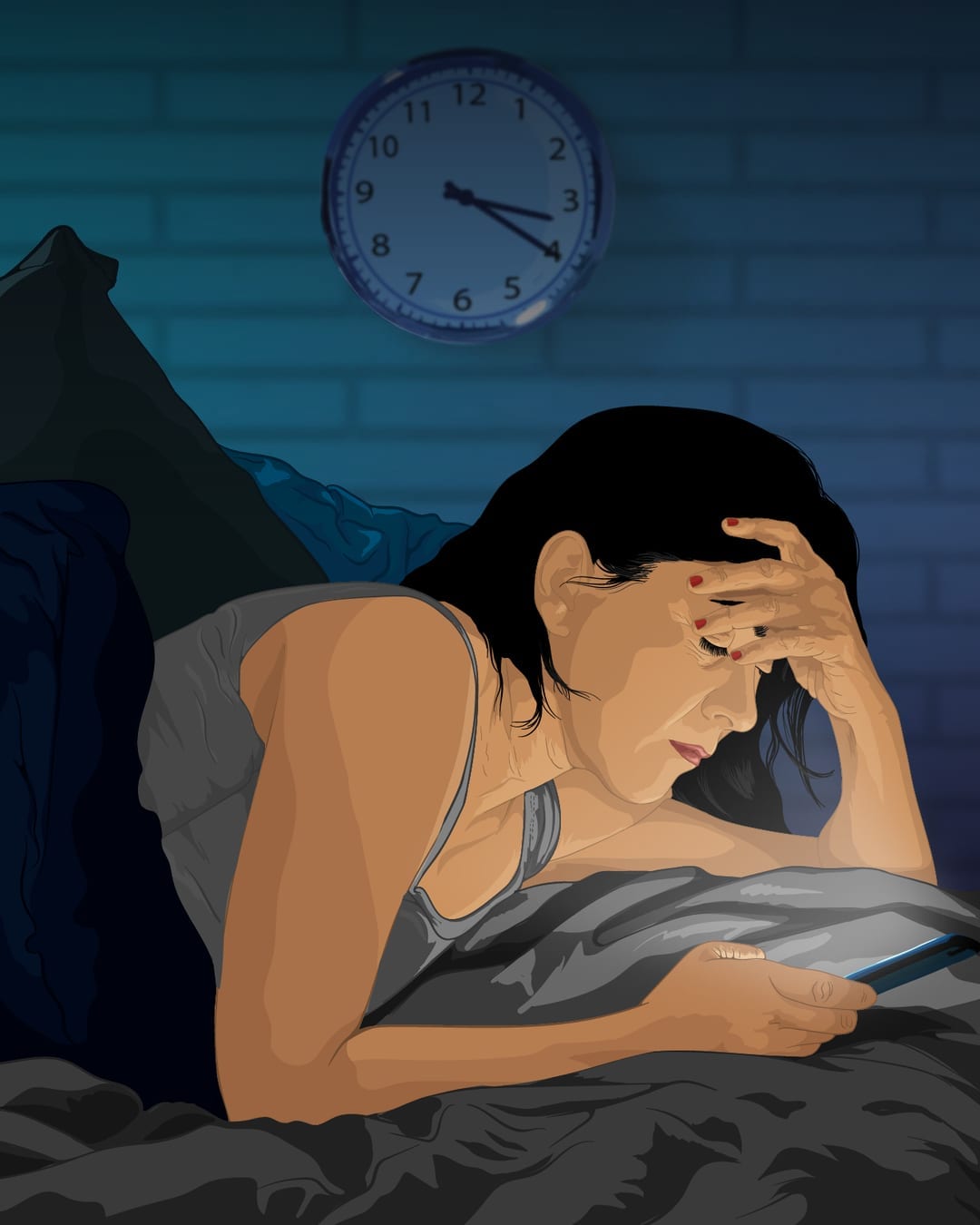 Image: depiction of insomnia and sleeplessness — myUpchar / Wikimedia Commons, CC BY-SA 4.0
What is confirmed and what is not
Confirmed: the study was published in JAMA Pediatrics on May 18, 2026, and PubMed lists it under DOI 10.1001/jamapediatrics.2026.1707. The plain-language summary describes a cross-sectional study using passive smartphone sensing data to characterize school-night phone use by app category.
Confirmed by study reporting: 657 adolescents were included; average overnight use was 50.1 minutes; 52.1% used smartphones between midnight and 4 a.m.; social media accounted for the majority of overnight app use.
Not proven by this study alone: that TikTok or Instagram individually caused the sleep loss, or that every teen with overnight phone use had poor sleep outcomes. The design is observational and cross-sectional, so it can measure patterns more cleanly than it can prove causation.
Why it matters
The useful takeaway is not “all teen phone use is bad.” The better read is narrower: school-night phone use is happening late enough to collide with sleep, and social media appears to be the dominant category during that window.
That matters because adolescent sleep is already under pressure from early school times, homework, sports, jobs, social life and stress. A 50-minute average overnight phone window is not a small background habit when it lands inside the only hours many teens have available for recovery.
For parents and schools, the practical question is less about banning phones and more about the overnight boundary: where the phone charges, whether notifications are allowed after bedtime, and whether app access changes during school nights.
NoDechev rating: verified study, careful interpretation. The overnight phone-use numbers are real; the study shows association and behavior patterns, not a simple one-cause explanation for teen sleep problems.
Also Read
Another source-check brief on how internet behavior turns into real-world risk.
Read: Can the CIA Access Your Phone Camera and Microphone?