
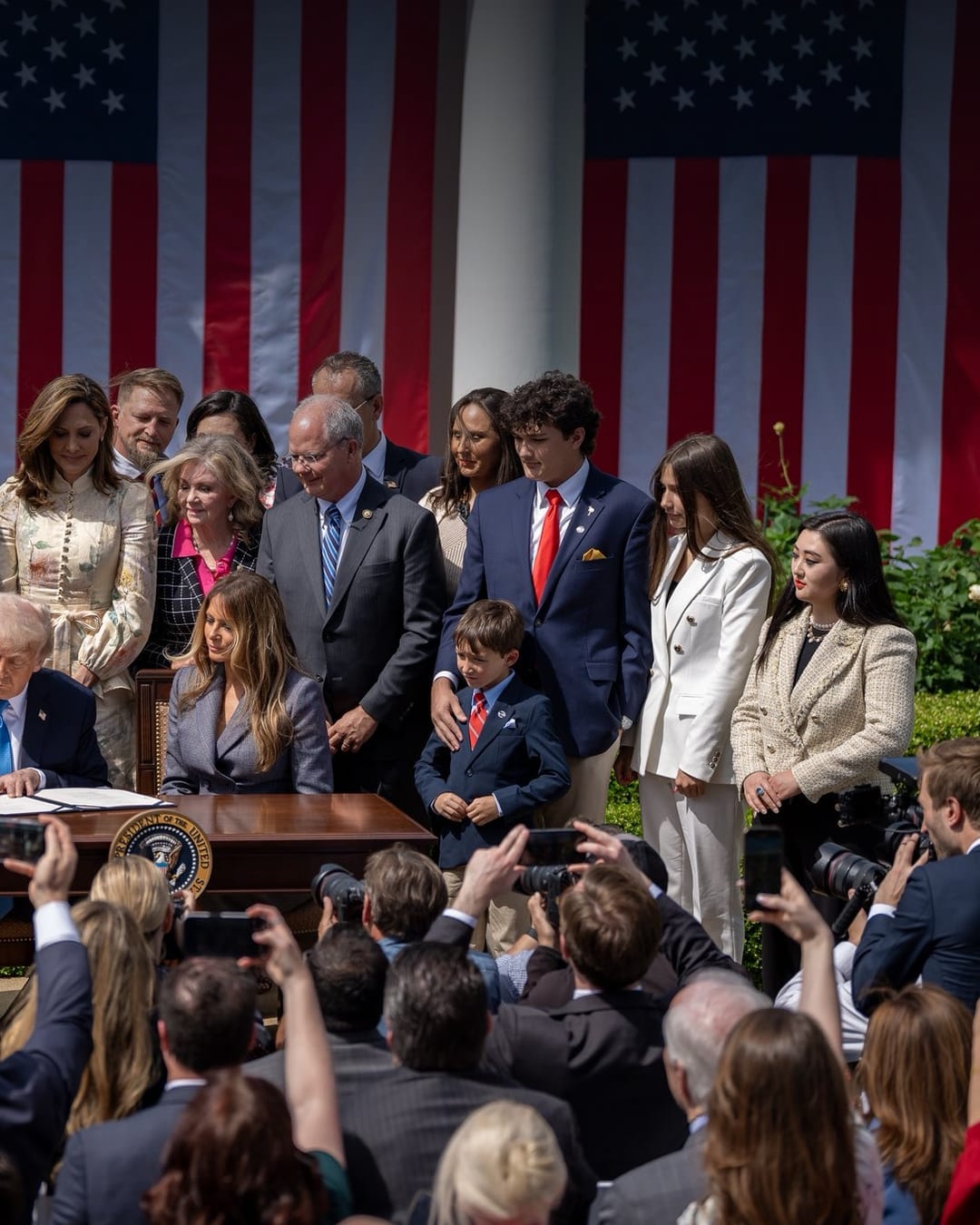
 Photo/source: White House release on the TAKE IT DOWN Act signing
- Trump signed the TAKE IT DOWN Act into law on May 19, 2025, after broad bipartisan support in Congress.
- The law covers nonconsensual intimate imagery, including AI-generated “digital forgeries” commonly described as explicit deepfakes.
- Covered platforms must remove reported content within 48 hours, with FTC enforcement for the notice-and-removal rules.
A viral post says President Donald Trump signed a new law making deepfake pornography a federal criminal offense punishable by up to two years in prison, while forcing social platforms to remove reported explicit deepfakes within 48 hours.
The short version is mostly right. The law is the TAKE IT DOWN Act, a bipartisan measure that Trump signed at the White House on May 19, 2025. The part that needs precision is that the law is broader than “deepfake pornography.” It covers nonconsensual intimate imagery, including real images and AI-generated “digital forgeries.”
What happened
Trump signed the TAKE IT DOWN Act at a White House event alongside First Lady Melania Trump, who publicly backed the legislation. NBC News reported that the measure bans the nonconsensual online publication of sexually explicit images and videos, whether authentic or computer-generated.
PBS, citing AP reporting, described the bill as a measure to set stricter penalties for distribution of nonconsensual intimate imagery online, often called revenge porn, and to address AI-created deepfakes. The White House framed the signing as a “landmark step” against digital exploitation.
What the law actually does
The bill makes it a federal crime to knowingly publish, or threaten to publish, intimate visual depictions of an identifiable person without consent. That includes AI-generated material if it appears to depict a real person in sexually explicit conduct.
For adult victims, the commonly cited maximum penalty is up to two years in prison. The legal picture is more detailed than a single number: penalties can vary depending on the conduct and whether minors are involved. Congressional summaries and later Justice Department references also point to fines, restitution and forfeiture as possible consequences.
The important shift is that victims no longer have to rely only on a patchwork of state laws. The act creates a federal route for criminal enforcement against people who knowingly publish or threaten to publish this material.
The 48-hour platform rule
The law also creates a notice-and-removal system for covered online platforms. Once a platform receives a valid request from the depicted person or an authorized representative, it must remove the reported content as soon as possible, and no later than 48 hours after receiving the request.
Platforms must also make reasonable efforts to remove known identical copies. The Federal Trade Commission is responsible for civil enforcement of the platform-removal rules. That is the source of the viral line saying platforms could face FTC action.
One nuance: the platform obligations were not all immediate on signing. The law gave platforms time to set up their removal process. That matters because a viral post can make the rule sound like it began the minute the pen touched paper.
Why it matters
The TAKE IT DOWN Act is one of the clearest examples of Washington responding to the real-world harm caused by generative AI. The law is not only about fake celebrity images or viral scandals. Its supporters emphasized teenagers, private citizens and victims who had little practical leverage once explicit material spread across platforms.
There are also civil liberties concerns. Some digital rights groups have warned that fast takedown systems can be overused or applied too broadly. That tension is now part of the law’s implementation: move fast enough to protect victims, but define requests clearly enough to avoid sweeping up lawful speech.
What to watch next
The next test is enforcement. Watch for how platforms publish their reporting processes, how quickly they respond to takedown requests, and whether the FTC brings early cases against services that ignore valid notices.
Also watch how prosecutors use the criminal side of the law. The strongest signal will not be the signing ceremony; it will be the first visible cases showing how federal authorities interpret “knowingly publish,” threats to publish, and AI-generated “digital forgeries.”
The viral claim is broadly accurate: the law criminalizes nonconsensual explicit deepfakes and creates a 48-hour takedown rule. The full law is broader than deepfakes and has important implementation details.
Also Read
Another viral Trump quote needed source context before the headline became the story.
Read: Trump Says the U.S. May Have to Refund $149 Billion in Tariffs