

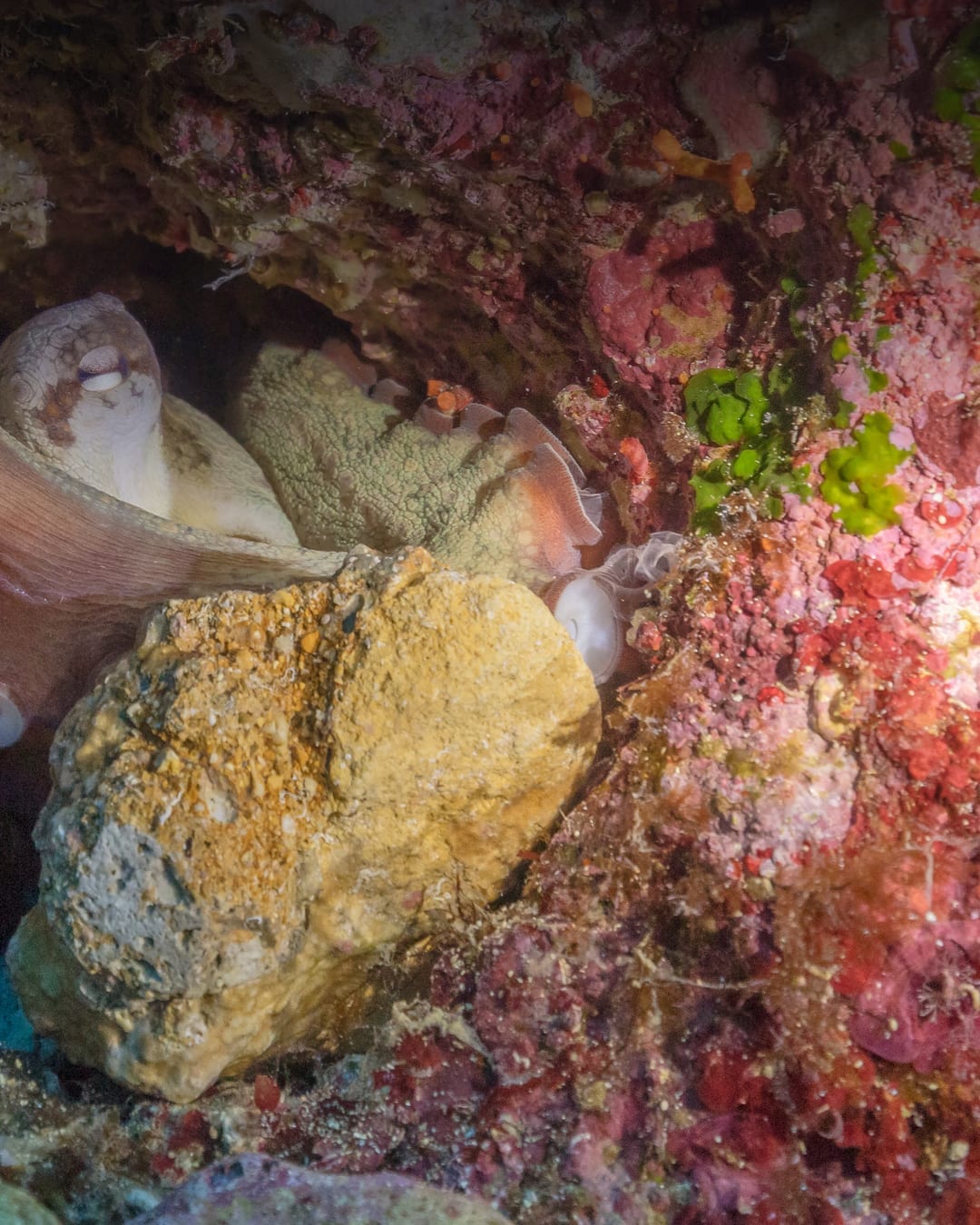
 Image: Common octopus, Cathedral Cave, Gozo — Diego Delso / Wikimedia Commons, CC BY-SA 4.0
- The claim traces to Tim Coulson, Professor of Zoology at the University of Oxford.
- Coulson argues octopuses have intelligence, dexterity and adaptability that could make them candidates for complex post-human evolution.
- The important caveat: this is a speculative evolutionary thought experiment, not a prediction that octopuses are likely to build cities.
An Oxford biologist has argued that if humans disappear, octopuses could be one of the strongest candidates to evolve into Earth’s next civilization-building species.
The claim comes from Tim Coulson, Professor of Zoology at the University of Oxford, whose book and interviews explored how evolution might unfold in a post-human world. Coulson’s surprising pick was not apes, dolphins or crows — but octopuses.
What Coulson said
Coulson’s argument is not that octopuses are about to build underwater cities. It is that, given enough time and the right environmental pressures, their existing traits make them unusually interesting candidates.
He pointed to their ability to solve problems, manipulate objects, camouflage with extreme precision and adapt to complex environments. In one widely quoted line, Coulson said those traits suggest that “given the right environmental conditions,” octopuses could evolve into a civilization-building species after humans.
That makes the headline real, but easy to overstate. Coulson is speculating about evolutionary possibility over very long timescales, not issuing a near-term forecast.
Why octopuses?
Octopuses are among the most cognitively impressive invertebrates. They can open containers, navigate mazes, use camouflage dynamically and manipulate their surroundings with eight flexible arms. Some species have also been documented using shells or coconut halves as protective tools.
That combination matters because civilization requires more than brainpower. It also requires interaction with the physical world. Octopuses have both distributed intelligence and extraordinary dexterity — a very different body plan from humans, but not a simple one.
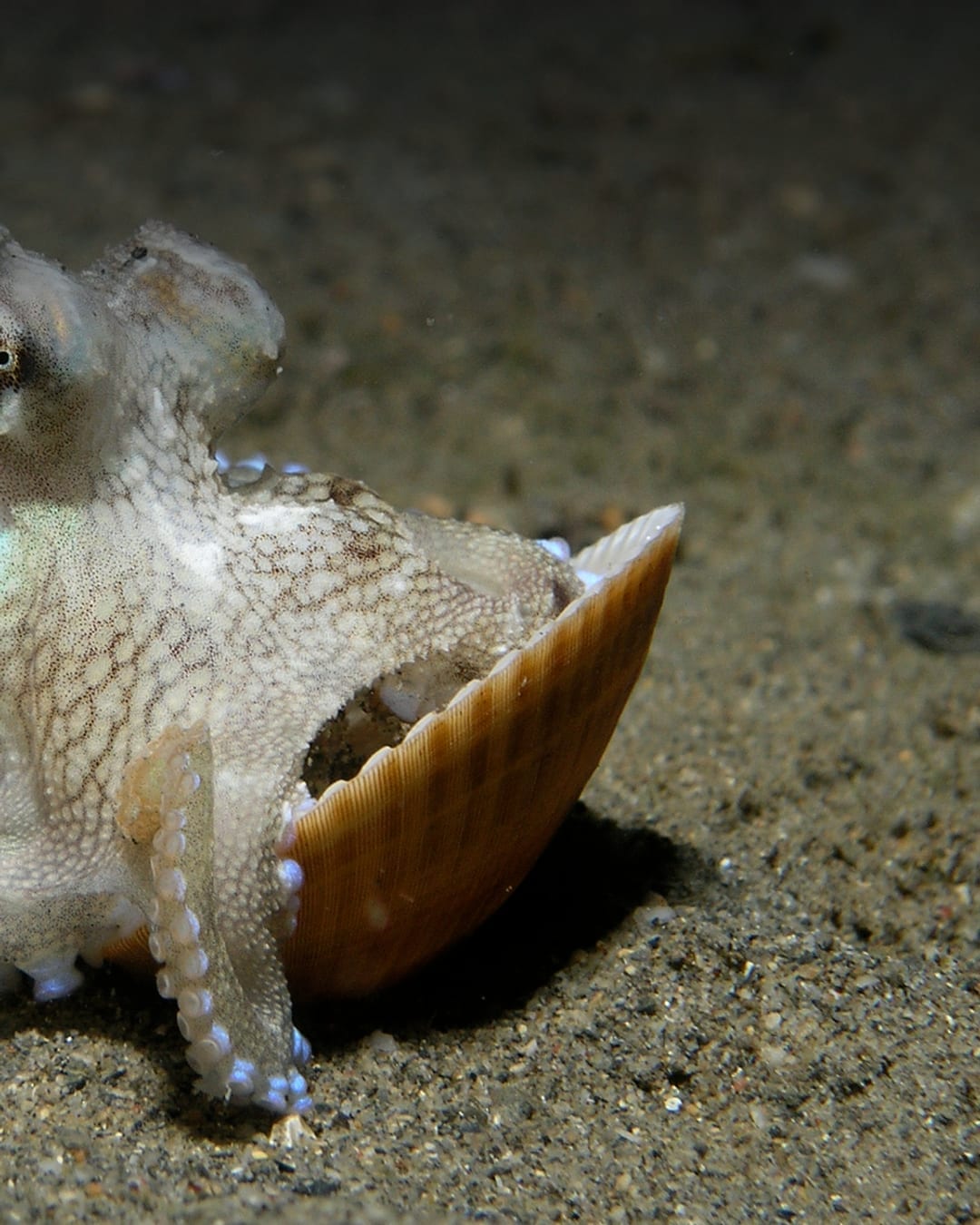 Image: Amphioctopus marginatus using shells for protection — Nick Hobgood / Wikimedia Commons, CC BY-SA 3.0
The big caveats
The strongest objection is lifespan. Many octopuses live only one to five years. That is a problem for civilization, because complex culture usually depends on long learning periods and knowledge passed across generations.
Another issue is sociality. Humans became civilization-builders partly because we are intensely social and cooperative. Many octopus species are solitary, and some are cannibalistic. A post-human octopus civilization would likely require major evolutionary changes toward longer life, stronger social learning and more stable communities.
There is also the water problem. Fire, metallurgy and electronics are much harder underwater. Coulson and some coverage imagine alternative paths — tidal energy, hydrothermal systems or tool use adapted to marine environments — but those remain speculative.
What is confirmed and what is not
Confirmed: Coulson is an Oxford zoologist, and multiple outlets have reported his argument that octopuses could be candidates for civilization-building evolution after human extinction.
Confirmed scientifically: octopuses show advanced problem-solving, dexterity, camouflage and environmental flexibility compared with many animals.
Not confirmed: that octopuses are likely to build the next civilization, or that any current species is already on that path. Evolution is contingent; the claim is best read as informed speculation.
Why it matters
The viral version of the story sounds like science fiction: “octopuses will replace humans.” The more accurate version is more interesting. Coulson is using octopuses to show that intelligence does not have to look human, mammalian or even land-based.
If humans vanish, Earth would not be waiting for another ape to replay our history. Evolution could produce something stranger — or nothing civilization-like at all.
That is the actual signal in the claim: octopuses are not secretly planning Atlantis. They are a reminder that intelligence has already evolved along alien-looking paths on this planet.
NoDechev rating: real claim, speculative framing. The Oxford source is real; the “next civilization” line is a thought experiment about evolutionary potential, not a testable prediction.
Also Read
Another science/data brief where the viral version needs careful framing.
Read: Teens Averaged 50 Minutes of Phone Use Overnight