
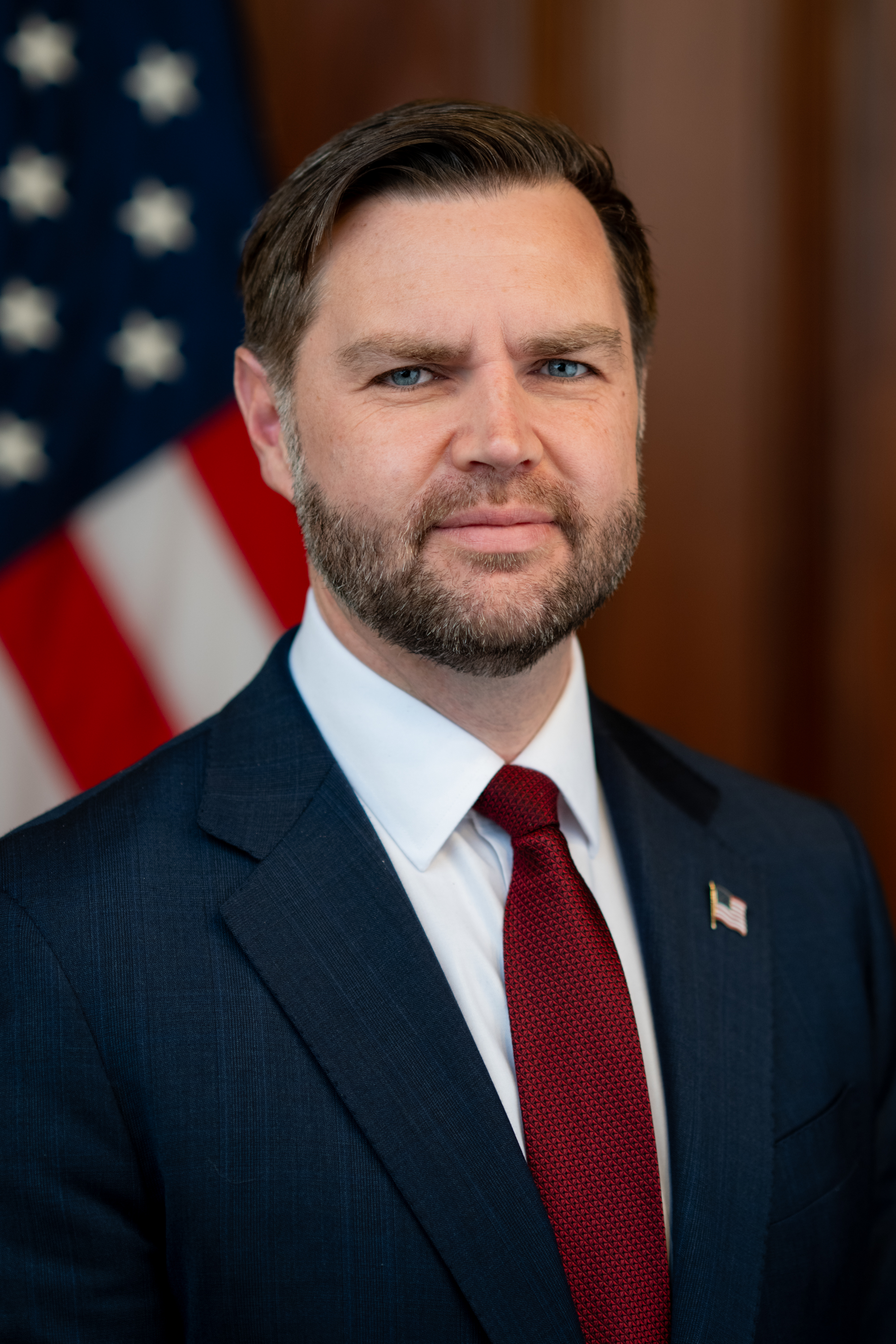
 Image: Vice President JD Vance, official White House portrait by Emily J. Higgins, via Wikimedia Commons.
- AP, carried by ABC News, reports that JD Vance landed in Switzerland on Sunday, June 21, to help launch talks with Iran.
- Axios reported that the first round is expected at Bürgenstock and is meant to open a 60-day nuclear negotiation track.
- The delegations are arriving after earlier delays tied to logistics and renewed regional fighting.
- The clean read: talks are active again, but not yet proof of a durable deal.
The Switzerland track has moved from delayed logistics to a live diplomatic test.
Associated Press reporting carried by ABC News says Vice President JD Vance landed in Zurich on Sunday to help formally launch negotiations with Iranian leaders. The talks are focused on curbing Tehran's nuclear program and building out the interim framework tied to the wider war in the region.
What happened
Vance's arrival follows several days of uncertainty. A planned Switzerland trip had been postponed after the first technical phase of talks failed to line up cleanly. Now the U.S. side is treating the Swiss round as the opening high-level step in a 60-day negotiation window.
Axios reported that White House envoys Steve Witkoff and Jared Kushner arrived before Vance, and that an Iranian delegation headed by parliament speaker Mohammad-Bagher Ghalibaf and Foreign Minister Abbas Araghchi also arrived in Switzerland. Pakistani and Qatari officials are involved as mediators.
What is confirmed
Confirmed: Vance has arrived in Switzerland for the talks. Confirmed: the talks are tied to Iran's nuclear program and the implementation phase after the U.S.-Iran framework. Confirmed: the location is part of the Swiss-hosted Bürgenstock diplomatic track.
Also confirmed: the regional backdrop remains unstable. Al Jazeera's live coverage on Sunday framed the talks alongside Iranian threats around the Strait of Hormuz and Israeli strikes in Lebanon, the exact kind of pressure that can interrupt a negotiation calendar.
What is not confirmed
Not confirmed: that the talks have produced a deal. Not confirmed: that Iran has accepted a new inspections schedule. Not confirmed: that Lebanon or Hormuz tensions are now contained.
That distinction matters. A principal landing in Switzerland is a real escalation in diplomatic activity. It is not the same thing as a negotiated settlement.
Why it matters
The first round is supposed to set the structure for negotiations rather than solve every issue immediately. Vance said before leaving Washington that the goal was to make progress on the nuclear issue and the Lebanon ceasefire file.
For Washington, the talks are a chance to show the memorandum can turn into implementation details. For Tehran, they are a chance to test sanctions relief, access to frozen assets and the future of international inspections. For Israel, Hezbollah and Gulf shipping, the talks may matter because failure would put the regional war framework under fresh pressure.
What to watch next
Watch for three signals: whether Iran invites UN nuclear inspectors back to relevant sites, whether Switzerland confirms a formal session structure, and whether Lebanon ceasefire claims or Strait of Hormuz threats disrupt the schedule again.
The clean read: Vance landing in Switzerland makes the talks real again. The hard part is still ahead.
NoDechev rating: arrival confirmed; outcome not confirmed. Vance is in Switzerland for a live U.S.-Iran negotiation round, but there is no confirmed final deal from this round yet.
Ready social post
JD Vance has landed in Switzerland for a new U.S.-Iran negotiation round. The important caveat: arrival confirms the talks are live again, not that a nuclear or regional settlement has been reached.
Read the Bürgenstock talks context