

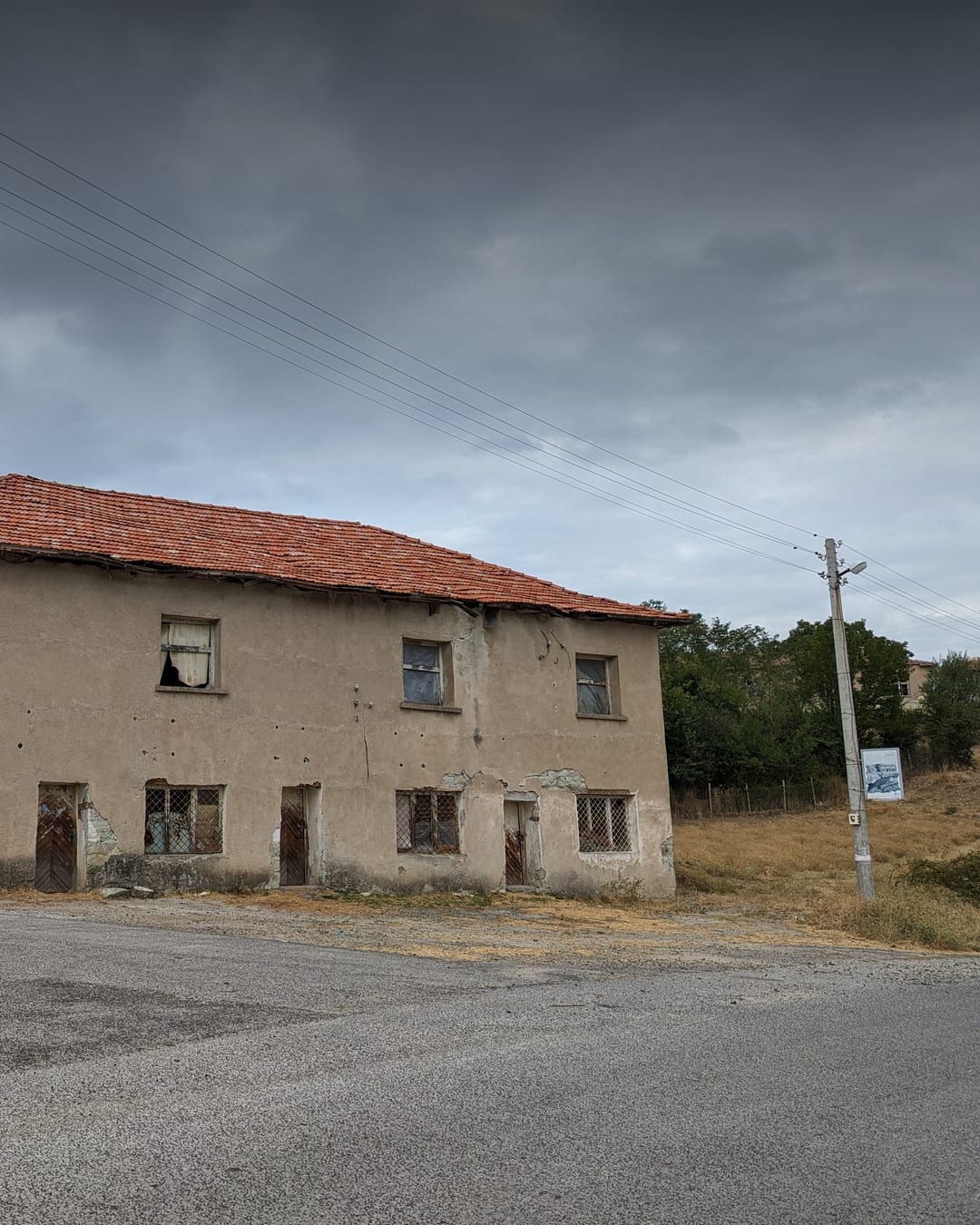
 Image: Abandoned house in Kovil, Bulgaria — Андрей Романенко / Wikimedia Commons, CC BY-SA 4.0
- UN WPP 2024 projects Bulgaria’s population falling from about 6.93 million in 2020 to about 5.40 million in 2050.
- That is a projected decline of roughly 22.1%, placing Bulgaria among the steepest expected population losses worldwide.
- The core drivers are low fertility, ageing, deaths exceeding births, and long-running emigration pressure.
The viral version is simple: Bulgaria is expected to suffer one of the world’s sharpest population declines between 2020 and 2050. The useful version is slightly more precise: in the latest United Nations World Population Prospects dataset, Bulgaria is still near the top, but the ranking shifts depending on whether the post uses the 2022 or 2024 UN revision.
Using the UN’s 2024 medium-variant projection, Bulgaria’s population falls from 6.93 million in 2020 to 5.40 million in 2050. That is a loss of about 1.53 million people, or 22.1% of the 2020 population.
What the UN data says
NoDechev checked the UN’s World Population Prospects 2024 demographic indicators file, comparing total population on July 1 in 2020 with the medium-variant projection for July 1, 2050. Among countries and areas with at least half a million people in 2020, the largest projected percentage declines are concentrated in Eastern Europe, the Balkans and parts of East Asia.
In the 2024 revision, Ukraine shows the steepest projected drop, but that number is heavily affected by war, migration uncertainty and revised demographic assumptions. Bulgaria remains one of the clearest long-running demographic decline cases because the trend predates the current geopolitical shock.
Top projected declines in WPP 2024
The countries and areas with the largest projected population declines from 2020 to 2050 in the UN 2024 medium variant include:
- Ukraine: about 28.4%
- Bosnia and Herzegovina: about 25.6%
- Puerto Rico: about 23.6%
- Moldova: about 23.4%
- Bulgaria: about 22.1%
- Albania: about 22.0%
- Latvia: about 20.4%
- Belarus: about 20.3%
- Serbia: about 19.9%
- Lithuania: about 19.2%
That is close to the viral list’s message, even if the exact order and percentages differ. Older UN-based charts commonly placed Bulgaria at the very top with a figure around 22%. The updated dataset keeps the same broad signal: Bulgaria is among the fastest-shrinking countries in the UN projection horizon.
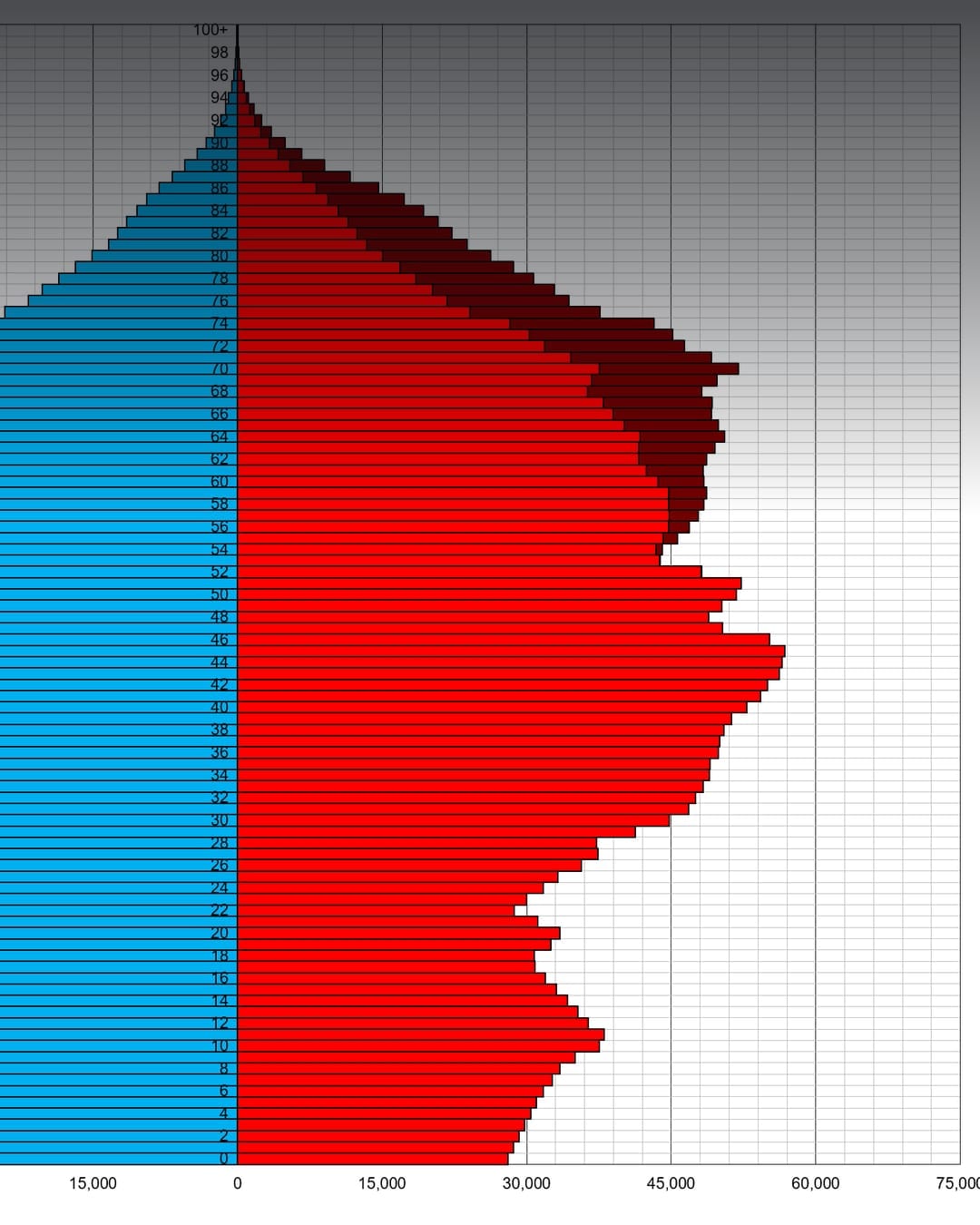 Image: Bulgaria single-age population pyramid, 2020 — Sdgedfegw / Wikimedia Commons, CC BY-SA 4.0; generated from U.S. Census Bureau International Data Base.
Why Bulgaria is so exposed
Bulgaria’s problem is not one single bad year. It is a compound trend: low birth rates, an older age structure, outward migration after EU accession, and fewer women in childbearing ages than in previous generations.
Once that structure is in place, population decline becomes difficult to reverse quickly. Even if fertility improves modestly, the number of births can remain low because the cohort of potential parents is smaller. At the same time, an older population means deaths stay elevated relative to births.
Why the ranking should be read carefully
A percentage decline is useful, but it is not the whole story. Japan’s projected fall is smaller in percentage terms than Bulgaria’s, but it represents tens of millions of people. Ukraine’s projection is deeply affected by conflict and displacement. Puerto Rico is included in the UN country-area dataset but is not a sovereign state.
So the clean read is not “Bulgaria is uniquely doomed.” It is: Bulgaria sits near the extreme end of a wider demographic pattern across Eastern Europe and the Balkans, where ageing and migration have moved faster than replacement.
What to watch next
The important signals are fertility, net migration, labour-force size, regional depopulation and whether younger Bulgarians return or stay abroad. A country can adapt to fewer people if productivity rises and institutions adjust. But rapid decline creates pressure on schools, hospitals, pensions, housing markets and small towns long before 2050 arrives.
NoDechev rating: verified with dataset nuance. The UN projects a severe decline for Bulgaria by 2050. The exact rank depends on the UN revision and country/area filter used, but the demographic signal is real.
Also Read
Another data brief where a viral ranking needs the source table behind it.
Read: Foreign Treasury Holdings Fell From $9.487T to $9.348T