

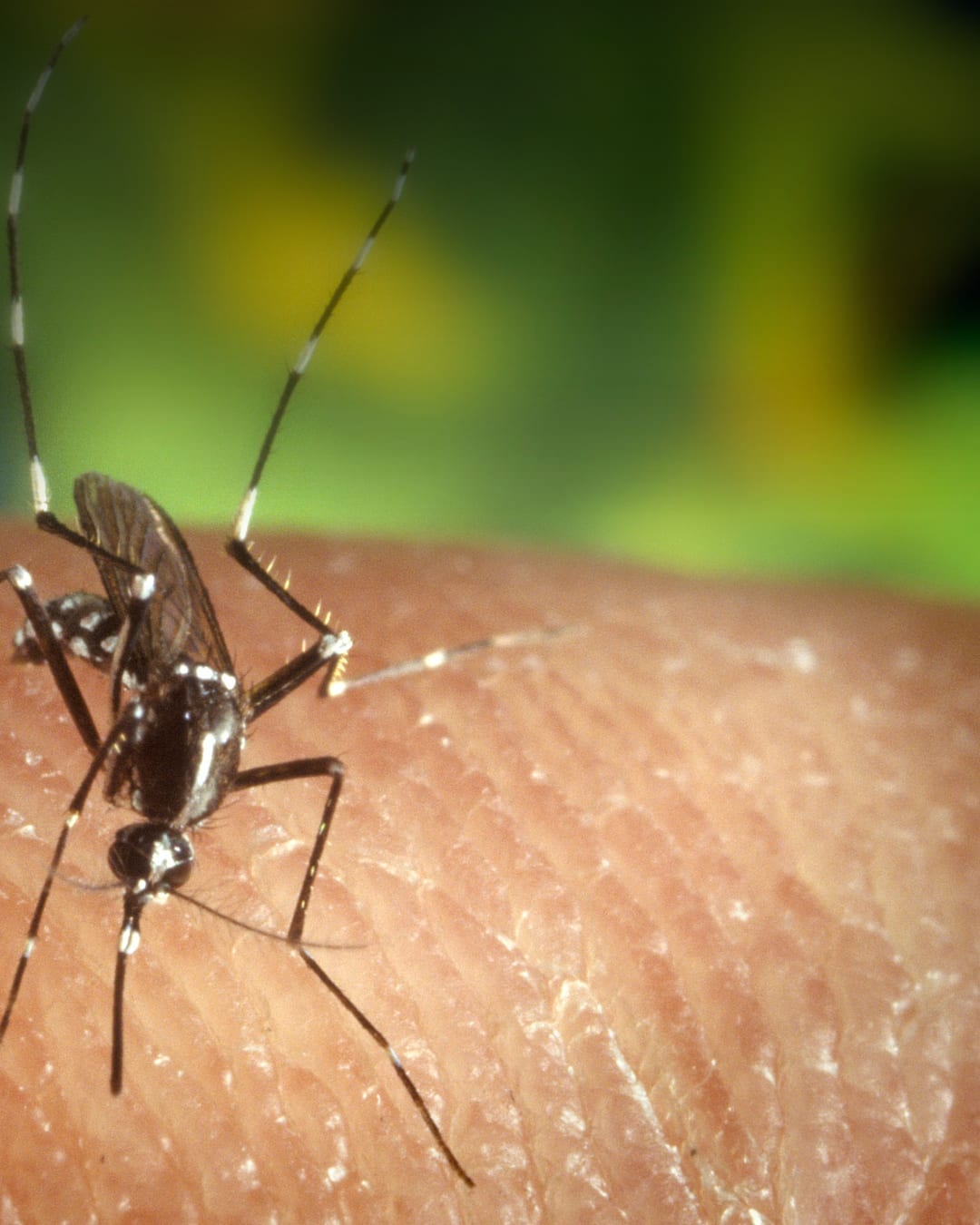
 Image: Asian tiger mosquito, Aedes albopictus — James Gathany / CDC, public domain
- Toulouse is launching sterile male tiger mosquito releases as a pilot against Aedes albopictus.
- The method uses lab-reared males sterilized by low-dose irradiation; males do not bite.
- Officials and project partners cite a goal of roughly 50% reduction after one year and up to 90% after two years.
Toulouse is preparing to release sterile tiger mosquitoes as part of a new effort to reduce the city’s population of Aedes albopictus, the invasive mosquito known for spreading diseases such as dengue, chikungunya and Zika in outbreak conditions.
The project uses a technique known as sterile insect technique. Lab-reared male mosquitoes are sterilized, then released to mate with wild females. Because the resulting eggs do not develop, the population should fall over repeated release cycles.
What Toulouse is doing
Local reporting says the first release is scheduled for May 26, 2026, starting in the Terre-Cabade cemetery and other targeted areas where tiger mosquitoes are a persistent nuisance.
The program is being run with Terratis, a Montpellier-based biotech company specializing in sterile insect technique for mosquito control.
The initial Toulouse release has been described as involving thousands of mosquitoes, with the broader strategy scaling over time. Viral posts saying “millions” are broadly consistent with large multi-year sterile mosquito programs, but the first Toulouse release appears smaller than that.
Why sterile males?
Only female mosquitoes bite. Male mosquitoes feed on nectar and do not transmit disease to humans.
That is why the program releases sterile males. They compete with wild males, mate with females, and create eggs that do not hatch. Over time, if enough sterile males are released consistently, the local population can collapse.
 Image: mosquito laboratory work at a CDC field station — public domain
The 90% target
City-linked reporting and company estimates cite a target of about 50% population reduction after the first year and up to 90% after two years.
That target is ambitious but not biologically implausible. Sterile insect technique has been used against agricultural pests and is increasingly being tested against mosquitoes in urban environments.
The key is repetition. One release does not solve the problem; sustained releases, monitoring and reduction of breeding sites are needed.
Is this genetic modification?
No, based on the available reports. The Toulouse program is described as using sterilization by irradiation, not genetically modified mosquitoes.
The released males are also not radioactive. Irradiation is used to make them sterile before release; it does not turn the insects into a radiological hazard.
What is confirmed and what is not
Confirmed: Toulouse is launching sterile male tiger mosquito releases; the target species is Aedes albopictus; the method aims to make eggs non-viable.
Confirmed as target: officials and project partners cite a goal of up to 90% reduction after two years.
Nuance: the initial Toulouse release is reported as thousands, not necessarily millions on day one. “Millions” better describes potential scale over a full campaign or comparable projects.
NoDechev rating: verified with scale nuance. The sterile mosquito plan is real; the 90% figure is a stated target, not a guaranteed result.
Also Read
Another public-health source check on a fast-moving claim.
Read: WHO Says Additional Hantavirus Case Reported in the Netherlands