

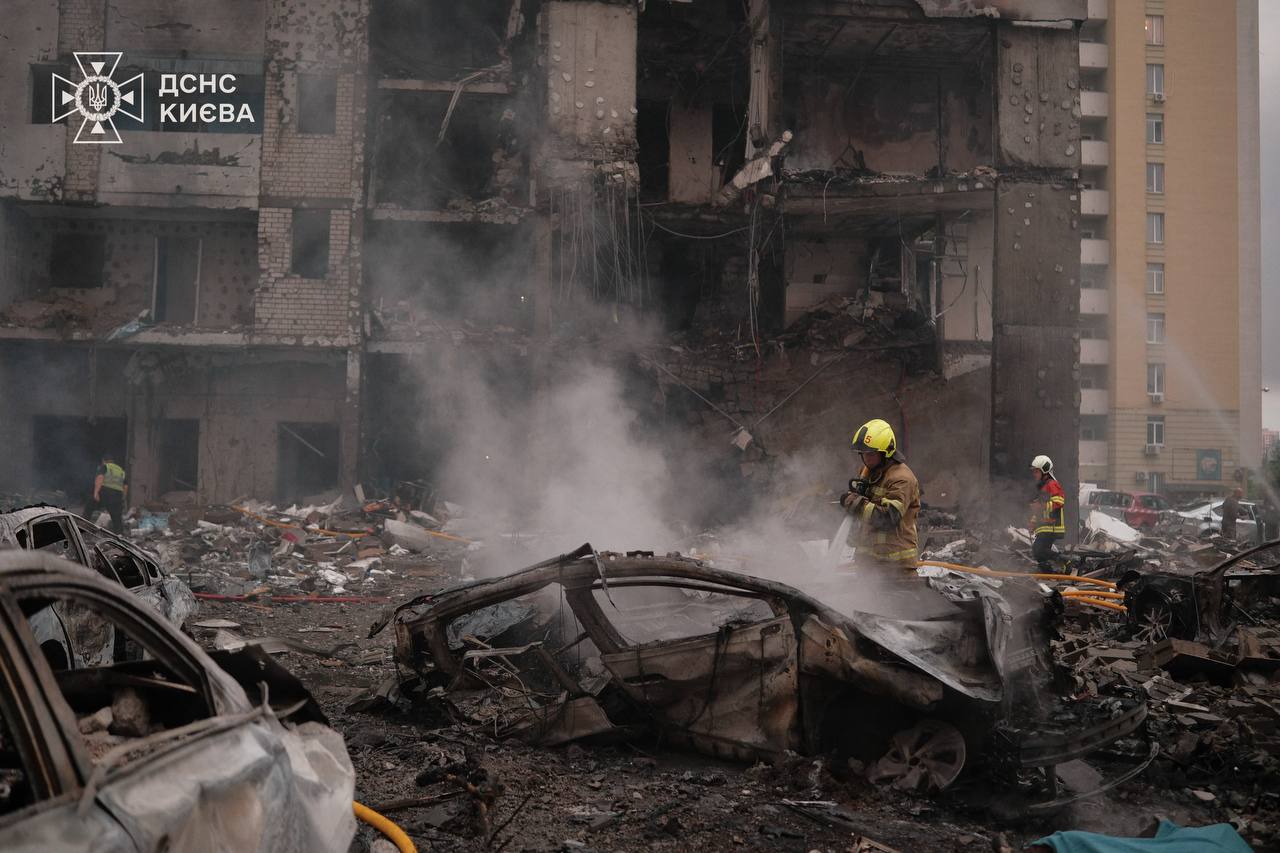
 Image: Aftermath of the July 6, 2026 Russian attack on Kyiv — Ukraine State Emergency Service, via The Kyiv Independent
- Russia struck Kyiv and the surrounding region overnight on July 6 with missiles and drones, including reported ballistic missile attacks.
- The Kyiv Independent reported at least eight people killed and 34 injured across Kyiv and Kyiv Oblast; AP reported at least seven killed and 24 wounded inside Kyiv in an earlier count.
- Apartment buildings were damaged in Podilskyi and Darnytskyi districts, while officials also reported damage in Bucha, Vyshhorod and Brovary communities outside the capital.
Russia launched another large overnight attack on Kyiv and its surrounding region on July 6, striking residential areas with missiles and drones just days after a previous mass assault on the Ukrainian capital.
Ukrainian officials and major news agencies described a combined barrage involving drones, cruise missiles and ballistic missiles. The attack hit Kyiv before dawn, with explosions reported in several waves and residents sheltering in underground metro stations during air raid alerts.
What happened
The first confirmed picture is a major Russian strike on Kyiv and Kyiv Oblast overnight into Monday, July 6. The Kyiv Independent, citing city and regional officials, reported that at least eight people were killed and at least 34 were injured across the capital and surrounding communities. Associated Press reported an earlier Kyiv city count of at least seven killed and 24 wounded.
Those numbers should be read as developing. In mass overnight attacks, casualty totals often change as rescue teams reach damaged buildings, hospitals update counts and regional authorities separate city figures from oblast figures.
Where the damage was reported
Kyiv City Military Administration head Tymur Tkachenko said a residential building in the Podilskyi district was partially destroyed between the fifth and ninth floors. Local officials also reported additional apartment buildings hit in Podilskyi and Darnytskyi districts.
Mayor Vitali Klitschko said rescue crews were working at damaged sites, including non-residential buildings, garages and warehouse areas. Kyiv Oblast Governor Mykola Kalashnyk said homes, businesses and civilian infrastructure were damaged in communities including Bucha, Vyshhorod and Brovary.
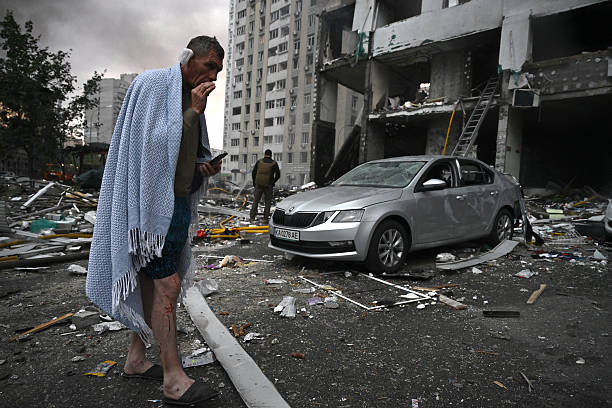 Image: A resident outside a damaged Kyiv apartment building after the July 6 strike — Genya Savilov / AFP via Getty Images, reported by The Kyiv Independent
What is confirmed
It is confirmed that Kyiv and nearby towns were struck overnight; that residential buildings were damaged; that people were killed and injured; and that Ukrainian officials tied the attack to a broader Russian missile-and-drone barrage.
The Guardian reported that Russia struck the Kyiv region with ballistic missiles on Monday, killing at least eight and wounding dozens. AP described the assault as including ballistic and cruise missiles as well as drones, with structural damage in multiple city districts.
What is not confirmed
The exact number of missiles, the final casualty toll and the full breakdown of intercepted versus successful strikes were not settled in the first reports. The available public record also does not yet support treating every explosion video or social post as proof of a specific missile type.
The cautious formulation is this: ballistic missiles were reported as part of the strike package, and Ukrainian officials confirmed a large attack, but final technical details should wait for Ukraine's Air Force and emergency services to finish their public updates.
Why it matters
The timing matters because the July 6 attack came days after a July 2 assault on Kyiv that killed dozens, according to Ukrainian officials, and just before President Volodymyr Zelensky was expected to meet U.S. President Donald Trump on the sidelines of the NATO summit in Turkey.
Zelensky had warned hours earlier that Russia was preparing another large strike and again pushed allies for faster delivery of Patriot air defense systems. For Kyiv, the military question is immediate: how many ballistic threats can be intercepted before they reach apartment blocks and civilian infrastructure.
What to watch next
Watch for three updates: Ukraine's final Air Force tally, revised casualty numbers from Kyiv and Kyiv Oblast, and any Russian Defense Ministry statement framing the intended targets. Russia usually describes long-range strikes as attacks on military or infrastructure sites; Ukraine says the visible damage again includes residential and civilian areas.
NoDechev rating: confirmed major Russian attack, developing damage picture. Multiple reputable reports and Ukrainian officials confirm a July 6 missile-and-drone strike on Kyiv and Kyiv Oblast; final casualty numbers and missile-type breakdowns may change.
Also Read
Background on how NoDechev treats fast-changing wartime claims.
Read: How Ceasefire Violations Are Verified