

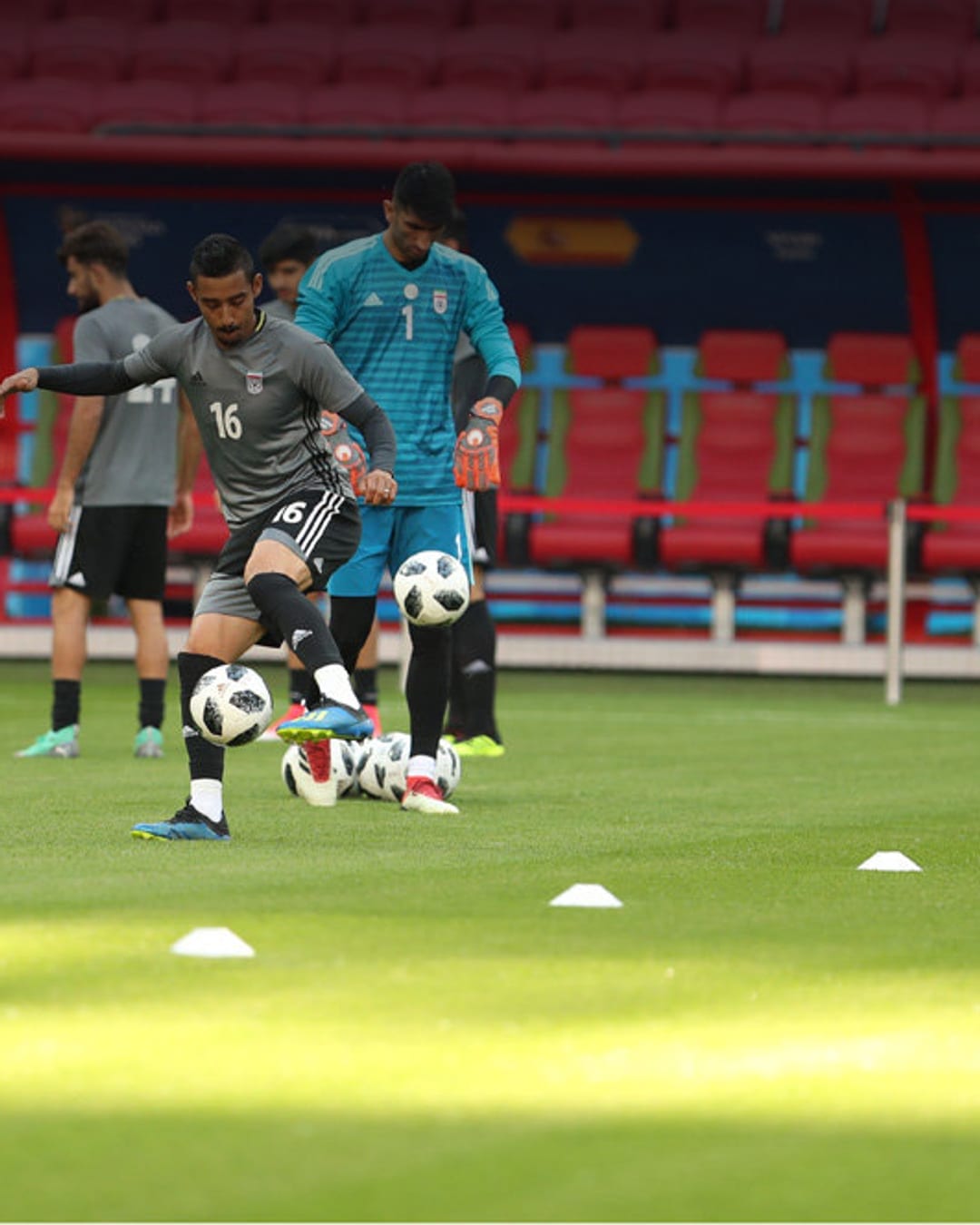
 Image: Iran national football team training before the Spain match at the 2018 World Cup — Mehr News Agency, CC BY 4.0 via Wikimedia Commons.
- Iran’s ambassador to Mexico says the squad has been told to enter and leave the U.S. on the same day as its American-hosted matches.
- U.S. officials told AP that players, coaches, trainers and some support staff have been issued or approved for visas.
- Iran’s federation says some senior officials and backroom staff still do not have U.S. visas.
Iran’s World Cup visa fight has moved from “will the players get in?” to “how long will they be allowed to stay?”
Iran’s ambassador to Mexico, Abolfazl Pasandideh, said Saturday that the squad had been notified it must enter and leave U.S. soil on the same day as any World Cup match played in the United States. The comment was reported from Tijuana by AFP and carried by multiple outlets.
The line is blunt: “We can enter in the morning and we must leave the same day.” That makes the arrangement look less like a normal World Cup base-and-travel plan and more like a controlled match-day crossing from Mexico.
What happened
Iran is now based in Tijuana, Mexico, after moving its planned team base from Tucson, Arizona. AP reported that visa-processing problems had earlier pushed the team toward the Mexico base, which sits directly across the border from California.
U.S. officials told AP on June 5 that Iran’s players had been granted visas to enter for their World Cup games. One official said all players were approved, while another said visas had been issued for players, coaches, trainers and some support staff.
That did not settle the whole delegation. AP reported a day later that Iranian state television said federation secretary-general Hedayat Mombeini and vice president Mehdi Mohammad Nabi were among 14 backroom staff and officials still without U.S. visas.
What is confirmed
Confirmed: Iran’s players have U.S. visas or approvals, according to U.S. officials quoted by AP. Confirmed: Iran’s base camp is in Tijuana, not Tucson. Confirmed: Iran has three Group G matches in the United States, with two near Los Angeles and one in Seattle.
Also confirmed: the same-day entry claim comes from Iran’s ambassador to Mexico, not from a public U.S. visa document. No public U.S. statement seen so far lays out the exact same-day condition in writing.
 Image: San Ysidro border crossing between Tijuana and San Diego — Phil Konstantin, public domain via Wikimedia Commons.
What is not confirmed
Not confirmed: whether the same-day condition applies identically to every player, coach and support staff member. Not confirmed: whether it is a visa condition, an operational agreement, a security arrangement or a practical requirement created by the Tijuana base plan.
Also not confirmed: whether any restrictions would change if Iran advances beyond the group stage. Iran’s federation had previously pushed for multiple-entry visas because the team would need to leave and re-enter the U.S. several times.
The safe read: the players can enter for matches, but Iran says the permission is tightly limited.
Why it matters
The World Cup normally asks teams to manage travel, rest, recovery and security with as little disruption as possible. A same-day border-crossing requirement adds friction to all of that, especially around Los Angeles traffic, border processing, media duties and post-match recovery.
The politics are larger than football. The visa dispute sits inside the U.S.-Iran conflict and follows Iranian complaints that visa refusals for officials amount to discriminatory treatment under host-country obligations. U.S. officials, according to AP, suggested some applicants affiliated with the team may have been rejected for requesting visas under false pretenses.
That leaves FIFA in a delicate position: the tournament host has security and immigration authority, while World Cup rules expect qualified teams to be able to compete without political obstruction.
What to watch next
Watch the team’s first U.S. crossing from Tijuana to Los Angeles. If the process is smooth, the same-day restriction may remain a diplomatic controversy more than a sporting disruption. If it produces delays, media lockdowns or recovery problems, it will become a tournament story immediately.
Also watch the unresolved federation officials. The players’ visas solve the core participation question, but the staff and administrative denials are where Iran’s discrimination claim is likely to continue.
Ready social post
Iran says its World Cup squad can enter the U.S. only on match days and must leave the same day. The players have visas, according to U.S. officials, but the status of some federation staff remains disputed. This is now a logistics story and a diplomatic story at the same time.
Read next: Starmer backs outdoor pints and pub garden screens