

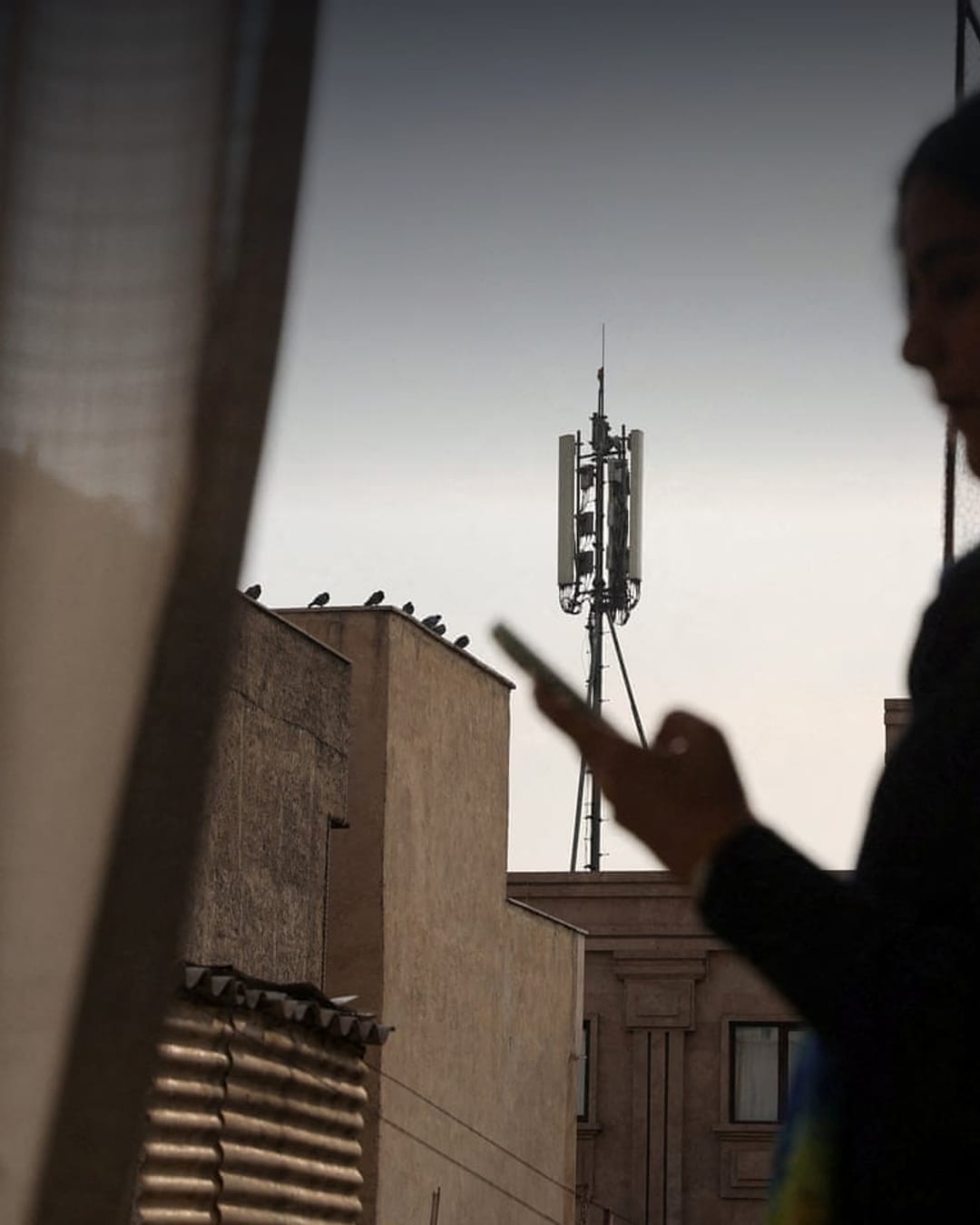
 Image: Majid Asgaripour / WANA via Reuters, as used by The Guardian. A mobile phone in Iran during the nationwide internet shutdown.
- Iran’s judiciary has suspended the presidential cyberspace body that voted to restore broader internet access.
- The legal challenge targets whether the body was lawfully established, not only the restoration order itself.
- The dispute stalls President Masoud Pezeshkian’s attempt to end an 88-day national-scale blackout.
Iran’s judiciary has suspended a presidential cyberspace body that had ordered the restoration of internet access, creating a last-minute legal block to the end of months of nationwide restrictions.
The move came after President Masoud Pezeshkian’s government said international internet access would be restored toward its pre-January status. Iranian outlets including Tasnim and Fars reported that the instruction had been sent to the Ministry of Communications, while The Guardian reported officials pointed to the return of Gmail access inside Iran as an early sign of implementation.
What was suspended?
The suspended body is the Special Headquarters for Organising and Governing the Country’s Cyberspace, a presidential taskforce Pezeshkian established on May 12 to manage internet and cyberspace policy.
According to AFP-based reports carried by Firstpost and other outlets, Iran’s judiciary website Mizan Online said the body was suspended after the “filing of complaints.” The reports did not identify who filed the complaints or give a detailed legal timeline.
Why the court challenge matters
The Guardian framed the intervention as an administrative court challenge over whether the cyberspace body was lawfully created. The court said it was examining the body’s powers, not directly judging the political question of whether internet restrictions should be lifted.
That distinction matters. The restoration order has not simply disappeared from public view; it has been stalled inside a power struggle between the president’s camp, judicial institutions and security-aligned hardliners who have resisted a return to open access.
 Image: Iranian flag on Azadi Street, Tehran — Alborzagros / Wikimedia Commons, CC BY-SA 3.0.
How long has Iran been restricted?
The Guardian described the shutdown as an 88-day internet blackout. Firstpost reported that restrictions began during anti-government protests in January and were tightened again after the conflict involving the United States and Israel.
Most Iranians have been pushed toward domestic services and sites hosted on Iran’s internal network, while international apps and websites remained heavily restricted. The limits have hit online businesses, education, ordinary communication and access to outside information.
What the government says
Iran’s communications minister, Sattar Hashemi, said the restrictions had caused significant damage to the digital economy, online businesses and service industries, warning that continued limits could weaken investment and encourage skilled workers to leave.
That is the argument behind Pezeshkian’s push: keeping the blackout in place has become economically costly and politically embarrassing for a president who campaigned on freer internet access.
What is still unclear
It is not clear how long the court process will take, whether the taskforce can be reconstituted, or whether Iran’s Supreme National Security Council will ultimately approve a broader restoration of access.
For now, the clean read is this: Iran’s government signaled a move toward reopening the internet, but the judiciary has frozen the presidential mechanism behind that move. The blackout is no longer only a technical restriction. It is a visible institutional fight over who controls access to the outside web.
NoDechev rating: verified legal stall, outcome unclear. Multiple reports say the presidential cyberspace body was suspended after complaints; the timing and final impact on internet restoration remain unresolved.
Also Read
Another source check on a fast-moving Iran claim.
Read: Iran Says U.S. Talks Made Progress, But No Deal Is Imminent