

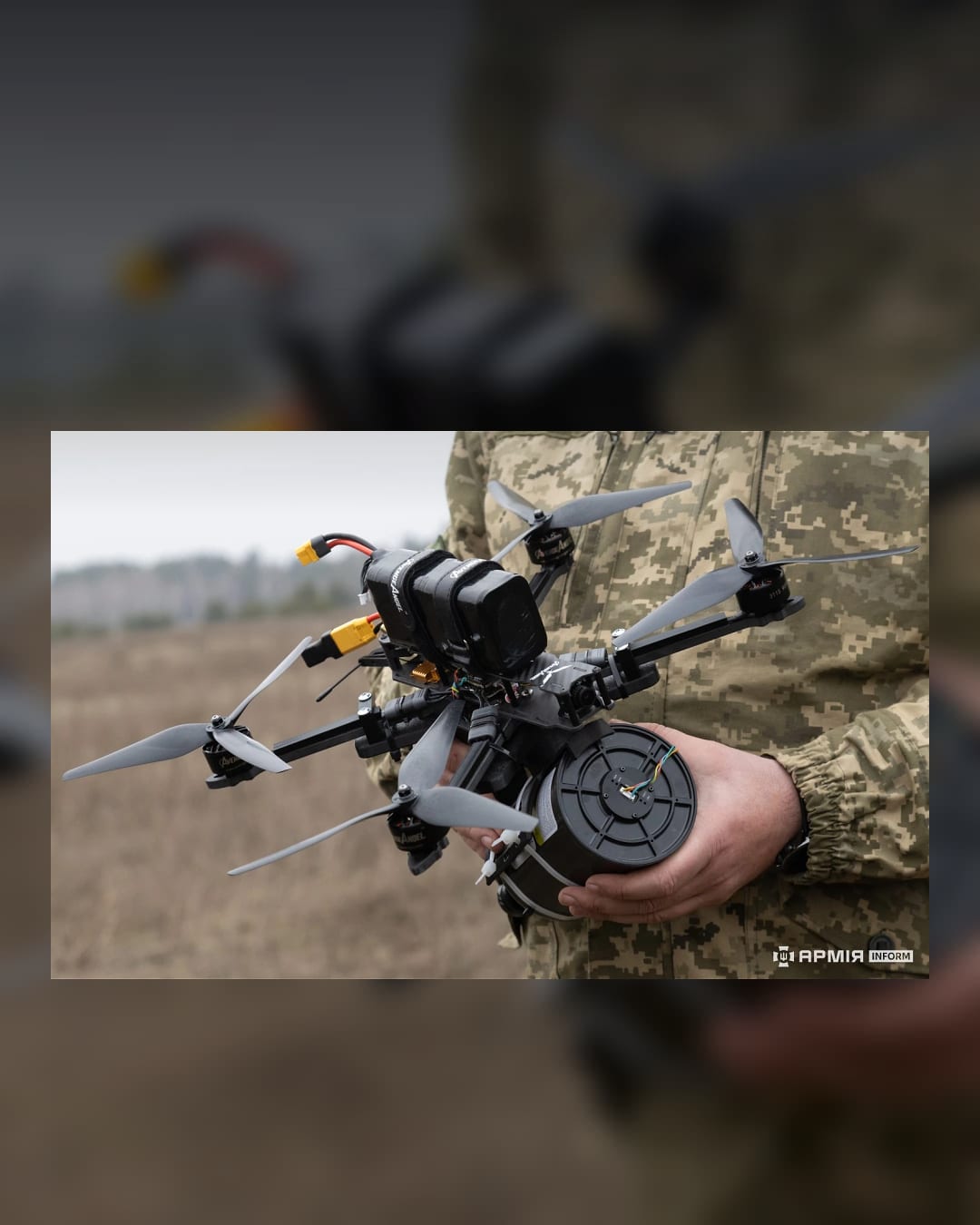
 Image: Ukrainian fiber-optic FPV drone, a representative example of the cable-guided drone type - Armed Forces of Ukraine / Wikimedia Commons, CC BY 4.0.
- AP reports Hezbollah has launched fiber-optic drones against Israeli forces in south Lebanon and northern Israel.
- The Guardian reports Hezbollah has studied Ukraine-war drone tactics and is using cheap cabled FPV systems to pressure Israel's better-funded military.
- The key battlefield feature is not invisibility; it is resistance to radio jamming because the drone is controlled through a physical fiber-optic cable.
Hezbollah is using fiber-optic FPV drones against Israeli forces, borrowing a tactic that became familiar on the Ukraine battlefield and applying it along the Israel-Lebanon front.
The Associated Press reported that Hezbollah has launched small drones controlled by fiber-optic cables against northern Israel and Israeli forces operating in southern Lebanon. The drones are hard to jam because they are not steered by ordinary radio control or GPS signals; a thin cable physically links the operator console to the aircraft.
What happened
The trend is not based on one isolated video. AP reported that drones had killed an Israeli soldier in southern Lebanon and injured more than a dozen others in northern Israel, while Hezbollah has posted attack videos through its own media channels.
A separate AP report this week said Netanyahu's warning to increase strikes came as Hezbollah had been firing fiber-optic drones at Israeli forces in southern Lebanon and northern Israel in recent weeks. That makes the claim current: the tactic has moved from a novelty into a recurring pressure point.
How the drones work
A normal FPV drone can be disrupted by jamming the radio link between the operator and the aircraft. A fiber-optic FPV drone avoids that weakness by dragging a spool of cable behind it. Video and control signals move through the cable, so many electronic-warfare systems built around radio disruption have less to attack.
That does not mean the drones are impossible to stop. They are still small, short-range explosive platforms that can be detected, shot down, netted, intercepted, or defeated by new sensors and hard-kill systems. But they make the first part of the kill chain - early detection and disruption - much harder.
 Image: House in Kiryat Shmona, northern Israel, damaged by Hezbollah fire - Alex Geiner / Wikimedia Commons, CC BY-SA 4.0.
The Ukraine connection
The Guardian reported that Hezbollah has learned from Ukrainian warfare to develop cabled drones that evade high-tech defenses. A Hezbollah source told the Guardian the group had watched the effect of fiber-optic drones in Ukraine, while analysts described the tactic as part of a wider spread of cheap offensive drones across conflicts.
That is the important strategic point. Ukraine did not invent every part of the technology, but the Russia-Ukraine war turned FPV drones into a mass battlefield system. Hezbollah is now adapting that playbook: cheap airframes, first-person video, improvised warheads and propaganda-ready strike footage.
Why Israel is vulnerable
Israel's defenses were built around different threat baskets: rockets, missiles, larger UAVs and radio-controlled drones. Fiber-optic FPVs are smaller, lower, cheaper and less exposed to jamming. Israeli analysts at INSS say Hezbollah's recent use of fiber-optic-guided drones removes the electronic signature and radio link that many counter-drone systems rely on.
Israeli forces are responding with field adaptations, including added protection on vehicles and research into better detection. But the cost curve is uncomfortable: a low-cost drone can force an expensive military to change patrol patterns, harden vehicles and deploy new sensors across a long border.
What to watch next
The next signal is whether Hezbollah scales the tactic from individual strike videos into coordinated drone pressure against armor, logistics routes and border positions. The second signal is Israel's countermeasure response: acoustic sensors, optical detection, lasers, nets, hard-kill interceptors, or physical barriers that cut the cable.
For now, the clean read is this: Hezbollah is using fiber-optic drones, the Ukraine-war influence is real, and Israel's problem is not that the drones are unstoppable. It is that they are cheap, hard to jam and good enough to raise the price of every exposed movement near the border.
NoDechev rating: verified tactical trend. AP confirms Hezbollah's use of fiber-optic drones against Israeli forces; Guardian and Israeli analysts support the Ukraine-learning and counter-drone context.
Also Read
The drone shift is part of the same regional arms race that keeps turning low-cost weapons into strategic pressure.
Read the Israel-Gaza command update