

 Image: U.S. Bullion Depository at Fort Knox - Work permit / Wikimedia Commons, CC BY-SA 4.0.
- The U.S. Mint says Fort Knox holds 147,341,858.382 fine troy ounces of gold, about half of Treasury's stored gold.
- The official book value is around $6.2 billion because U.S. government gold is carried at a statutory price of $42.22 per fine troy ounce, not the market price.
- An audit debate is real, but public sources should not be read as proof that a new full physical assay and inventory has already happened.
What Fort Knox is
The Fort Knox gold reserve is the U.S. Bullion Depository at Fort Knox, Kentucky. It is a Treasury-owned storage site operated by the U.S. Mint for precious metal bullion reserves of the federal government. Unlike a mint production facility, Fort Knox is not where ordinary coins are made. Its public role is storage, custody and security.
The building became a symbol because it combines a real government asset with unusually limited public access. The U.S. Mint says no visitors are permitted at the bullion depository. That secrecy is partly operational security, but it also explains why Fort Knox has become a recurring target for political claims, audit demands and viral speculation.
How much gold is stored there
The current official figure from the U.S. Mint is precise: 147,341,858.382 fine troy ounces of gold are held at Fort Knox. The Mint summarizes that as about 147.3 million ounces and says the site holds about half of Treasury's stored gold.
A fine troy ounce is a precious-metals measure based on pure gold content, not the everyday ounce used for groceries. A standard gold bar is often described as roughly 400 troy ounces, though bar weights can vary. The important point for readers is that the Fort Knox number is not a social-media estimate; it is the official public inventory figure used by the Mint and repeated in federal data series.
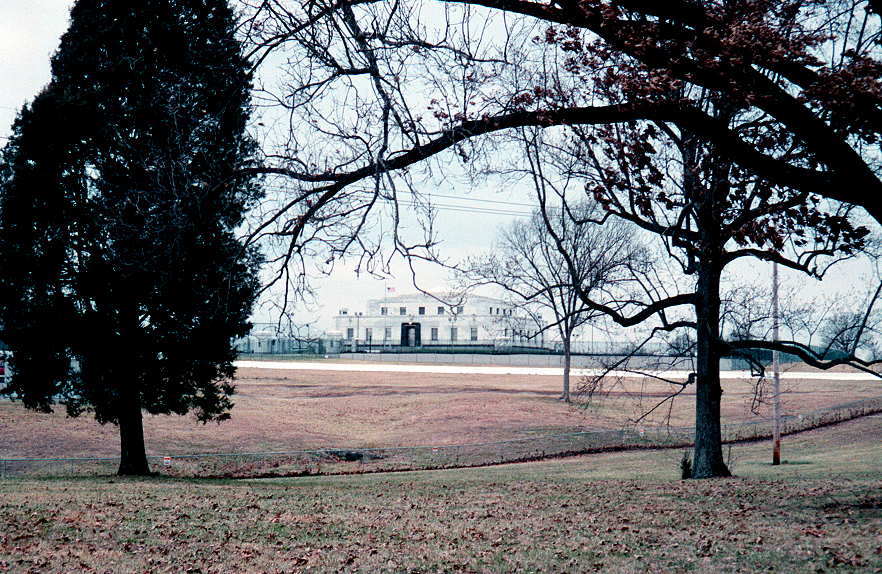 Image: Fort Knox Gold Vault - Wikimedia Commons, public domain.
Why the official value is around $6.2B
The confusing part is valuation. The U.S. government does not mark its gold stock to the daily gold market price for official book value. Congress's research service explains that, under 31 U.S.C. sections 5116 and 5117, Treasury gold is valued for accounting purposes at a fixed statutory price of about $42.22 per fine troy ounce.
Apply that statutory price to Fort Knox's 147.3 million fine troy ounces and the book value comes out near $6.2 billion. That number is not a claim that the gold could only sell for $6.2 billion. It is an accounting value set by law and left far below modern market prices.
Why market value can be hundreds of billions
Market value uses a different question: what would the gold be worth at current spot prices? If gold trades around $4,000 per troy ounce, Fort Knox's reported holdings would imply a market value near $589 billion. At about $4,500 per ounce, the same holdings are around $663 billion. If gold is a little higher, viral posts can round the figure toward $667 billion or $700 billion.
Those market-value calculations can be reasonable as arithmetic, but they are not the official balance-sheet value. A careful article should say "market value estimate," not simply "Fort Knox is valued at" a viral number. It should also avoid implying that Treasury can casually sell the gold without legal, policy and market consequences.
What an audit would actually mean
In public debate, "audit Fort Knox" can mean several different things. A narrow review might check records, seals, custody controls and sample procedures. A full physical audit would mean a much heavier process: opening compartments, counting bars, weighing inventory, testing purity, reconciling serial or melt records, protecting chain of custody and documenting the result in a public report.
H.R. 3795, the Gold Reserve Transparency Act of 2025, shows what advocates mean by a broader audit. The bill would require the Comptroller General to contract with an independent external auditor for a full assay, inventory and audit of U.S. gold reserves, including gold in deep storage, and to repeat the process every five years if enacted. A bill is not the same as a completed audit, but it gives readers a concrete benchmark for the audit debate.
What is confirmed
It is confirmed that Fort Knox is an official U.S. gold-storage site and that the Mint reports 147,341,858.382 fine troy ounces there. It is confirmed that the statutory accounting price is about $42.22 per fine troy ounce, producing a book value near $6.2 billion for Fort Knox holdings. It is also confirmed that the Federal Reserve Bank of St. Louis publishes a Fort Knox deep-storage series that tracks the same general official holdings line.
It is also confirmed that audit talk is not imaginary. Lawmakers have introduced gold-audit legislation, and President Donald Trump discussed the Fort Knox inspection idea in a Full Measure interview with Sharyl Attkisson. That interview is useful context for why the topic keeps resurfacing in political media.
What is not confirmed
Public sources do not confirm that a new full physical audit, including comprehensive weighing and assay of the Fort Knox stock, has already been completed. They also do not confirm viral claims that the gold is missing. The stronger public position is narrower: the government reports the gold, carries it at statutory value and has not released a new comprehensive public audit report that would end the debate for skeptics.
The distinction matters because the absence of a newly public full audit is not the same as proof of absence. Fort Knox claims often jump from "the vault is not open to the public" to "the gold is gone." That leap is not supported by the official sources listed here.
Why it matters
Fort Knox matters less because it backs the dollar in an old gold-standard sense and more because it is a high-visibility public asset. The United States no longer runs a classical gold standard, but Treasury gold still appears in federal accounts, in Federal Reserve gold-certificate context and in debates over transparency, trust and monetary symbolism.
It also matters as a media-literacy example. A single Fort Knox post can contain a true official quantity, a plausible market-value estimate, a misleading official-value comparison and an unproven audit claim. Sorting those pieces is the difference between reading a source-backed brief and repeating a viral summary.
What to watch next
The clearest future signals would be legislative movement on H.R. 3795 or a successor bill, a Treasury or Mint announcement defining the scope of a new review, or a GAO-linked audit process with published methodology. The details would matter: who gets access, whether the process includes assay and weighing, how security-sensitive information is redacted, and whether the final report reconciles records to physical inventory.
Until then, the durable read is cautious: Fort Knox is officially reported to hold about 147.3 million fine troy ounces of gold; its book value is around $6.2 billion because of statutory accounting; its market value can run into the hundreds of billions; and the full-audit debate remains a transparency argument, not public proof that the gold is missing.
NoDechev note: this is an evergreen explainer, not a breaking-news claim check. For the latest Trump-specific audit claim context, read the linked Fort Knox claim-check brief.
Use this as context
When Fort Knox claims go viral, start with the reserve facts, then separate official book value, market value and audit status.
Read the Fort Knox audit claim check ->