

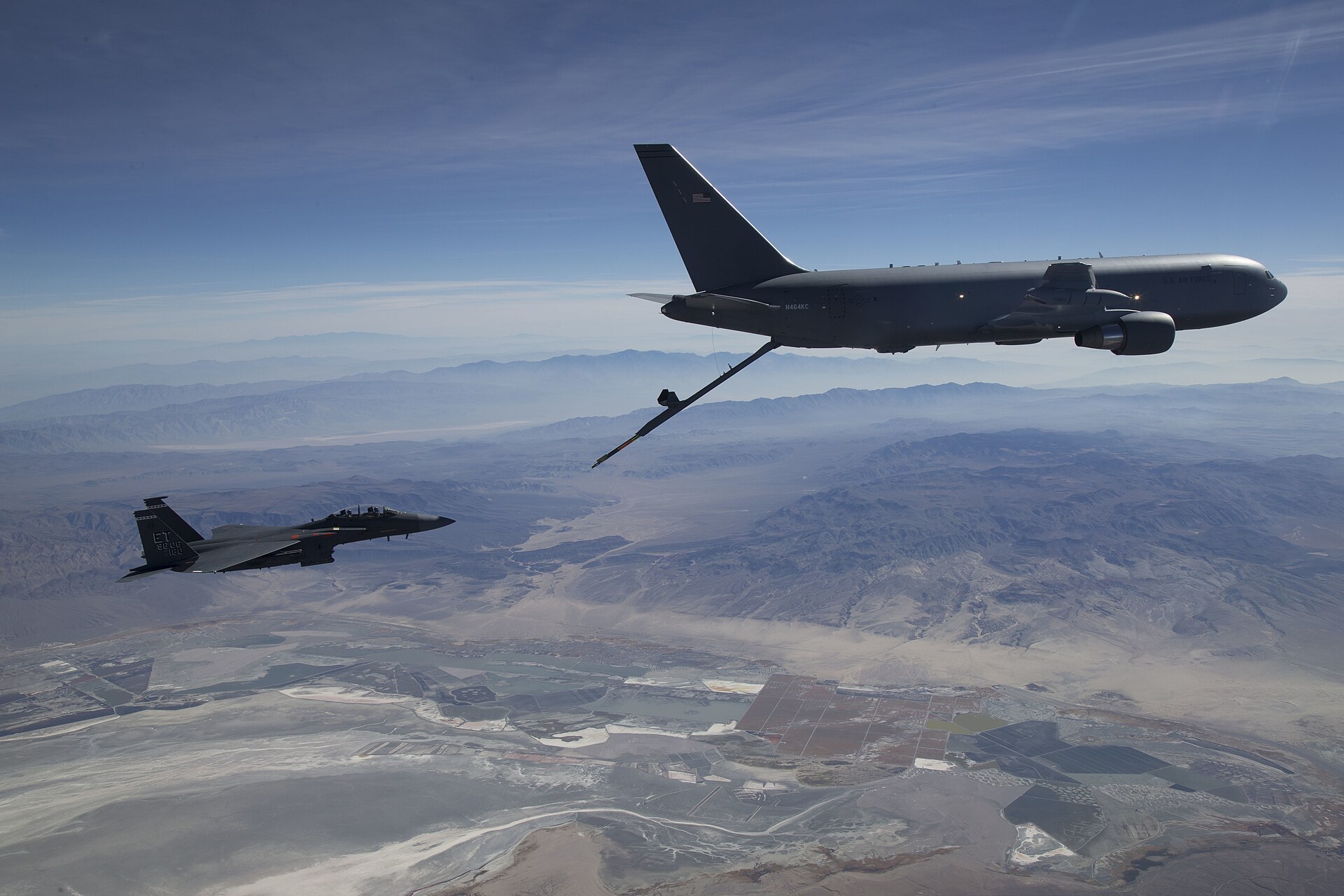
 Image: U.S. Air Force KC-46A Pegasus refuels an F-15 Strike Eagle - U.S. Air Force / Wikimedia Commons, public domain.
- Reuters-linked reports citing the New York Times say the U.S. plan would cut NATO-available F-16 and F-15E aircraft from roughly 150 to 100.
- The sharper capability issue is refueling: the reports say all eight aerial refueling tankers previously made available to Europe would be removed.
- The fair read is a reported force-model reduction, not a confirmed U.S. withdrawal from NATO or an end to Article 5 obligations.
The United States is reportedly preparing a significant reduction in the air and naval assets it makes available for NATO operations in Europe, with the most sensitive cut involving aerial refueling aircraft.
The latest report, carried by Reuters-linked outlets and attributed to the New York Times, says Washington would reduce the number of F-16 and F-15E fighter jets available for NATO in Europe from roughly 150 to 100. It also says maritime reconnaissance aircraft would fall from 26 to 15, while all eight aerial refueling tankers previously assigned to Europe would be removed from the NATO pool.
That does not mean U.S. forces are leaving Europe overnight. It does not mean NATO has ended. It does mean the alliance may be forced to plan for a crisis with fewer U.S. enablers in the exact areas Europe has historically struggled to replace quickly.
What happened
The report follows an earlier Spiegel/Reuters account in late May that said U.S. officials had briefed NATO allies on planned reductions to the pool of American military capabilities available during a crisis. Defense News, carrying the Reuters report, said the planned changes included fewer fighter jets, warships, mid-air refueling aircraft, strategic bombers, destroyers, submarines and reconnaissance drones.
The newer account puts more specific numbers on the air side. The headline number is the fighter reduction, but the operational number is the tanker line. Fighters can be counted easily. Tankers decide how far, how long and how flexibly those fighters can operate.
What the sources say
The Strait Times report, citing NYT reporting through Reuters, says the U.S. plan would cut F-16 and F-15E availability from about 150 to 100, reduce maritime reconnaissance aircraft from 26 to 15 and remove all eight aerial refueling tankers previously made available to Europe.
Defense News, carrying the earlier Reuters/Spiegel report, said a U.S. envoy briefed NATO officials in Brussels and that fighter numbers were set to fall by a third. It also reported that NATO had acknowledged an over-reliance on the United States in force planning, while Europe and Canada were increasing defense investments.
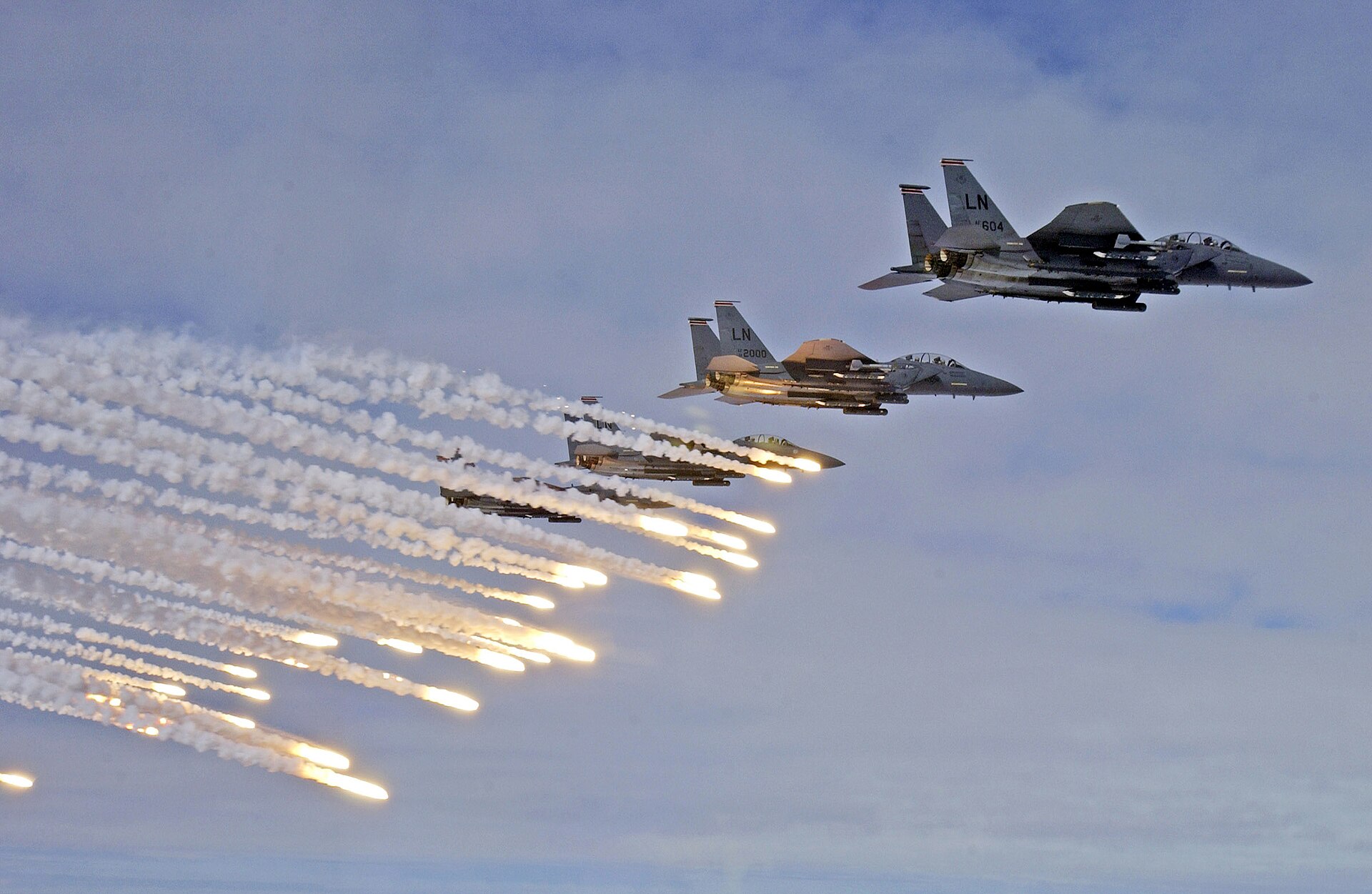 Image: F-15E Strike Eagles from RAF Lakenheath launch flares during an Excalibur practice - U.S. Air Force / Wikimedia Commons, public domain.
What is confirmed
It is confirmed that multiple reputable outlets are reporting the reduction plan and that the story fits a broader U.S. push to resize contributions to NATO's force model. NATO's own public description of the Force Model says it is the framework for organizing, activating and commanding Allied national forces in support of NATO's core tasks.
It is also confirmed that aerial refueling is not a decorative support category. Tankers extend combat radius, keep aircraft on station longer, support long-range strike packages and give commanders options when airfields, weather or enemy defenses complicate operations.
What is not confirmed
No public NATO document reviewed by NoDechev sets out the exact final U.S. numbers as binding alliance policy. The reports describe a plan and briefings, not a published NATO force table. The timeline for implementation is also not fully clear from public material.
The cuts should also not be framed as proof that the United States is abandoning Article 5. NATO's collective-defense clause is a treaty commitment. A force-model reduction changes how the alliance would generate capability in a crisis; it does not automatically erase the legal guarantee.
Why it matters
Europe can buy fighter jets. Replacing the U.S. support architecture around those jets is harder. Refueling aircraft, reconnaissance aircraft, drones, bombers, command-and-control systems, munitions stockpiles and naval assets are the less visible parts of air power that make the visible aircraft matter.
That is why the tanker cut is the clean signal. If Europe has fewer U.S. tankers available in a crisis, European air forces may need to operate with shorter reach, more dependence on forward bases and less flexibility for sustained air campaigns. In a Baltic, Arctic, Black Sea or wider European crisis, that can matter before the first headline talks about fighter totals.
The political signal is just as important. Washington is telling European allies that the era of assuming U.S. depth behind every NATO plan is narrowing. Europe can respond by spending more, buying more, pooling more or arguing more. Only the first three change the military picture.
What to watch next
The next useful checkpoint is whether NATO or U.S. European Command publishes a clearer force-model update with numbers, timelines and categories. Watch especially for tanker aircraft, reconnaissance drones, maritime patrol aircraft and strategic bombers, not only fighter jets.
Also watch Europe's reaction. If governments respond with generic spending pledges, the capability gap remains vague. If they announce tanker capacity, long-range reconnaissance, air-defense integration, munitions production and shared procurement, that is a real answer.
NoDechev rating: reported plan, not final public NATO force table. The tanker removal is the most important operational signal because it would reduce how far and how long NATO air power can operate in a European crisis.
Also Read
The aircraft report is a force-planning story, but the treaty question underneath it is still Article 5.
Read the NATO Article 5 explainer