
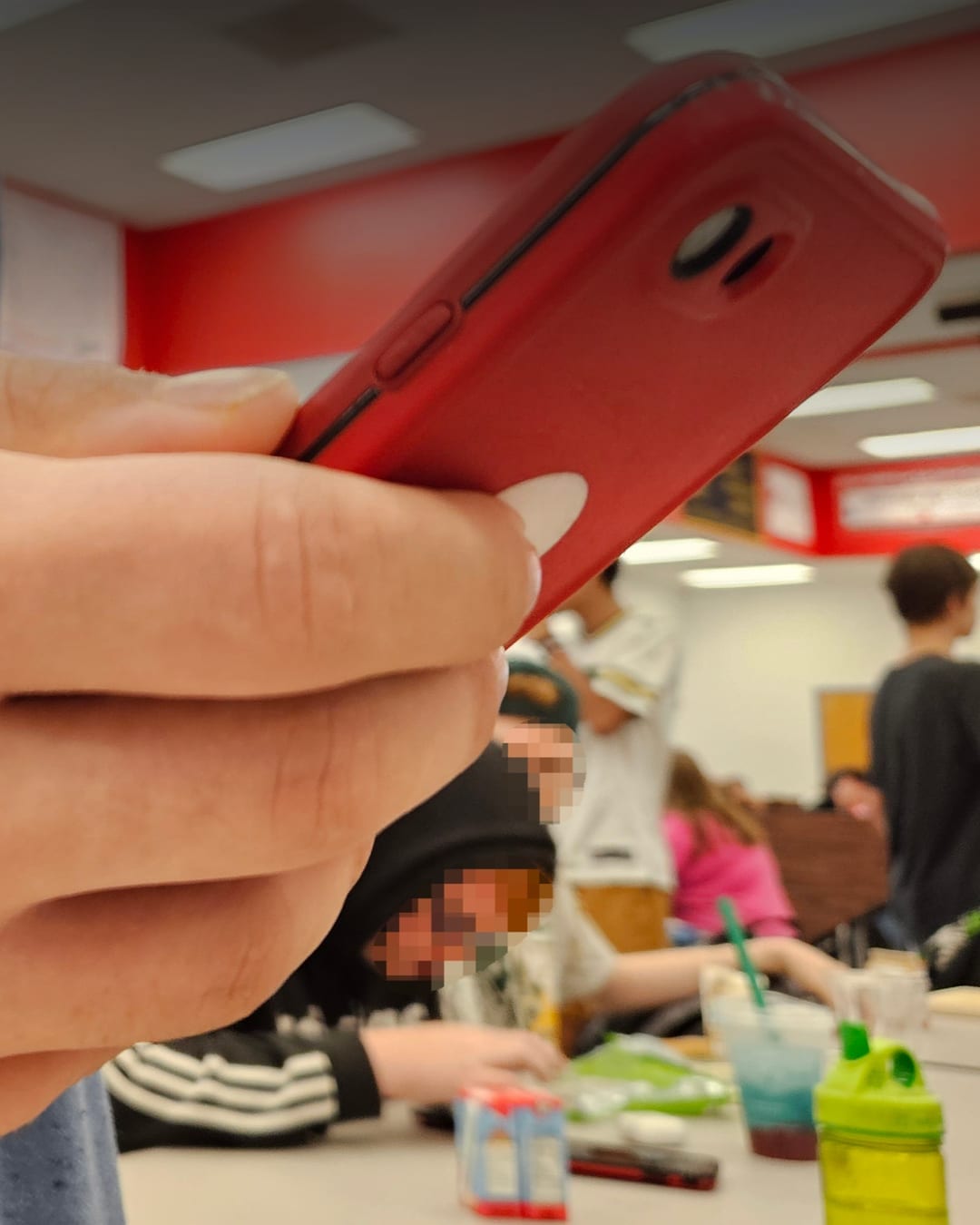
 Image: Teenagers and mobile phones - Wikimedia Commons.
- The UK government announced plans to ban social media platforms from offering services to under-16s.
- Platforms named by GOV.UK include Snapchat, TikTok, YouTube, Instagram, Facebook and X.
- Messaging services such as WhatsApp and Signal are not intended to be included; the first regulations could be in effect in Spring 2027.
The viral claim is broadly real: the UK government has announced a national under-16 social media ban. The more precise version is that platforms will be blocked from offering social media services to users under 16, with implementation expected through regulations that could take effect in Spring 2027.
That timing matters. This is official government policy, but it is not the same as saying every under-16 account in Britain became illegal on June 15, 2026.
What happened
GOV.UK published a June 15 press release saying social media platforms will be blocked from offering services to under-16s. The government says it plans to use an Australia-style model for the ban.
The release says the ban is expected to capture user-to-user platforms whose purpose is social interaction, posting and algorithmic distribution. It names Snapchat, TikTok, YouTube, Instagram, Facebook and X as platforms expected to be included.
The government also says it does not intend messaging services such as WhatsApp and Signal to be included in the social media ban.
What else is included
The plan goes beyond a simple account-age rule. The government says under-16s will face additional restrictions on harmful functions, including livestreaming and stranger communication, across a wider range of online services such as gaming sites.
Those restrictions will also be on by default for 16- and 17-year-olds, to avoid a sudden drop-off at 16. The government says it will look in more detail at overnight curfews and breaks in infinite scrolling for under-18s, with more detail due in July.
What is confirmed
Confirmed: the announcement is official and was published by the Department for Science, Innovation and Technology, with statements from Prime Minister Keir Starmer and Technology Secretary Liz Kendall.
Confirmed: the government says protections are expected to be brought to Parliament before Christmas, and that the first set of regulations could be in effect in Spring 2027. Confirmed: Ofcom is being asked to study effective age assurance for verifying whether someone is over 16.
What is not confirmed
Not confirmed: the final legal text, the exact list of platforms in scope, the final age-assurance standard, the penalty structure for noncompliant companies, and how edge cases such as video platforms, gaming communities and hybrid messaging/social apps will be treated.
Also not confirmed: whether enforcement will work cleanly in practice. The government says it will learn from Australia's model and use more effective age-assurance measures, but age verification remains the hard part of any under-16 social media rule.
Why it matters
This is one of the biggest online child-safety moves in the UK since the Online Safety Act. It shifts the burden from parents trying to police every app toward platforms being legally responsible for age access and harmful design features.
The tradeoff is privacy and enforcement. Strong age checks can reduce underage access, but they can also create new data, identity and exclusion risks if the system is badly designed. That is why Ofcom's age-assurance work now becomes central.
What to watch next
Watch the secondary legislation before Christmas, the July detail on curfews and infinite scrolling, and Ofcom's enforcement strategy. The announcement is clear; the practical test is whether the rules become enforceable without pushing children into less visible spaces.
NoDechev rating: official policy announcement, not yet a live access cutoff. The UK has announced an under-16 social media ban, with first protections expected in Spring 2027 and key implementation details still pending.
Ready social post
The UK has officially announced plans to ban social media platforms from serving under-16s. The key caveat: the first regulations are expected in Spring 2027, so this is not a live access cutoff today.
Read next: Trump signs TAKE IT DOWN Act targeting explicit deepfakes