

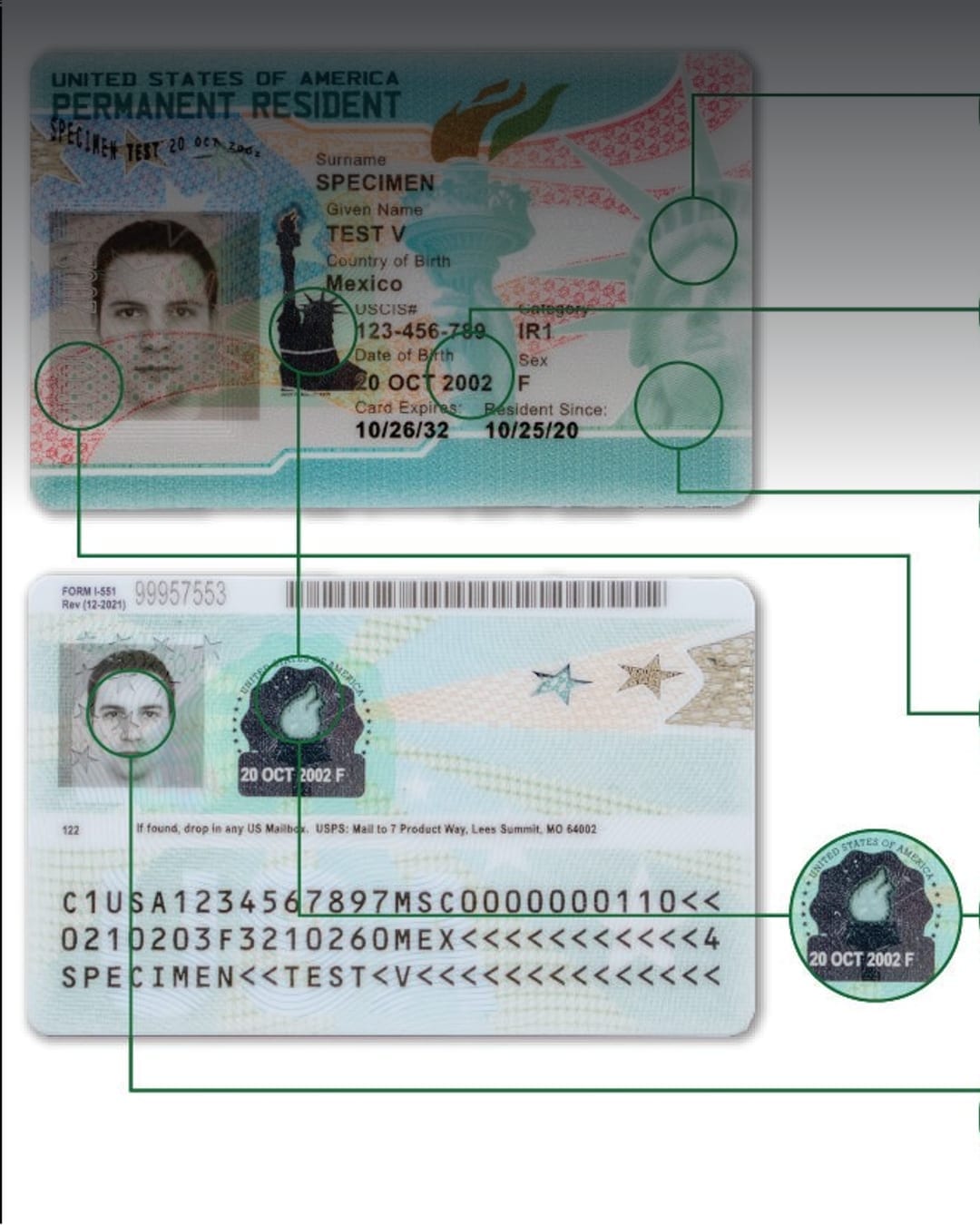
 Image: United States Green Card 2023 edition — USCIS / Wikimedia Commons, public domain
- USCIS issued a new policy memo making in-country adjustment of status an “extraordinary” discretionary benefit.
- The viral claim that all green card applicants must leave the U.S. indefinitely is too broad.
- The change could still be one of the most disruptive immigration shifts in years for people applying from inside the U.S.
A viral claim says the Trump administration now requires all green card applicants to leave the United States indefinitely while their cases are processed, even if they are legally present or married to U.S. citizens.
The core concern is real: USCIS has announced a major policy shift that pushes many people toward consular processing abroad instead of adjustment of status inside the U.S. But the viral wording overstates the rule.
What changed
The policy centers on a USCIS memorandum known as PM-602-0199, titled “Adjustment of Status is a Matter of Discretion and Administrative Grace, and an Extraordinary Relief that Permits Applicants to Dispense with the Ordinary Consular Visa Process.”
In plain English: USCIS is telling officers that getting a green card from inside the U.S. through Form I-485 should be treated as exceptional, not routine. The agency says consular processing through the State Department is the ordinary path.
USCIS framed the rule around temporary visitors and nonimmigrants, saying their time in the U.S. should not function as the first step in a green card process.
Does it apply to everyone?
No. That is the biggest issue with the viral claim.
The memo does not appear to abolish adjustment of status entirely. It does not say every green card applicant, without exception, must leave the country. It instead gives officers broader discretion to deny in-country adjustment unless the applicant shows extraordinary circumstances or fits an exception.
That still matters enormously. For many people already living legally in the U.S. — including workers, students and some family-based applicants — being forced into consular processing can mean leaving jobs, spouses, children and homes while waiting through uncertain overseas processing.
 Image: USCIS Application Support Center, Queens — Tdorante10 / Wikimedia Commons, CC BY-SA 4.0
What about spouses of U.S. citizens?
The claim specifically says even people married to American citizens must leave. That is possible in some cases under the new discretionary posture, but it is not a clean universal rule.
Spouses of U.S. citizens have long had special protections in immigration law, and some statutory bars do not apply to immediate relatives in the same way they apply to other categories. The new memo can still make their cases harder, but it should not be summarized as “all spouses must leave indefinitely.”
Why this is a big deal
Adjustment of status is a central part of the U.S. immigration system. It lets eligible people already in the country become permanent residents without leaving for a consular interview abroad.
If USCIS officers apply the new standard aggressively, it could shift hundreds of thousands of applicants into overseas processing, increase consular backlogs, and create real risks for people who may not be able to return quickly — or at all — after leaving.
Immigration lawyers quoted in early coverage described the move as sweeping, confusing and likely to face legal challenges.
What is confirmed and what is not
Confirmed: USCIS issued a policy memo making adjustment of status a more exceptional, discretionary benefit and emphasizing consular processing as the normal route.
Overstated: the claim that all green card applicants must leave the U.S. indefinitely. The memo leaves room for exceptions, discretion and category-specific treatment.
Still unclear: how officers will apply “extraordinary circumstances,” how pending cases will be handled, and how courts will respond.
NoDechev rating: partly true, overstated. The policy is a major shift, but not a blanket order forcing every green card applicant out of the country indefinitely.
Also Read
Another claim-check on Trump administration policy and legal framing.
Read: Is Trump Opening Drilling Near National Parks?