
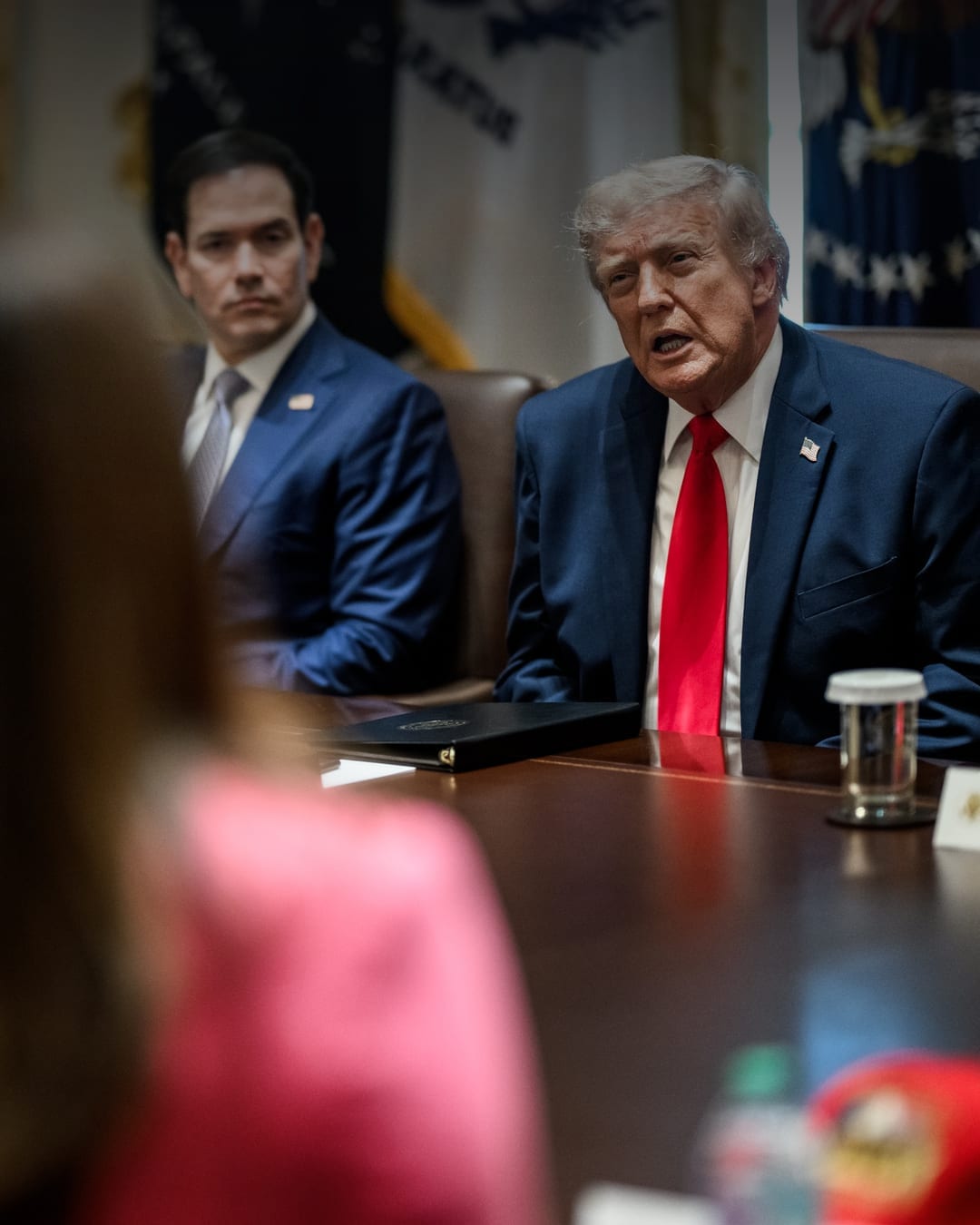
 Image: President Donald Trump during a White House meeting, May 27, 2026 — White House photo.
- Reuters reports Trump told reporters his team will look into a public stake in AI companies.
- He also said he expects to host AI executives at the White House “probably next week.”
- NOTUS, cited by Reuters, says senior U.S. officials have had preliminary talks with major AI companies about possible government share purchases.
- The key caveat: there is no confirmed company list, stake size, voting structure, funding source or legal vehicle yet.
President Donald Trump is now publicly entertaining an idea that would normally sit far outside standard U.S. tech policy: the government, or the American public through the government, holding equity in major artificial intelligence companies.
Reuters reported Friday that Trump told reporters his team will “look into” the idea of AI companies giving the American public a stake in their firms. He also said he planned to host AI executives at the White House as soon as next week. Reuters said the White House did not immediately provide details on the planned meeting or whether the equity-stake idea would be formally on the agenda.
What happened
The Reuters report followed earlier NOTUS reporting that senior U.S. officials held preliminary discussions with major AI companies about the possibility of the government buying shares in their firms. The NOTUS-sourced account, carried by Reuters, said OpenAI CEO Sam Altman had discussed the concept with administration officials and had first pitched it directly to Trump in 2025.
The idea is being framed as a way to let the public share in the economic upside of AI. That language matters. It is not the same as a confirmed nationalization plan, a signed investment agreement or a proposed bill. It is a live policy concept being floated in public by the president.
What the sources say
AP added the political backdrop on Saturday: Bernie Sanders has proposed giving the public a 50% ownership stake in large AI companies through stock placed in a public wealth fund, while Altman told Sanders he supports the general idea of public equity in AI but not the 50% threshold, according to people familiar with their meeting.
Axios reported Trump described a U.S. stake in AI giants as potentially “a beautiful thing,” arguing the public could share in the upside of companies expected to become extremely valuable. Axios also reported that Altman has pushed versions of the idea in private conversations, policy proposals and meetings on Capitol Hill.
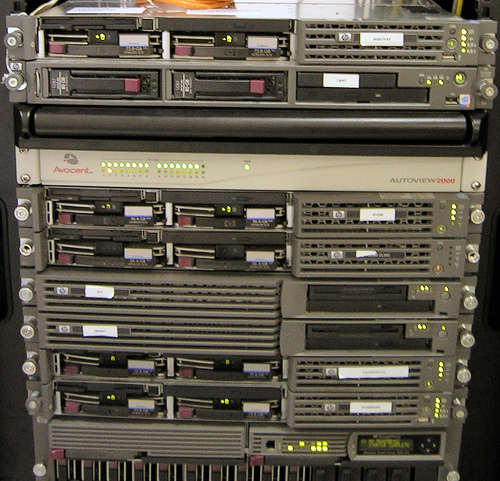 Image: Computer server rack — Wikimedia Commons. AI policy fights are increasingly tied to compute, data centers and infrastructure costs.
What is confirmed
It is confirmed from Reuters that Trump said his team would examine the idea and that he expected a White House meeting with AI executives as soon as next week. It is also confirmed from Reuters’ account of NOTUS that preliminary discussions over possible government stakes had already taken place.
It is confirmed from White House material that the administration is already moving aggressively on AI, including national-security use of advanced models and AI infrastructure. Separately, the White House has publicly promoted the earlier Intel deal as an example of taxpayers receiving a direct equity stake in a major American company.
What is not confirmed
It is not confirmed which AI companies would attend next week’s meeting, whether OpenAI, Anthropic, Google, Microsoft, xAI or others would accept any equity framework, or whether the idea would involve voluntary shares, government purchases, tax treatment, warrants, a public wealth fund or another mechanism.
It is also not confirmed whether any stake would carry voting rights, board rights, national-security conditions or limits on model deployment. Those details decide whether the proposal is mainly industrial policy, public wealth sharing, regulatory leverage or something closer to state ownership.
Why it matters
AI companies are asking the public to tolerate enormous costs: electricity demand, data-center buildouts, water use, labor disruption, copyright fights and national-security risk. A public-equity argument says the upside should not flow only to private investors and founders if public infrastructure and public tolerance are part of the bargain.
The counterargument is equally obvious: government equity in frontier AI companies could blur the line between regulator, customer, investor and political power. If Washington owns pieces of the companies it also regulates and contracts with, competition and oversight become harder to separate.
What to watch next
The immediate signal is the guest list. If the White House confirms attendance from OpenAI, Anthropic, Google, Microsoft, Meta, xAI or major chip and cloud companies, the story becomes more concrete. The second signal is whether the administration describes the idea as voluntary wealth sharing, federal investment, a sovereign-wealth structure or a condition tied to government contracts.
NoDechev rating: real policy signal, no finalized plan. Trump is publicly exploring public or government equity in AI companies, but the structure is still missing.
Also Read
For the infrastructure side of the AI race, read the NoDechev explainer on how AI data centers work.
Read the AI data center explainer ->