
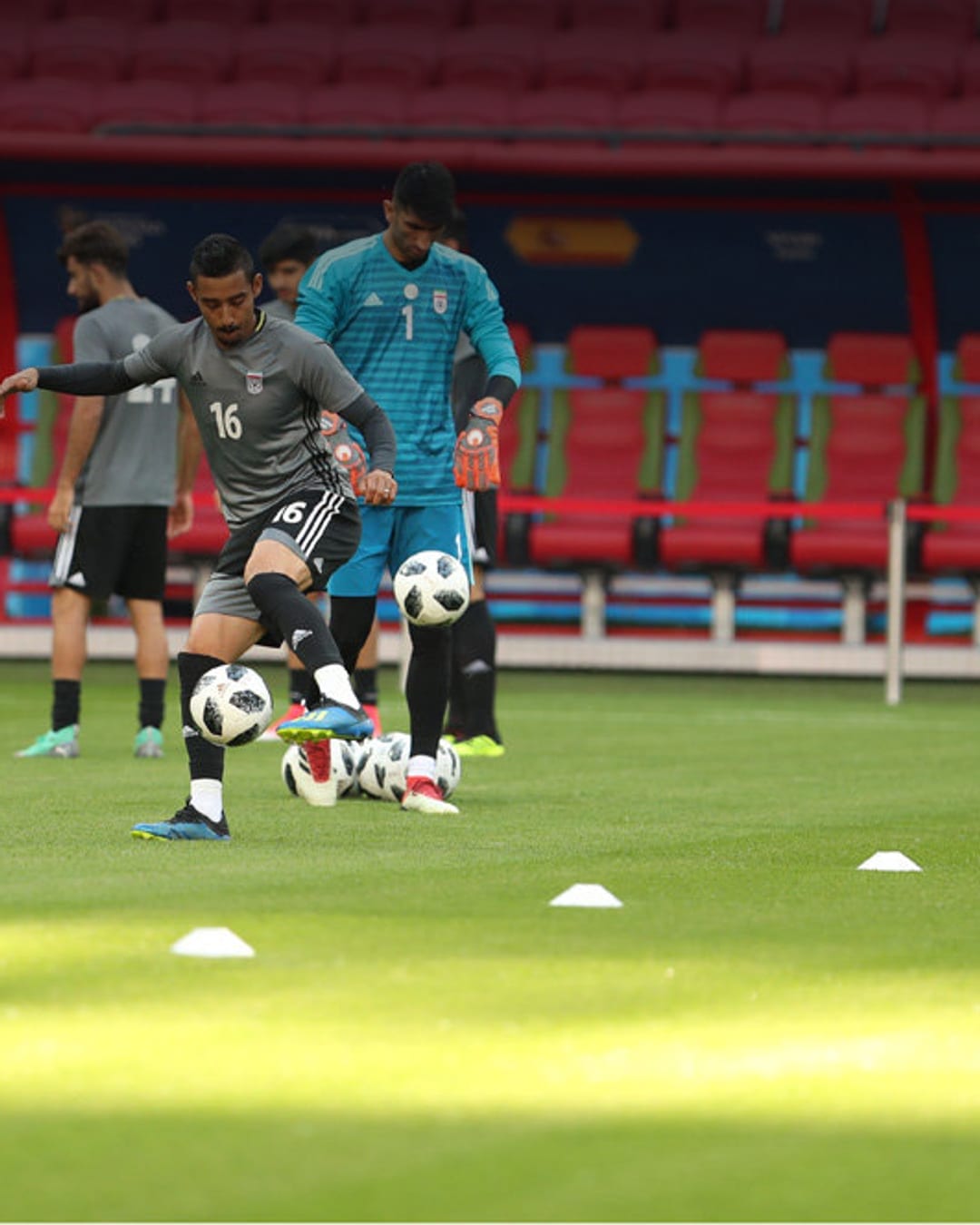
 Image: Iran national football team - Wikimedia Commons, used as team context.
- Iran's players arrived in Tijuana wearing gold #168 pins, according to AP and the Los Angeles Times.
- The number points to the reported death toll from the February 28 strike on Shajareh Tayyebeh Elementary School in Minab.
- The clean framing is not "confirmed U.S. killing"; it is a confirmed Iranian memorial gesture around a strike whose responsibility remains publicly disputed.
Iran did not arrive at the World Cup quietly. The squad landed in Tijuana wearing small gold pins marked #168, a number meant to carry the Minab school strike into the first week of the tournament.
On one level, this is a football arrival story: a qualified team reaches its base camp before group-stage matches in the United States. On another level, it is Iran using the world's biggest sporting stage to make a wartime memory visible before FIFA, the host country, and television cameras can look away.
The pins themselves are not in dispute. AP and the Los Angeles Times both report that players wore #168 lapel pins after landing in Mexico. The number refers to the reported death toll from the February 28 strike on Shajareh Tayyebeh Elementary School in Minab, southern Iran. What needs discipline is the next sentence: public reporting points toward U.S. involvement, but Washington and Israel have not accepted responsibility.
What happened
Iran's squad arrived in Tijuana on Sunday, June 7, after shifting its World Cup base from Arizona to Mexico amid U.S. visa and travel restrictions. The team is scheduled to play all three group-stage matches in the United States: New Zealand in Inglewood on June 15, Belgium in Inglewood on June 21, and Egypt in Seattle on June 26.
The pins appeared as players and staff left the aircraft. Iran's embassy in Hungary later referenced the gesture in a social media post tied to Minab, AP reported. That turned the pin from a small uniform detail into a deliberate public signal.
This is also not the first memorial gesture by the team. AP and LA Times reporting both note that before a March warmup match in Antalya, Turkey, Iranian players held pink and purple school backpacks during the national anthem. The backpacks were not subtle. Neither are the pins.
What the #168 means
The #168 pin points to the reported death toll from the Minab school strike. AP says the number refers to people killed, most of them children. The Los Angeles Times reports that most of the victims were girls attending Shajareh Tayyebeh Elementary School.
The New Arab frames the same number as a tribute to 168 people killed, most of them young girls, in the February 28 strike. The Guardian's earlier visual investigation described Iranian state media reporting 168 dead and 95 injured, while noting that those figures were not independently verified at the time.
That is why the wording matters. "168 schoolgirls" is the emotionally sharp version moving online. The sourced version is slightly more exact: 168 reported dead, most of them children, with reporting that most victims were girls at the school.
What is confirmed
Confirmed: Iran's players wore #168 pins after arriving in Mexico for the World Cup. Confirmed: the pins refer to the Minab school strike. Confirmed: the strike has become a major wartime symbol inside Iran and is now being carried into a U.S.-hosted tournament.
Also confirmed: the school was close to a Revolutionary Guard-linked site. That context does not erase the civilian deaths. It explains why the public argument over responsibility, target selection, and intent remains so charged.
What is still disputed
The viral headline says the schoolgirls were killed by the United States. That is the version built for maximum emotional force. It may match Iranian attribution and some reporting assessments, but it should not be written as a settled official admission.
AP's current wording says the strike was likely launched by the U.S. LA Times says video analyzed by Bellingcat appears to show a U.S. Tomahawk missile striking the school, while also saying the United States has not accepted responsibility. The Guardian reported in March that U.S. officials acknowledged the incident and promised investigations, but denied deliberately targeting a school.
The clean NoDechev framing is narrower and stronger: Iran wore #168 pins for the Minab school victims. The gesture is real. The U.S. responsibility claim is serious, sourced, and central to the story, but still requires attribution.
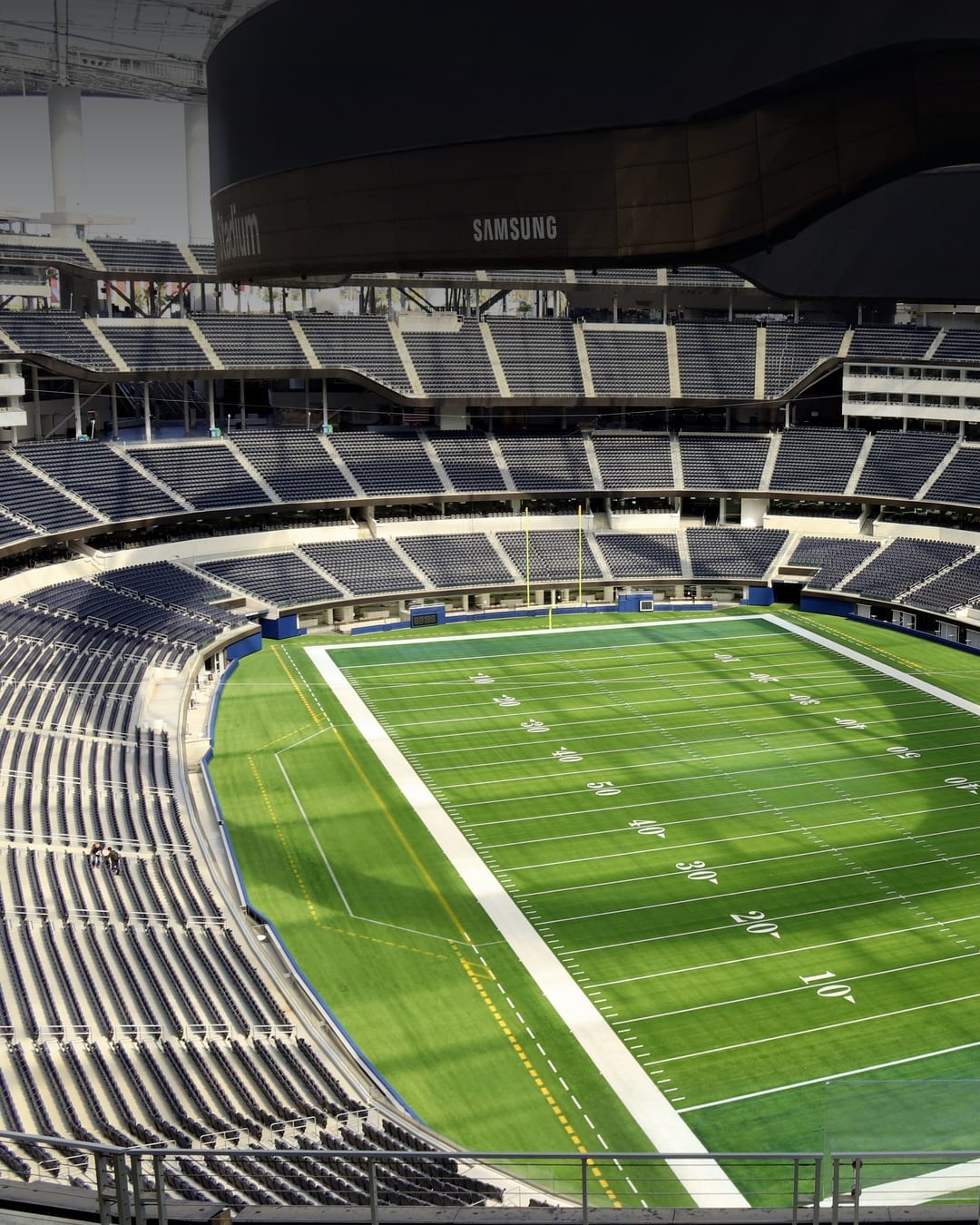 Image: SoFi Stadium in Inglewood, California - Prayitno / Wikimedia Commons, CC BY 2.0.
Why it matters
The gesture lands directly inside FIFA's political-message problem. The World Cup is being co-hosted by the United States, Iran will play in U.S. venues, and the team's memorial refers to a wartime incident tied to U.S.-Iran tensions.
That is the tension FIFA tries to avoid: a global sporting event, a host country accused in a civilian-death story, and players using tiny symbols to force a memory into the frame. Airport arrival is the easiest place to do it. Matchday is harder.
FIFA rules restrict political, religious, or personal slogans and images on equipment used during matches. LA Times reported that FIFA had not commented on whether the pins could be worn on sidelines during games. The next signal is not whether the pins existed. It is whether FIFA lets the memorial follow Iran into the stadium environment.
What to watch next
Watch whether FIFA allows the pins around matches, whether Iran repeats the memorial on the pitch, and whether U.S. officials release more detail from the investigation into the Minab strike.
The story is not just a football note. It is a test of how a global tournament handles wartime memory when the host country is also part of the accusation. If the pins stay visible, the World Cup becomes one more stage for the Minab story. If FIFA shuts them down, that becomes its own political signal.
NoDechev rating: pins confirmed; Minab victim reference confirmed; U.S. responsibility claim serious but still attribution-required.
Ready social post
Iran's World Cup team arrived in Tijuana wearing gold #168 pins for the Minab school strike victims. The gesture is confirmed. The careful wording: AP says the strike was likely launched by the U.S., but Washington and Israel have not publicly accepted responsibility.
Read next: Iran's same-day U.S. entry claim