

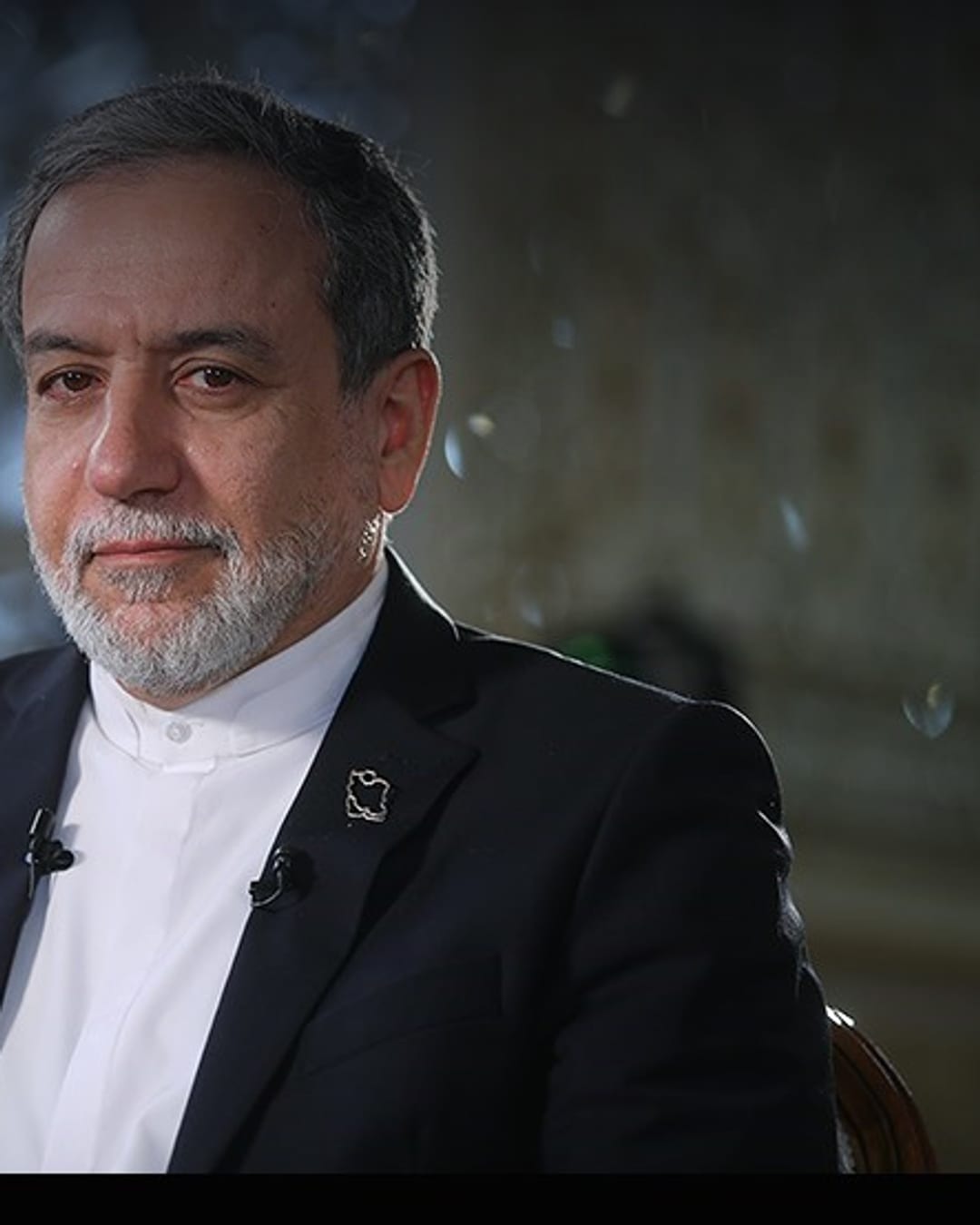
 Image: Abbas Araghchi — Mohammad Hassanzadeh / Tasnim News Agency via Wikimedia Commons, CC BY 4.0
- Iran’s foreign minister says talks with Washington were undercut by U.S.-Israeli attacks and regime-change messaging.
- Araghchi told PBS that the U.S. and Israel first aimed for a quick “regime change” but failed.
- NBC reported Araghchi also said a nuclear deal had been within reach during Geneva talks before the attack.
Iran is framing the latest U.S.-Israel pressure campaign as proof that negotiations were never only about the nuclear file.
Foreign Minister Abbas Araghchi told PBS NewsHour that Tehran had entered talks after American assurances that Washington wanted a negotiated solution and had “no intention” of attacking Iran. But, he said, after three rounds of negotiation and signs of progress, the U.S. and Israel still moved militarily.
Asked what Washington and Israel were trying to achieve, Araghchi said they initially believed they could force a rapid political collapse in Tehran.
“They thought that, in a matter of two or three days, they can go for a regime change, they can go for a rapid, clean victory, but they failed,” Araghchi said in the PBS interview.
What Iran is claiming
The Iranian position is not simply that talks failed. It is that diplomacy and regime-change pressure were happening at the same time.
That is why Araghchi’s language matters. He is arguing that negotiations over Iran’s nuclear program were used alongside, or overtaken by, a military strategy intended to weaken or replace the Islamic Republic’s leadership.
NBC News separately quoted Araghchi saying that Iranian negotiators had met U.S. envoys Steve Witkoff and Jared Kushner in Geneva with the aim of averting a military assault, and that “a deal was at our reach.” He said the two sides had resolved some nuclear questions and planned to continue discussions before the attacks.
The regime-change signal
The regime-change reading is not coming from Iran alone. It follows public remarks from both Washington and Israel.
NBC reported that President Donald Trump told Iranians to “take over your government,” while Israeli Prime Minister Benjamin Netanyahu said the operation would create conditions for Iranians to “take their fate into their own hands.” Iran is now using those statements as evidence that the campaign was political, not just military or nuclear.
Araghchi rejected the idea that outside military pressure could produce a clean change of government, calling it “mission impossible” in his NBC interview and saying millions still supported Iran’s political structure.
 Image: Iran nuclear talks in Vienna — Wikimedia Commons / public source archive
Why this matters
The practical effect is a harder negotiating environment. If Tehran believes U.S. diplomacy is paired with regime-change planning, it has less incentive to treat future talks as a neutral channel.
In the PBS interview, Araghchi said talking with Americans again was unlikely to be “on our agenda” because of what he called a bitter experience: negotiations followed by strikes.
That does not mean talks are impossible. Iranian officials have often mixed public defiance with back-channel diplomacy. But the public line now gives Tehran political cover to resist a quick return to the table unless attacks stop and the scope of negotiations is redefined.
What is confirmed
Confirmed: Araghchi publicly accused the U.S. and Israel of pursuing regime change and said they failed to achieve it quickly.
Confirmed: he linked that accusation to negotiations over Iran’s nuclear program, saying talks had progressed before the attacks.
Still contested: whether regime change was the formal end goal of U.S. policy or a political message attached to a military campaign. Iran says yes; U.S. and Israeli officials frame the campaign around security, nuclear and military objectives.
NoDechev rating: verified statement, contested interpretation. Iran’s foreign minister did say the U.S. and Israel sought regime change despite negotiations; whether that was formal policy remains disputed.
Also Read
More NoDechev coverage on the Iran-U.S. negotiation track.
Read: Iran Reportedly Agreed to Give Up Enriched Uranium