

 Image: European Union flags outside the Berlaymont building in Brussels - Thijs ter Haar / Wikimedia Commons, CC BY 2.0.
- The Council of the EU and European Parliament negotiators reached a provisional deal on a new returns regulation on June 1.
- The rules would create faster EU-wide return procedures, cooperation obligations for people ordered to leave, and possible return hubs in third countries.
- The text is not fully final: it still needs Council and Parliament endorsement, legal-linguistic revision and formal adoption.
European Union negotiators have reached a provisional deal on a new returns regulation designed to speed up the removal of people who have no legal right to stay in member states.
The Council of the EU said the agreement with European Parliament negotiators was reached on June 1 and would complement the wider EU Pact on Migration and Asylum, which starts applying on June 12, 2026.
What happened
The new regulation is meant to replace a slower, fragmented returns system with common EU-wide rules. It would require third-country nationals who are illegally staying in the EU to cooperate with national authorities and leave the member state concerned either immediately or within the period set by a return decision.
Reuters described the agreement as a deal to fast-track illegal migrant returns. Anadolu and Euronews framed it as part of a tougher migration framework, driven by political pressure across the bloc and low return rates compared with the number of removal orders issued.
What the deal includes
The most politically sensitive element is return hubs. The Council says member states would be able to establish return hubs in third countries for people who have no right to stay. Those hubs could serve as a final destination or as transfer centres before onward return to a country of origin or another third country.
The deal also introduces a European Return Order, a shared form containing key elements of a return decision. The goal is to make it easier for member states to recognise one another's return decisions later, although mutual recognition will remain voluntary at first.
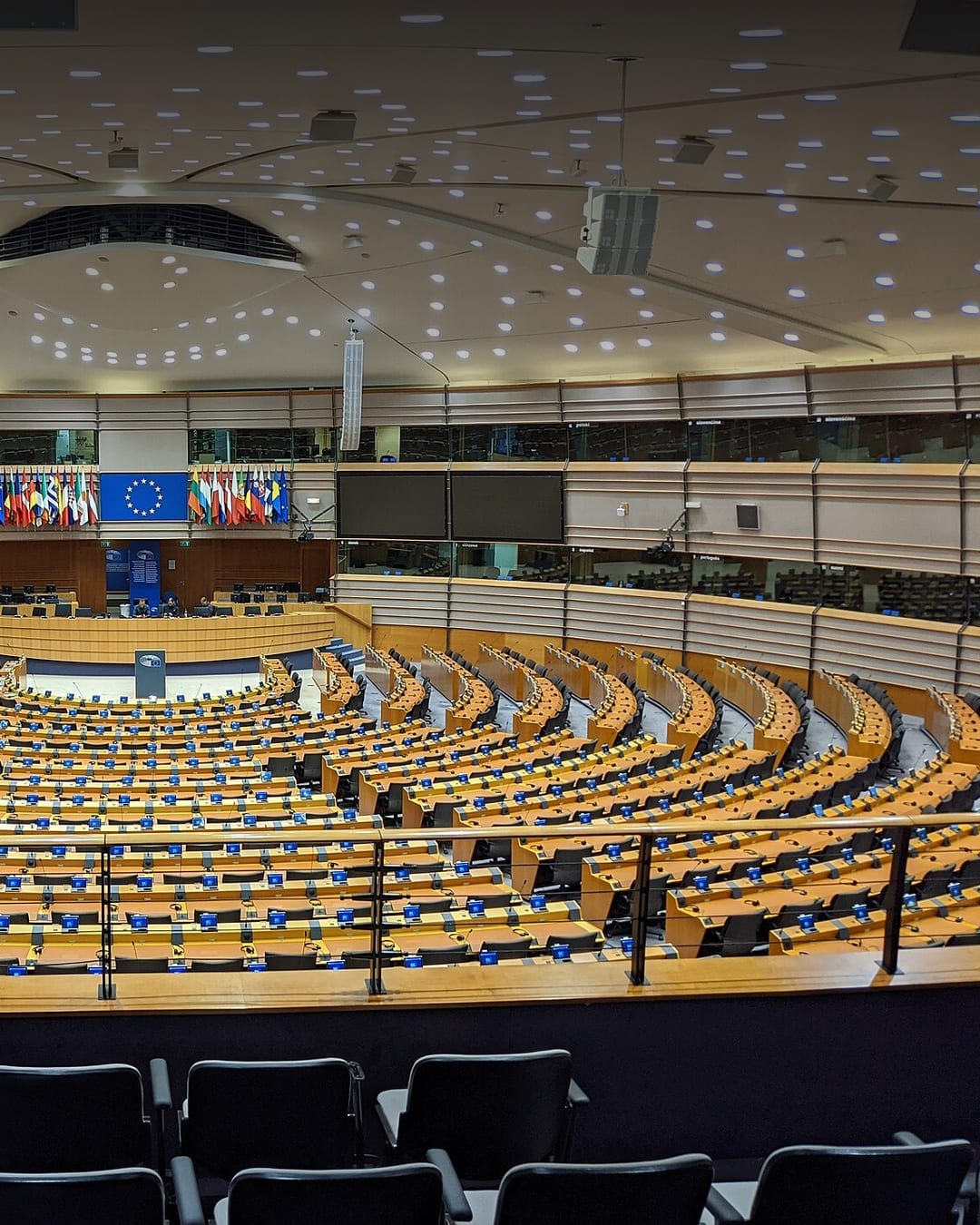 Image: European Parliament hemicycle in Brussels - Profpcde / Wikimedia Commons, CC BY-SA 4.0.
What is confirmed
It is confirmed that Council and Parliament negotiators reached a provisional agreement. It is also confirmed that the regulation covers cooperation obligations, possible consequences for non-cooperation, return hubs in third countries, a European Return Order and special measures for people considered security risks.
For security-risk cases, the Council says member states may issue entry bans longer than the usual ten-year maximum and may impose detention in prison. Unaccompanied minors are excluded from third-country return-hub agreements or arrangements.
What is not final
This is not yet the final legal step. The provisional agreement still has to be endorsed by the Council and Parliament, then formally adopted after legal-linguistic revision. The regulation would begin implementation after publication in the EU Official Journal, with a number of provisions applying 12 months later.
It is also not clear which third countries, if any, will actually host return hubs. The Council text says any such agreement may only be concluded with a country that respects international human rights standards, international law and the principle of non-refoulement.
Why it matters
Returns have long been one of the weakest parts of EU migration policy. Governments issue removal decisions, but actual returns often lag because of appeals, documentation problems, non-cooperation, lack of readmission agreements and uneven national procedures.
The political point is just as important. Migration pressure has helped reshape elections across Europe, and mainstream EU institutions are now moving toward tools that were once mostly associated with hardline migration policy: offshore return hubs, longer detention options and faster procedures for people with no right to remain.
What to watch next
The next steps are the formal institutional votes, the final legal text, the implementation timetable and any bilateral agreements with non-EU countries willing to host return hubs. Rights groups are also likely to challenge parts of the framework, especially detention and third-country transfer rules.
The clean read: the EU has not switched on a finished deportation machine overnight. It has reached a provisional political-legal deal that would make returns faster and more central to the new migration pact once the final steps are completed.
NoDechev rating: confirmed provisional deal. The EU institutions confirm the agreement; implementation details, return-hub countries and final legal text still need to be watched.
Also Read
The EU migration deal is another example of political pressure forcing institutions to convert border and asylum debates into enforcement machinery.
Read: Germany AfD and the Dexit claim check ->