
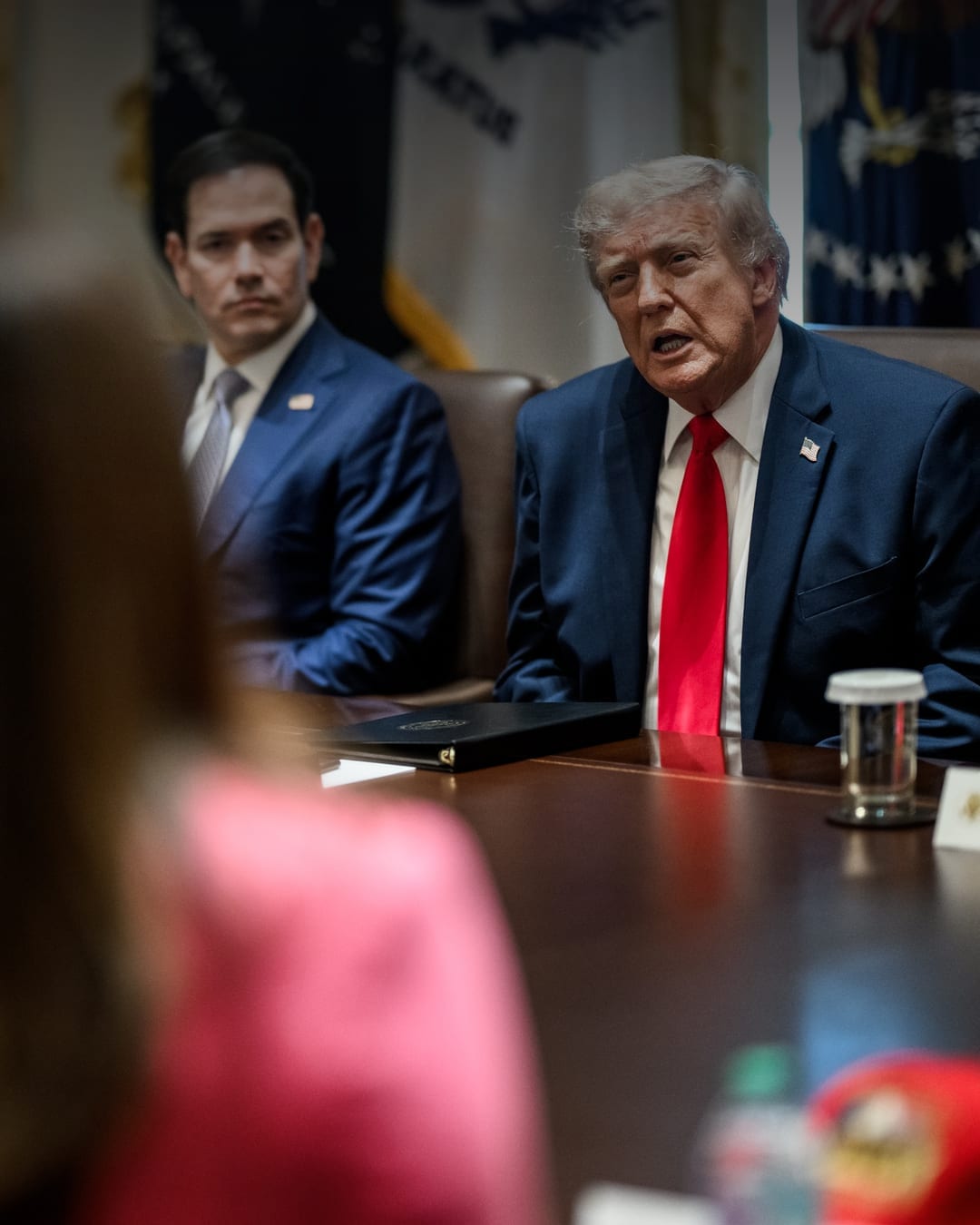
 Image: Donald Trump at a May 2026 White House cabinet meeting - White House photo.
- Trump shared a post about Canada’s weak economy and added the “51st State” framing.
- That is a political jab, not evidence of a formal statehood proposal for Canada.
- Canada’s Q1 data are weak, but the recession label is disputed: StatCan reported flat real GDP quarter over quarter, while some annualized measures turned slightly negative.
Donald Trump has revived his “51st State” line about Canada after sharing a post that framed the Canadian economy as being in recession.
The headline is politically loud, but the fact pattern is narrower. Trump did not announce a formal statehood plan. He amplified a recession claim and used it to repeat a familiar political taunt: that Canada would be better off as part of the United States.
What happened
The post circulated after a Canadian GDP release showed the economy struggling at the start of 2026. A Trump post archive captured the president resharing the recession framing and adding “51st State” language.
The Daily Beast reported the move as Trump taking another public shot at Canada while the U.S. president was also under pressure over the Middle East. That makes the Canada line part of a broader Trump communications pattern: take a negative headline, attach it to a political target, then push a punchy annexation-style phrase that travels faster than the underlying data.
What the data says
Statistics Canada’s May 29 release says real gross domestic product was essentially unchanged in the first quarter of 2026. It also says real GDP by expenditure fell 0.1% on an annualized basis, after a 2.1% annualized decline in the fourth quarter of 2025.
That is why some commentators describe Canada as technically in recession. But StatCan’s quarterly real GDP reading was flat, not clearly negative, and real GDP per capita increased 0.2% in the quarter. Desjardins’ economics team wrote that it was too early to call a recession from the first-quarter data.
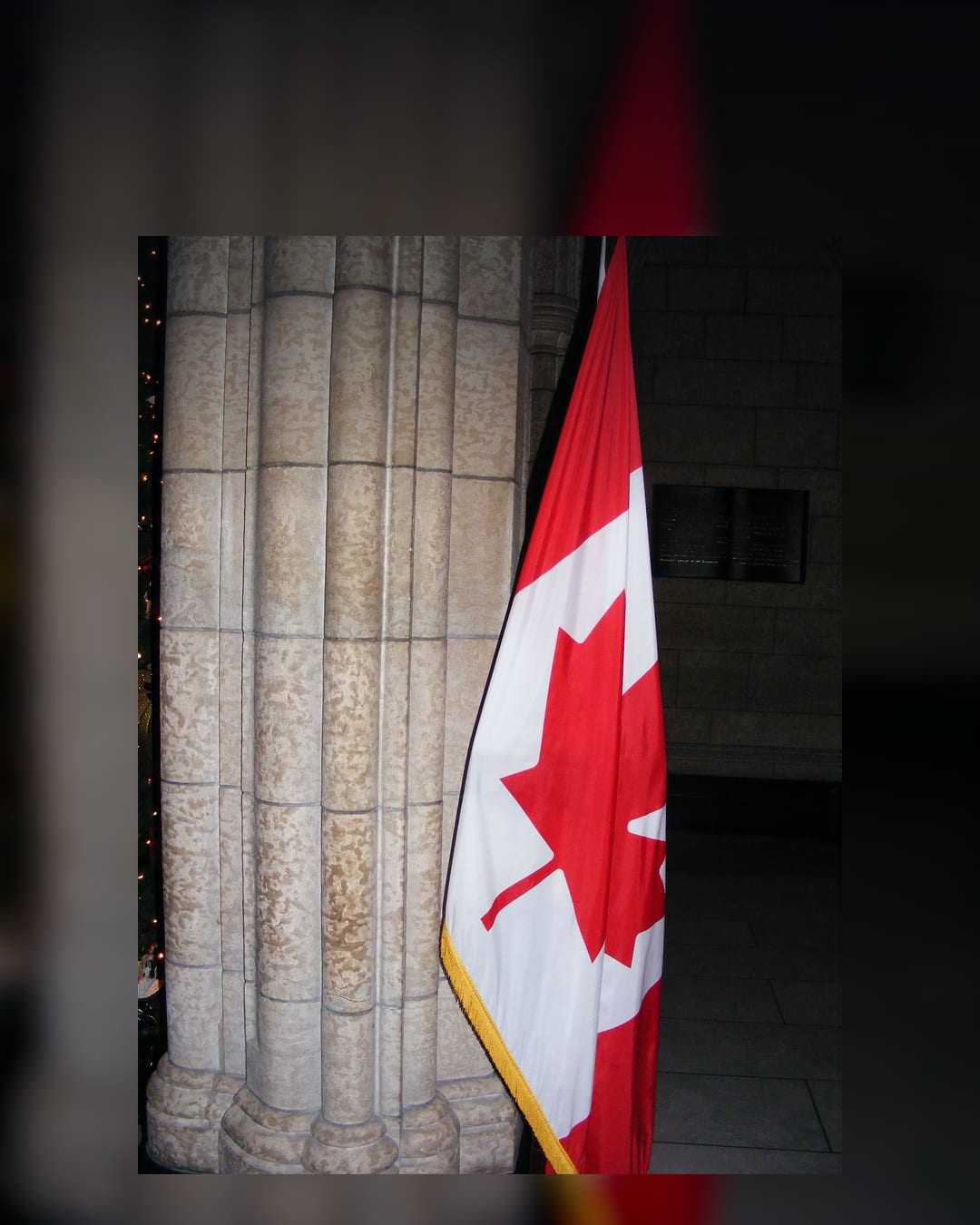 Image: Canadian flag - Wikimedia Commons.
What is confirmed and not confirmed
Confirmed: Trump used the “51st State” line in connection with a weak Canada recession headline. Canada’s economy also posted weak output data across late 2025 and early 2026, including a negative annualized Q1 expenditure measure.
Not confirmed: there is no formal Trump administration statehood proposal for Canada in this item. It is also not clean to say Canada has officially entered recession without qualification. The data support a slowdown and a contested technical-recession argument, not a simple official declaration.
Why it matters
The Canada jab matters because it packages two different things together: a real economic weakness story and a deliberately provocative sovereignty line. The first belongs in a macroeconomic context. The second belongs in a political communications context.
For readers, the trap is treating the most shareable version as the most precise version. “Trump proposes statehood for Canada as it enters recession” sounds like a formal policy move plus a settled economic condition. The evidence is weaker than that. What is solid is that Trump again used the Canada-as-51st-state theme while pointing to soft Canadian economic data.
What to watch next
Watch Canada’s second-quarter GDP and monthly industry data before treating the recession label as settled. Also watch whether Canadian officials respond directly or ignore the line as another Trump provocation. If the phrase becomes a recurring political attack, the key question will be whether it remains a social-media jab or gets tied to trade, tariffs and border negotiations.
NoDechev rating: real political post, cautious economic claim. Trump’s “51st State” framing is documented, but Canada’s recession status should be described as weak/contested rather than official and settled.
Ready social post
Trump revived his “51st State” jab after sharing a Canada recession headline. Caveat: this is a political repost, not a formal statehood plan, and Canada’s recession status is a contested technical read rather than a clean official declaration.
Read how NoDechev checks viral claims