

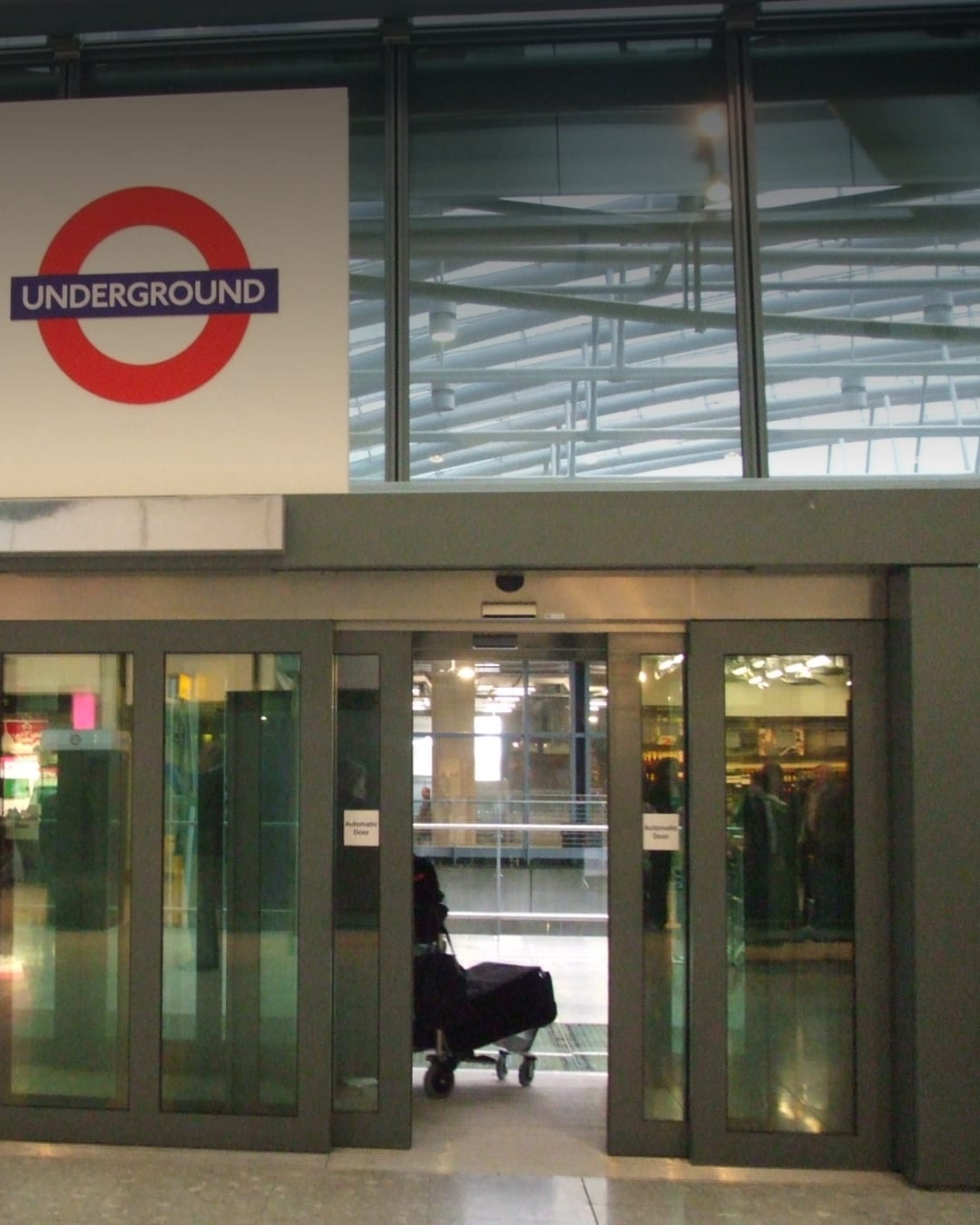
 Image: Heathrow Terminal 5 Underground entrance - Wikimedia Commons.
- The Guardian and Financial Times report that Tommy Robinson was detained at Heathrow on Saturday under Schedule 3 border powers.
- Robinson, whose real name is Stephen Yaxley-Lennon, said on social media that police held him for almost three hours and seized his phones.
- The legal power is a UK border examination tool for hostile-activity checks; it is not the same thing as a public criminal charge.
Tommy Robinson says he was detained at London's Heathrow Airport on Saturday for nearly three hours under the Counter-Terrorism and Border Security Act 2019, with police seizing his phones.
The Guardian and the Financial Times both reported that the far-right activist, whose real name is Stephen Yaxley-Lennon, was stopped under Schedule 3 powers at the UK border. Robinson said on social media that his iPhone and Samsung Galaxy phones were taken.
What is confirmed
The clean version is narrow: Robinson says he was detained at Heathrow and had his phones seized; major UK outlets report the stop was made under Schedule 3 of the 2019 Act; and police have not publicly laid out the specific reason for the examination.
That distinction matters because some viral posts are framing the episode as a terror arrest. The public record available so far points to a border stop and detention under examination powers, not a public charge announced against Robinson in connection with this Heathrow incident.
Schedule 3, not ordinary airport questioning
Schedule 3 of the Counter-Terrorism and Border Security Act 2019 gives examining officers powers at UK ports and border areas to stop, question, search and detain a person to determine whether they appear to be or have been engaged in hostile activity.
Official guidance says a person can be detained for the purpose of conducting that examination, and that the examination, including any detention period, must not exceed six hours from the start of the examination.
Several early social posts describe the power as "Section 3." The more precise legal reference is Schedule 3 of the 2019 Act.
Phone seizure is the live issue
The phone seizure is likely to become the center of the legal fight. Robinson's spokesperson framed the stop as an attack on free speech and investigative journalism, while police have not publicly explained the basis for the device seizure.
Robinson was previously cleared in 2025 of a terror-related offence over refusing to provide a phone PIN after a separate Channel Tunnel border stop. That earlier case does not decide the Heathrow matter, but it explains why the phone issue is immediately politically and legally sensitive.
What to watch next
The next useful signals are a Metropolitan Police or Counter Terrorism Policing statement, any court challenge over the phone seizure, and whether officers seek access to the devices or return them.
Until then, the strongest formulation is: Robinson was reportedly detained at Heathrow under Schedule 3 border powers and says police seized his phones. The reason for the stop has not been publicly confirmed by police.
NoDechev rating: reported detention, official reasoning not public. The stop is supported by Robinson's own statement and UK media reporting, but the legal basis should be described as Schedule 3 border powers, not a confirmed terror charge.
Ready social post
Tommy Robinson says police detained him at Heathrow for nearly three hours and seized his phones. UK outlets report the stop was under Schedule 3 of the Counter-Terrorism and Border Security Act 2019. Important caveat: this is a border-powers detention report, not a publicly announced terror charge.
Read next: UK crime and courts context