

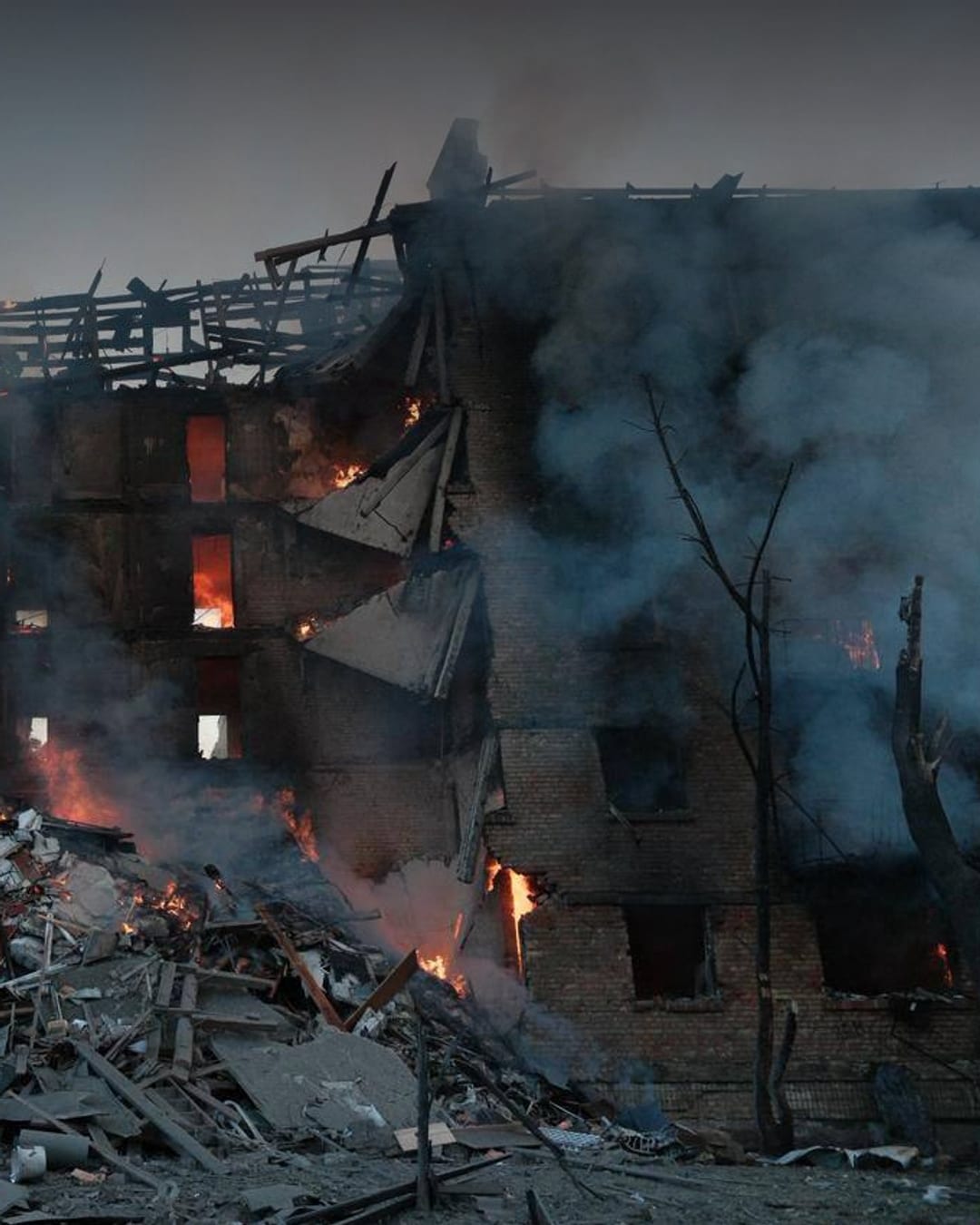
 Image: Kyiv Independent / local normalized asset from recent Kyiv strike coverage.
- Russia’s Foreign Ministry threatened a new wave of systematic strikes on Kyiv.
- Moscow said future targets could include “decision-making centres,” command posts and drone production facilities.
- The warning is confirmed as a Russian statement. The targets, timing and battlefield justification remain Russian claims.
Russia has threatened a new wave of major strikes on Kyiv, days after one of its largest recent attacks on the Ukrainian capital.
The threat came from Russia’s Foreign Ministry, which said Moscow was preparing “systematic” strikes against Ukrainian military-industrial facilities in the city. The ministry said future attacks could target “decision-making centres and command posts,” alongside drone manufacturing facilities.
The safest way to frame the story is straightforward: Russia has made a public threat against Kyiv. That does not independently verify the targets, timing, or Russia’s justification for any future attack.
What happened
The BBC reported that Russia threatened more strikes on Kyiv and told foreign nationals to leave the city. The warning followed a heavy Russian missile and drone assault on the Ukrainian capital over the weekend, one of the largest attacks Kyiv has faced in the latest phase of the war.
Kyiv Independent also reported the Foreign Ministry statement, saying Moscow described the planned attacks as systematic and continuous. The language is significant because “decision-making centres” is a phrase Russia has used before when threatening Ukrainian state institutions, military command sites, or security-service facilities.
What Russia is claiming
Russia framed the threatened strikes as retaliation for what it says was a Ukrainian drone strike on a student dormitory and college complex in Russian-occupied Starobilsk, in Luhansk Oblast. Russian officials claimed the strike killed civilians.
Ukraine has rejected that version of events. Ukrainian officials said the target in the Starobilsk area was a military facility, not a civilian education site. Those competing claims have not been independently resolved, which is why the retaliation framing should be treated carefully.
What is confirmed is narrower: Russian officials issued the warning, named Kyiv as the target area, and listed categories of intended targets. Everything beyond that — including the legal status of those targets and the timing of any future strikes — depends on Russian claims.
Why Kyiv matters
Kyiv is not only Ukraine’s capital. It is the seat of government, home to ministries, military leadership structures, foreign embassies, and a large civilian population. Any threat to strike “decision-making centres” in Kyiv therefore carries obvious escalation risk, even when Moscow presents the targets as military or industrial.
Russia has repeatedly argued that its long-range attacks are aimed at military infrastructure. Ukraine and Western governments say Russian attacks have repeatedly hit civilian areas, energy systems, residential buildings and other non-military sites. That gap between Russian targeting claims and observed damage is central to the story.
What is confirmed — and what is not
Confirmed: Russia’s Foreign Ministry threatened further strikes on Kyiv. Multiple outlets report the reference to “decision-making centres,” command posts and drone-related facilities. Reports also say Moscow warned foreign citizens, diplomats and international-organization staff to leave Kyiv.
Not confirmed independently: the exact targets of any future attack, when such strikes would happen, whether the facilities Russia names are actually military targets, and Russia’s claims about the Starobilsk incident used to justify the warning.
NoDechev rating: confirmed warning, source-sensitive framing. The viral sentence is broadly accurate, but the clean version is: Russia’s Foreign Ministry threatened fresh strikes on Kyiv; the targets and timing remain Russian claims, not independently verified facts.
What to watch next
The next signal is whether embassies or international organizations change their Kyiv security posture, and whether Ukraine reports unusual missile or drone launch activity after the Russian statement. The second signal is language from Ukraine’s military command: if Kyiv treats the warning as operationally credible, air-defense alerts and public guidance may tighten quickly.
Ready social post
Russia has threatened a new wave of major strikes on Kyiv, saying future targets could include “decision-making centres,” command posts and drone production facilities. Treat it as a confirmed Russian warning — not independent proof of targets or timing.
Read next: Massive Russian assault leaves parts of Kyiv burning