

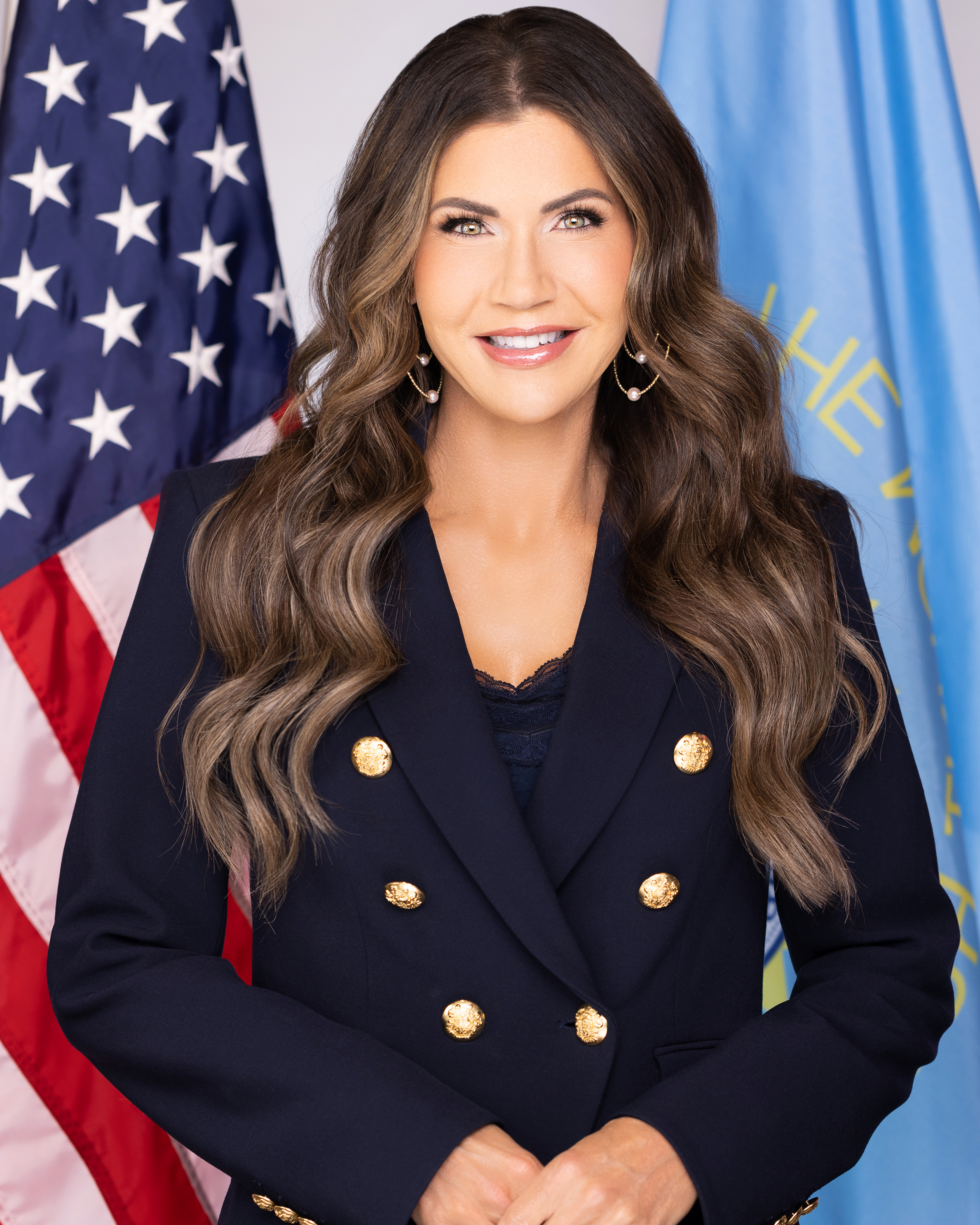
 Image: Official portrait of South Dakota Gov. Kristi Noem - Office of the Governor of South Dakota / Wikimedia Commons, CC BY 4.0.
- Federal prosecutors have charged Mark Milk in connection with the death of 14-year-old McKenna Wendel.
- Milk had been serving a life sentence for a 1993 manslaughter case before Noem commuted it to 240 years in 2023, making him parole-eligible.
- The case is now political because of the commutation, but the criminal charges still have to be proven in court.
A South Dakota criminal case is now being read through two lenses at once: the death of a 14-year-old girl, and a clemency decision made by then-Gov. Kristi Noem three years earlier.
The Associated Press reports that Mark Milk, 51, has been charged in connection with the death of his niece, McKenna Wendel. Wendel was reported missing on March 13 and was found dead on March 19 in a rural area near Brookings, South Dakota.
What happened
According to AP and ABC News, Milk faces federal charges that include cocaine distribution resulting in death, transporting a minor for criminal sexual activity, and conspiracy-related counts tied to alleged evidence destruction. Another man, Jon Rogness of Brookings, has also been charged in the case.
The indictment follows a months-long investigation. Public reporting says Milk was already in jail on unrelated allegations when Wendel's body was found. Prosecutors formally linked him to Wendel's death after the investigation advanced in late May and charges were announced in June.
Authorities have described the case as involving a child death, drugs, alleged sexual exploitation, and an alleged attempt to conceal evidence. That is why the story moved quickly from local crime report to national political headline.
Why Noem is part of the story
Milk had previously been sentenced to life for manslaughter in the 1993 stabbing death of Shawn Peneaux. In February 2023, Noem commuted that sentence to 240 years. South Dakota Searchlight has reported that the commutation made Milk eligible for parole.
That does not mean Noem personally released him from prison on the day of the commutation. It means the governor changed the sentence structure in a way that allowed parole eligibility. That distinction matters because the public argument is already collapsing into a simpler claim: Noem freed a killer, and then a child died.
The cleaner version is narrower and more accurate: Noem granted the commutation; Milk later became parole-eligible; Milk is now charged in a separate federal case involving his niece's death.
What is confirmed
Confirmed: Wendel was 14. Confirmed: she was reported missing in March and later found dead near Brookings. Confirmed: Milk is her uncle, and he has been charged federally in connection with the case. Confirmed: Noem commuted Milk's earlier life sentence in 2023.
Also confirmed from public reporting: Milk's earlier sentence came from a 1993 manslaughter conviction. The commutation reduced the life sentence to a 240-year term, which was enough to make him eligible for parole under the state process.
What is not confirmed
Not confirmed in the public record at publication time: a final court finding that Milk caused Wendel's death. He has been charged, not convicted. The public record also does not yet answer every question about autopsy details, the full timeline of Wendel's movements, or the exact state-level parole decision path after the commutation.
Also not proven by the indictment alone: that Noem knew or should have known that Milk would later be accused in a case like this. The political question is about clemency judgment and risk. The criminal question is about what prosecutors can prove beyond the indictment.
Why it matters
Clemency is one of the most powerful tools a governor has. It can correct excessive sentences and give second chances. It can also become politically radioactive when a person who benefited from that mercy is later accused of serious harm.
That is the hard part of this story. It is not just a viral attack line against Noem, and it is not just a local indictment. It is a case study in how commutations, parole eligibility, sealed records, and public accountability collide after a brutal allegation.
What to watch next
The next signal is the federal case itself: indictment filings, arraignment details, defense responses, and whether prosecutors release more of the timeline. The second signal is political: whether South Dakota officials face pressure to explain how the 2023 commutation and later parole path were reviewed.
For now, the strongest claim is limited but serious: a man whose life sentence Noem commuted is now charged in the death of his 14-year-old niece.
NoDechev rating: confirmed connection, unresolved liability. The commutation is real and the federal charges are real, but the charges remain allegations until the court process runs.
Ready social post
A South Dakota man whose life sentence was commuted by Kristi Noem is now federally charged in the death of his 14-year-old niece. The commutation is real. The charges are real. The court outcome is not decided yet.
Read next: federal court cases and what headlines leave out