
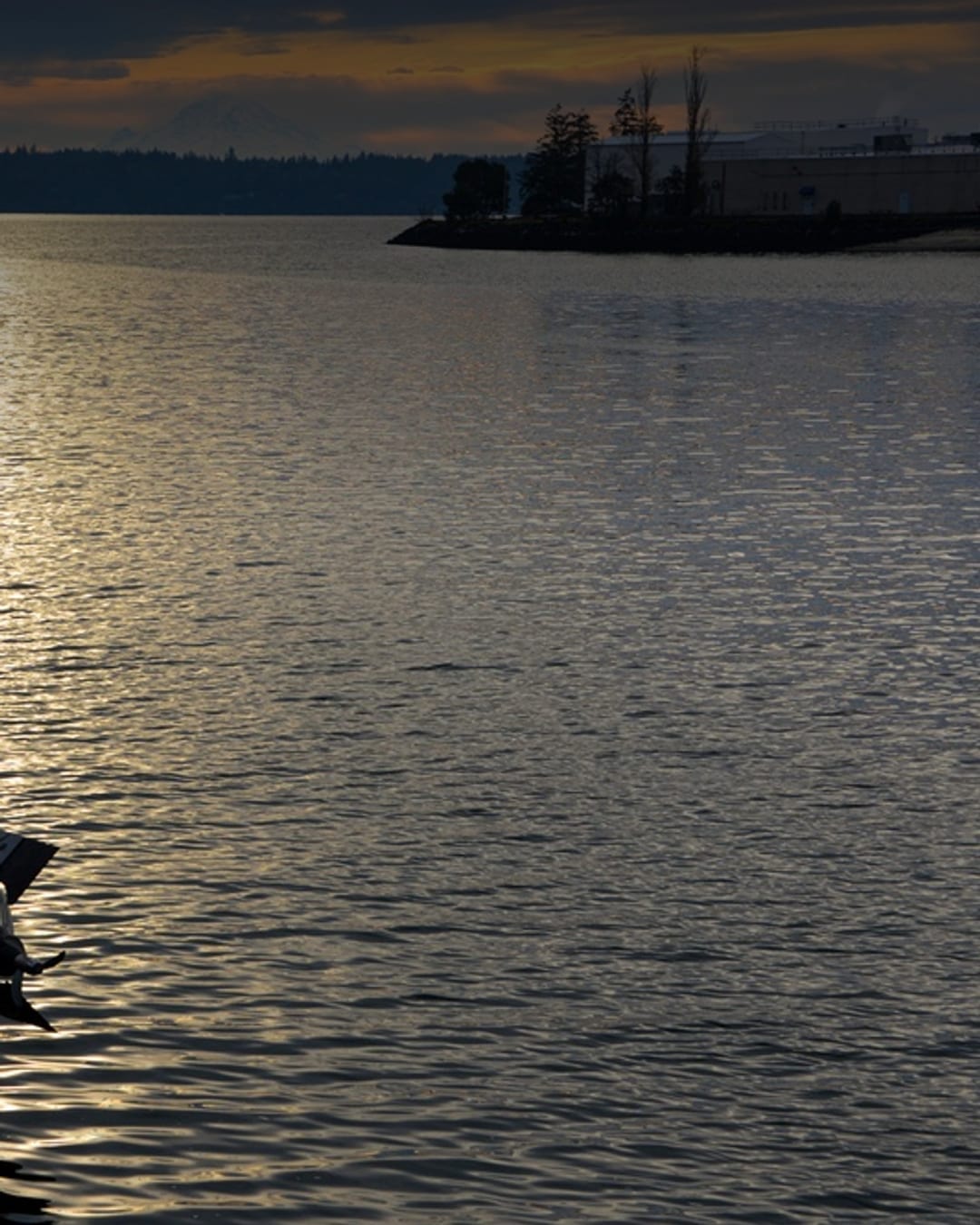
 Context image, not the seized vehicle: U.S. Navy sailors train with an Anduril Dive-LD large unmanned undersea vehicle in Keyport, Washington, Dec. 11, 2024. U.S. Navy photo by Loren Nichols / DVIDS, public domain.
- Iran's Revolutionary Guards said they seized a U.S. unmanned underwater vehicle at the entrance to the Strait of Hormuz.
- A U.S. official told TWZ that a U.S.-operated underwater drone had malfunctioned while surveying regional waters, and Anduril confirmed the loss of a Dive-LD in the region.
- The public record supports that a U.S. Dive-LD was lost and likely obtained by Iran; it does not prove whether Iran actively captured a working drone or recovered a disabled one.
Iran's Islamic Revolutionary Guard Corps said it had seized what it called an American unmanned submarine drone near the entrance to the Strait of Hormuz, according to a statement carried by Iranian state TV and quoted by Arab News/AFP.
The Iranian statement described the vehicle as one of the most modern U.S. unmanned undersea systems and said images would be released. Iranian media described possible roles including underwater reconnaissance, seabed mapping, mine detection, and inspection of cables or pipelines.
What happened
The claimed event happened at dawn on September 8, 2026, in one of the world's most sensitive maritime chokepoints. Iran framed the episode as a successful intelligence and operational action by IRGC naval forces.
The available public record does not show a neutral timeline of the encounter. It does show a convergence between Iran's claim, U.S.-side acknowledgment of a malfunctioning underwater drone, and independent visual analysis of the object Iran displayed.
What is confirmed
The strongest non-Iranian confirmation is not a public Pentagon press release, but it is significant. TWZ reported that a U.S. official said an underwater drone operated by U.S. forces had malfunctioned more than a day earlier while surveying regional waters in support of ongoing operations.
That account said the vehicle was an older model and did not collect sensitive data or carry classified sonar or radar equipment. Anduril, the maker of the Dive-LD, later confirmed to TWZ that a Dive-LD operating in the region had been lost.
Naval News separately reviewed imagery released through Iranian channels and said the object closely matched the American Anduril Dive-LD design, citing the overall form and visible details including flood holes, fastenings, and a small transparent mast.
What is not confirmed
The word "seized" remains the contested part. Iran's account frames the incident as a complex intelligence and operational action. The U.S.-side account frames it as a malfunctioned drone that was already defective before Iran publicly claimed the capture.
No public source verified in this review establishes the exact coordinates, launch platform, route, payload, data state, or whether the vehicle was still under U.S. control when Iranian forces reached it. There is also no public proof that sensitive classified equipment was compromised.
Why it matters
Underwater drones are becoming a visible part of military competition around the Strait of Hormuz, one of the world's most sensitive maritime chokepoints. A lost U.S. UUV gives Iran and its partners a chance to inspect hardware, manufacturing choices, sensors, and mission architecture, even if the vehicle was designed to be expendable.
The Dive-LD is not a small quadcopter-style system. Public U.S. Navy imagery identifies it as a large unmanned undersea vehicle used in training by Unmanned Undersea Vehicle Group 1 and Undersea Vehicle Squadron 3. Naval News described the design as roughly 5.8 meters long, 1.2 meters in diameter, and about three tons.
The incident also shows why the wording matters. "Iran seized a U.S. drone" is directionally supported. "Iran captured an intact, sensitive U.S. spy submarine in a successful operation" goes beyond what the available record proves.
What to watch next
The next useful evidence would be a public CENTCOM statement, clearer U.S. identification of the model, and verifiable imagery or metadata from the Iranian side. Any claim about classified payloads, reverse engineering, or operational compromise should be treated cautiously unless sourced to a named official, manufacturer statement, or technical inspection.
For now, the careful verdict is partial confirmation: Iran's claim is not baseless, because a U.S. Dive-LD was lost in the region and imagery appears to match that model. But the exact way it was obtained remains unresolved.
NoDechev rating
PARTIALLY CONFIRMED. Iran made the seizure claim; U.S.-side and manufacturer comments confirm a U.S.-operated underwater drone malfunctioned and that Anduril lost a Dive-LD in the region. The active-capture narrative, payload status, location, and intelligence value are not independently proven.
Source links
Ready social post
Iran says it seized a U.S. underwater drone near the Strait of Hormuz. The claim is partly confirmed: a U.S. official said a U.S.-operated underwater drone malfunctioned, Anduril confirmed a Dive-LD was lost in the region, and imagery matches that model. What is still unproven is whether Iran captured a working vehicle or recovered a disabled one.
Read the briefSupport source-first news
NoDechev tracks claims back to primary records and separates confirmed facts from early uncertainty.
Read the source method