
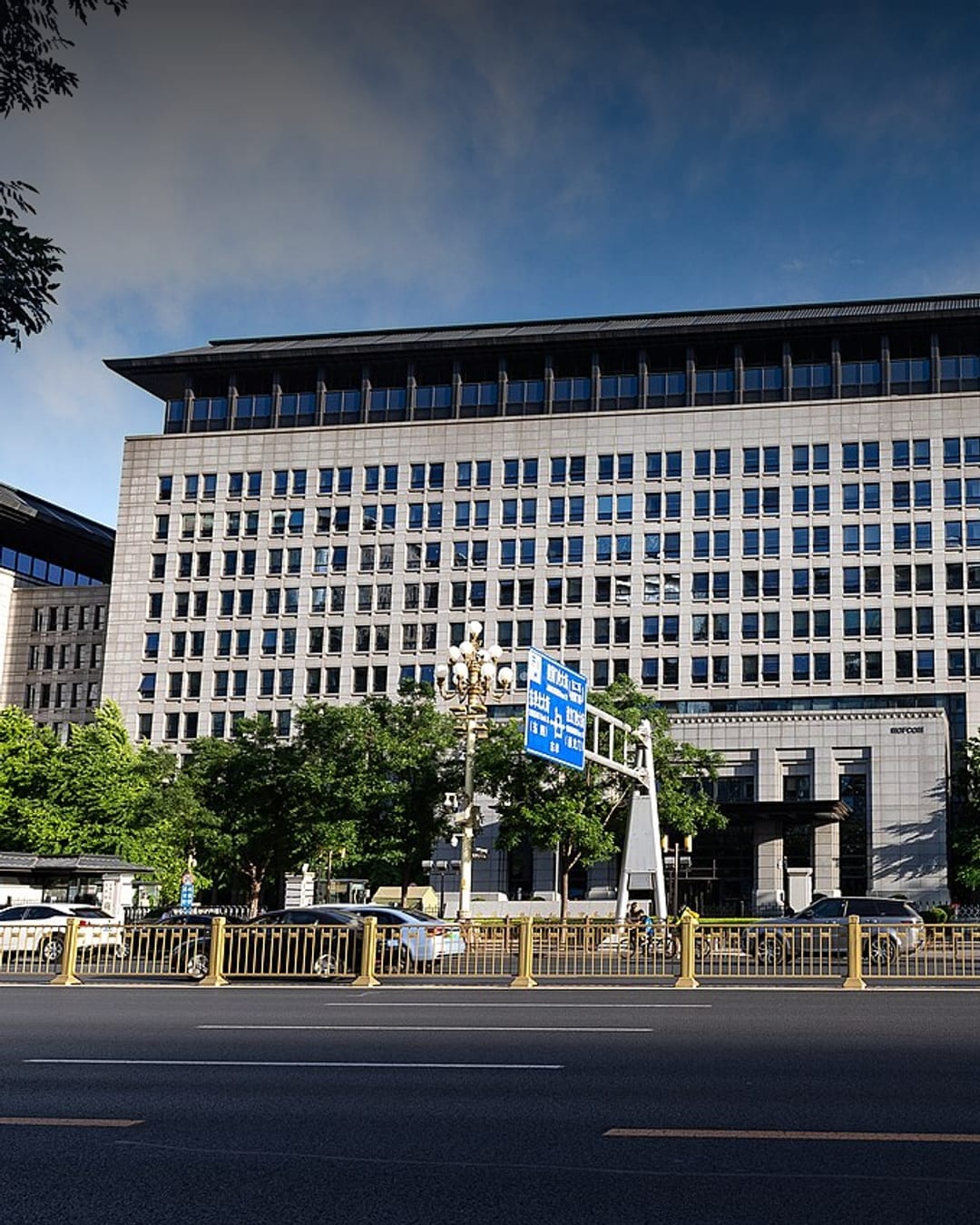
 Image: China's Ministry of Commerce building in Beijing, via Wikimedia Commons.
- China put 10 U.S. defense, drone and rare-earth-linked firms under export controls.
- Chinese companies are blocked from exporting dual-use items to the listed firms without approval.
- Separately, China's Finance Ministry barred government procurement from 46 American companies.
- The move follows U.S. Defense Department restrictions on Chinese tech firms including Alibaba and Baidu.
China has opened a new front in the U.S.-China tech fight, moving from diplomatic protest to direct restrictions on American companies tied to defense, drones and rare earths.
The Chinese Commerce Ministry said Monday that 10 U.S. entities are being added to China's export control list. The practical effect: Chinese exporters are blocked from sending dual-use items to those companies unless they receive approval.
What China announced
AP reported that the 10 companies include AVEOX, Red Cat Holdings, Teal Drones, IMSAR, Jaia Robotics, Ball Aerospace & Technologies, Oshkosh Defense, L3Harris Maritime Services, MP Materials and USA Rare Earth.
The list is not random. Several of the companies are linked to military drones, defense systems, aerospace or U.S. efforts to build domestic rare earth and magnet supply chains. That is exactly where China has leverage: dual-use goods and critical minerals can sit between ordinary commerce and national security.
China's Commerce Ministry framed the measure as a national security step and a response to what it called Washington's wrongful expansion of its Chinese military company list.
The procurement ban
The export controls were not the only measure. China's Finance Ministry separately said government entities would be barred from buying products from 46 American companies, including units of Lockheed Martin, Raytheon and General Dynamics, according to AP.
That second measure matters because it shows Beijing is not only targeting outbound exports from China. It is also using state procurement to limit access for U.S. defense-linked firms inside the Chinese government market.
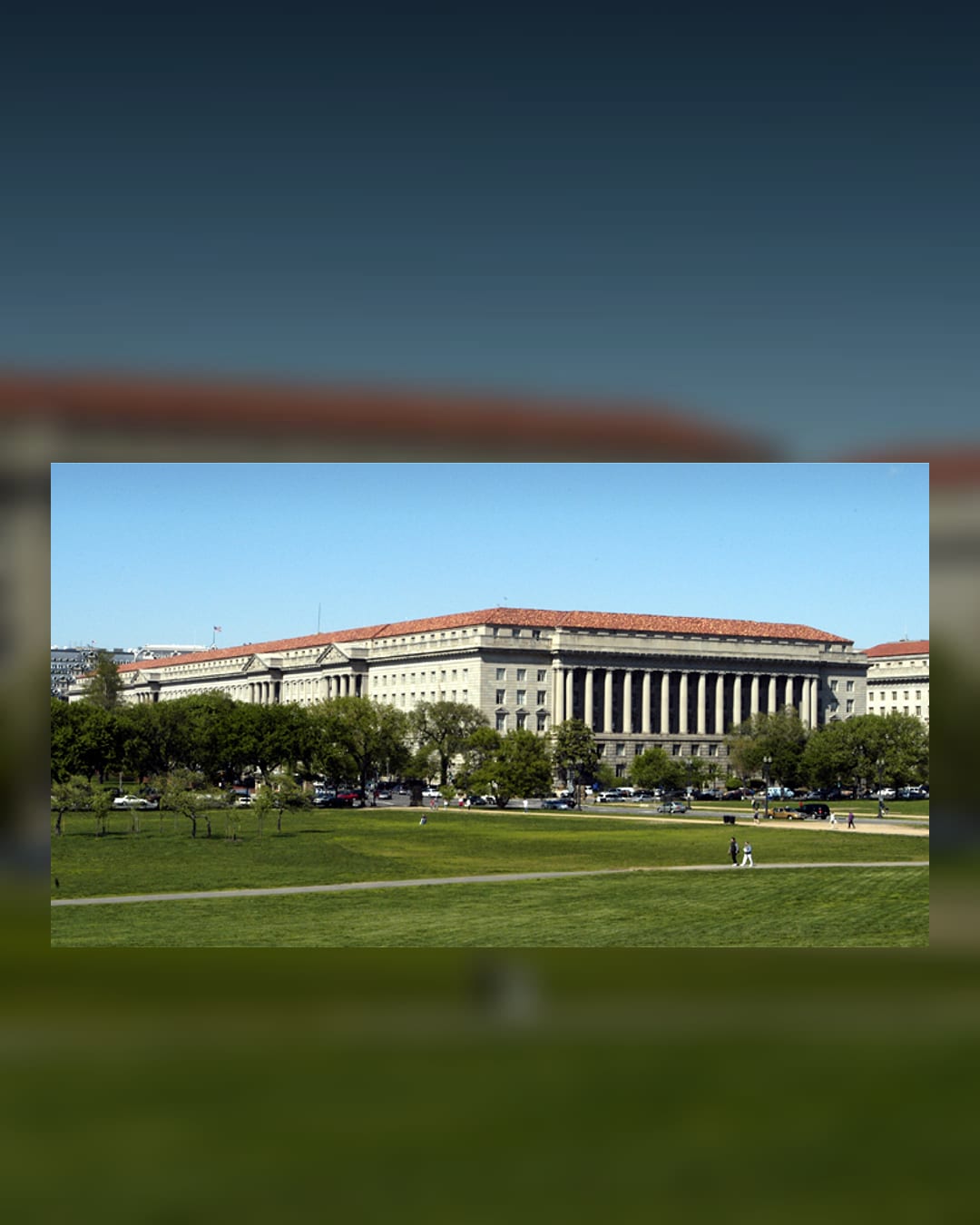 Image: U.S. Department of Commerce building in Washington, D.C., via Wikimedia Commons.
Why this happened now
The move follows a U.S. Defense Department decision earlier this month to add Chinese companies to its list of firms Washington says are linked to China's military. AP names Alibaba and Baidu among the Chinese companies affected by the U.S. move.
The U.S. designation can restrict access to defense contracts. China's response targets American companies through dual-use export controls and procurement restrictions. In plain terms: Washington says some Chinese tech companies should not touch U.S. defense contracting; Beijing says some American defense and critical-minerals firms should not receive Chinese dual-use goods or government purchases.
What is confirmed
Confirmed: China added 10 American entities to an export control list. Confirmed: Chinese exporters are restricted from sending dual-use goods to those companies. Confirmed: China also announced a procurement ban affecting 46 U.S. firms. Confirmed: the retaliation is tied to U.S. restrictions on Chinese companies described by Washington as military-linked.
What is not confirmed
Not confirmed: that every affected U.S. firm will suffer immediate operational disruption. Export controls can be serious, but the impact depends on whether a company actually relies on controlled Chinese-origin goods, components or materials.
Not confirmed: that this is a full trade break. The measures are targeted, not a broad embargo. But the target list touches sensitive supply chains, especially rare earths, drones and defense systems.
Why it matters
The sharpest part of this story is rare earths. MP Materials and USA Rare Earth are part of the U.S. push to reduce dependence on Chinese critical-mineral supply chains. If Beijing can complicate access to dual-use goods around that sector, it can slow or pressure the very supply-chain independence Washington is trying to build.
The bigger pattern is familiar: the U.S. uses lists, contract bans and export controls to contain Chinese tech and military-civil fusion. China answers with its own lists, procurement bans and dual-use restrictions. Each side says national security. Each side says the other is abusing trade rules.
What to watch next
Watch whether U.S. officials answer with more Entity List additions, whether the affected companies disclose supply-chain impact, and whether China uses rare earth licensing more aggressively in future rounds.
The clean read: this is not a symbolic press release. It is a targeted escalation in the U.S.-China tech war, with defense contractors and critical-minerals firms now directly in the retaliation loop.
NoDechev rating: sanctions confirmed; business impact still company-specific. The list is real, but the disruption depends on each firm's exposure to Chinese dual-use supply chains.
Ready social post
China just sanctioned 10 U.S. defense, drone and rare-earth-linked firms by blocking dual-use exports, while barring government procurement from 46 American companies. Key caveat: the measures are targeted, but they hit exactly where the U.S.-China tech fight is most sensitive.
Read next: How U.S. sanctions work