

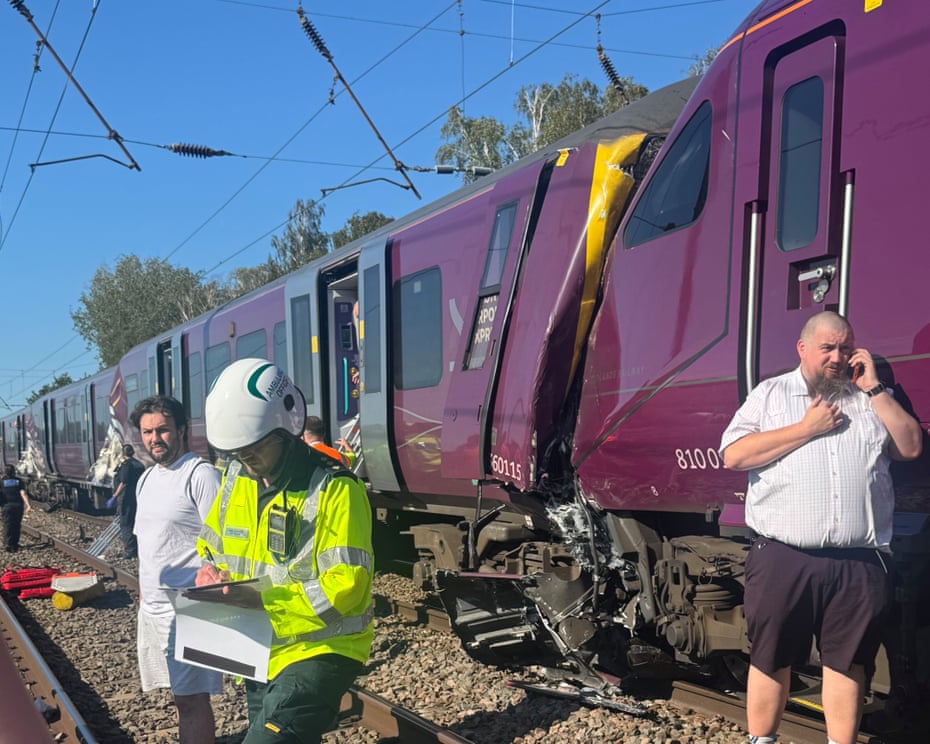
 Image: Emergency responders beside damaged trains near Bedford - Thinzar Ko Ko / The Guardian, local normalized asset.
- Two East Midlands Railway trains collided south of Bedford on Friday evening, June 19.
- Major UK reports now say one person died and 89 people were injured: 11 very serious, 22 serious and 56 minor.
- The earlier "50 casualties" hospital alert should be read as emergency preparedness, not as the final casualty count.
The early hospital alert was grim, but it was not the final toll.
Bedford Hospital reportedly expected at least 50 casualties after a train collision between Bedford and Luton, with staff appeals sent out for an "all hands on deck" response and warnings that fatalities were possible. That detail matters because it shows how quickly the crash was treated as a mass-casualty incident. But the current confirmed reporting is more precise: one person has died and 89 people were injured.
What happened
The collision happened on Friday evening, June 19, just south of the Elstow interchange between the A421 and the A6 near Bedford. East Midlands Railway said the trains involved were the 4.40 p.m. service from Corby to London St Pancras and the 3.50 p.m. service from Nottingham to London St Pancras.
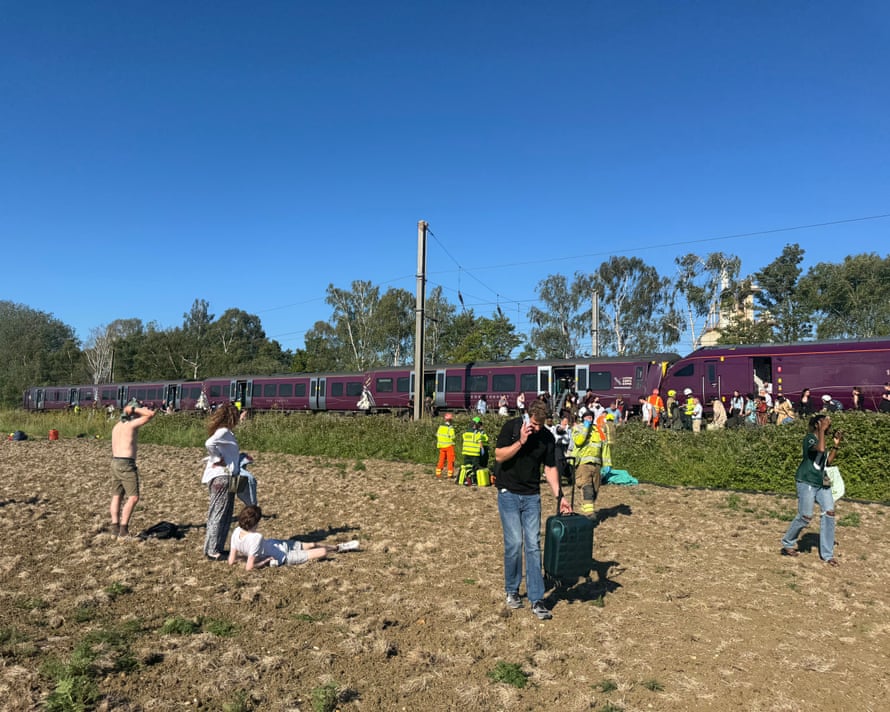
British Transport Police said officers responded after reports of a collision between two trains on the line in Bedford. Police declared a major incident while emergency services, fire crews and ambulance teams worked at the scene.
What the casualty reports say
ITV News, citing the East of England Ambulance Service, reported that 11 people suffered very serious injuries and 22 were seriously injured, with all of those patients in hospital. A further 56 people had minor injuries and were either treated at the scene or taken to hospital.
The Guardian later reported the same overall count: one dead and 89 injured. The RMT union said the person who died was a train driver and former RMT representative.
Where the hospital warning fits
The claim that Bedford Hospital expected at least 50 casualties came through live reporting and was repeated by outlets including The Standard and The Telegraph, which attributed the detail to The Times. The Standard also reported that Bedford Hospital and Luton and Dunstable University Hospital asked the public to avoid emergency departments unless they had a genuine emergency.
The correct way to read that line is operational. Hospitals plan for the worst in the first hours after a major crash. A 50-casualty warning does not mean 50 confirmed patients had already arrived, and it does not override later official counts from police, ambulance services and hospitals.
What is confirmed
Confirmed: two East Midlands Railway passenger trains collided near Bedford. Confirmed: a major incident was declared. Confirmed: one person died. Confirmed: major UK reports, citing emergency services, put the injured count at 89, including 11 very serious injuries, 22 serious injuries and 56 minor injuries.
Confirmed: the Rail Accident Investigation Branch sent inspectors to the scene to begin gathering evidence. Train services to and from London St Pancras were heavily disrupted after the crash.
What is not confirmed
Not confirmed: the final cause of the collision. Early witness accounts and railway-industry reporting point toward one train striking another, but the official investigation has not completed its work.
Also not confirmed: that the hospital's early expectation was itself the final casualty number. The better phrasing is that Bedford Hospital reportedly prepared for at least 50 casualties, while later emergency-service figures reported 89 people injured.
Why it matters
Britain's mainline rail system has had very few fatal passenger-train collisions in recent decades. That makes the Bedford crash a major safety event, not just a local disruption story. Investigators will need to establish why one train was stopped or slowed and why the following train did not stop in time.
For readers, the information hygiene matters too. In the first hour of a disaster, hospital capacity alerts, social-media posts and official casualty counts can all circulate together. They are not the same type of fact.
What to watch next
Watch for the Rail Accident Investigation Branch's first formal update, British Transport Police victim information, East Midlands Railway service restoration details and hospital updates on the most seriously injured passengers.
The clean read: the hospital's 50-casualty preparation report was a real warning sign about the scale of the emergency, but the confirmed story is now stronger and more specific: one dead, 89 injured, and an official rail-safety investigation underway.
NoDechev rating: major incident confirmed, hospital alert contextualized. Treat "50 casualties expected" as preparedness reporting, not as the final verified casualty count.
Ready social post
Bedford Hospital reportedly prepared for at least 50 casualties after the Bedford train collision. That was a mass-casualty alert, not the final toll. Major UK reports now say one person died and 89 were injured, including 33 serious or very serious injuries.
Read next: Belgium train-bus crash brief