

Quick read
- Counter Terrorism Policing says the three RAF Fairford vehicles were subject to extensive examination with military and forensic experts.
- BBC reports that all five suspects were released on police bail and says a major explosives find in the vehicles can probably be ruled out.
- The precise forensic conclusion has not been published: the men remain under investigation and no charges have been reported.
What happened
The RAF Fairford investigation has narrowed after vehicle checks, but it has not ended.
Five men arrested near the Gloucestershire airbase on Sunday were released on police bail after what Counter Terrorism Policing described as extensive interviews and inquiries. BBC's updated live coverage and explainer say the three suspicious vehicles at the centre of the incident were examined with support from military and forensic experts.
That matters because the original arrests were made on suspicion of Explosives Act offences and preparation of a terrorist act. BBC correspondent analysis now says the bail decision and the vehicle examination mean a large explosives find in the vans can probably be ruled out, while still noting concern about why the men were near RAF Fairford in the early hours.
NoDechev is updating the earlier article on the same URL because the public record has changed the weight of the story. The bail status is confirmed. The stronger claim that tested materials were formally found to be "not viable explosives" is only partially confirmed from the public material reviewed here, because the accessible official police record does not publish that exact forensic conclusion.
What is confirmed
The official CTP statement confirms the core legal facts: five men, all UK nationals in their 20s from London areas, were arrested near Whelford after reports of three vehicles travelling toward RAF Fairford at about 00:45 BST on Sunday.
CTP said the men were detained on suspicion of offences under the Explosives Act and preparation of a terrorist act under Section 5 of the Terrorism Act. BBC later reported that the suspects were released on police bail subject to stringent conditions on movement and contact with others, and that they "absolutely" remain under investigation.
BBC also reports that Assistant Commissioner Laurence Taylor, head of Counter Terrorism Policing, said the three vehicles had been subject to extensive examination with military and forensic support. That is the strongest public-source basis for the forensic update.
The same BBC live coverage includes correspondent analysis that the case did not reach the stage where police needed to keep the suspects in custody or charge them, and that a major set of explosives in the vehicles can probably be ruled out.
What is not confirmed
The exact tested material has not been publicly identified in the sources reviewed here. Police have not published a full forensic report, have not named a substance or device, and have not issued an accessible statement using the exact phrase "not viable explosives."
That distinction is important. It is fair to report that the early explosives-plot framing has weakened and that public reporting points away from a major operational explosive load in the vehicles. It is not fair, on the currently accessible record, to present a detailed forensic conclusion as if it had been formally published.
No charges have been reported. No public source proves a completed attack plan, identifies a confirmed motive, or establishes foreign-state involvement. The possible foreign-state angle remains a line of inquiry, not a conclusion.
President Donald Trump and U.S. Secretary of State Marco Rubio have used stronger public language about the incident than UK police. British officials and police have been more cautious, with Prime Minister Andy Burnham urging people not to speculate while authorities establish the facts.
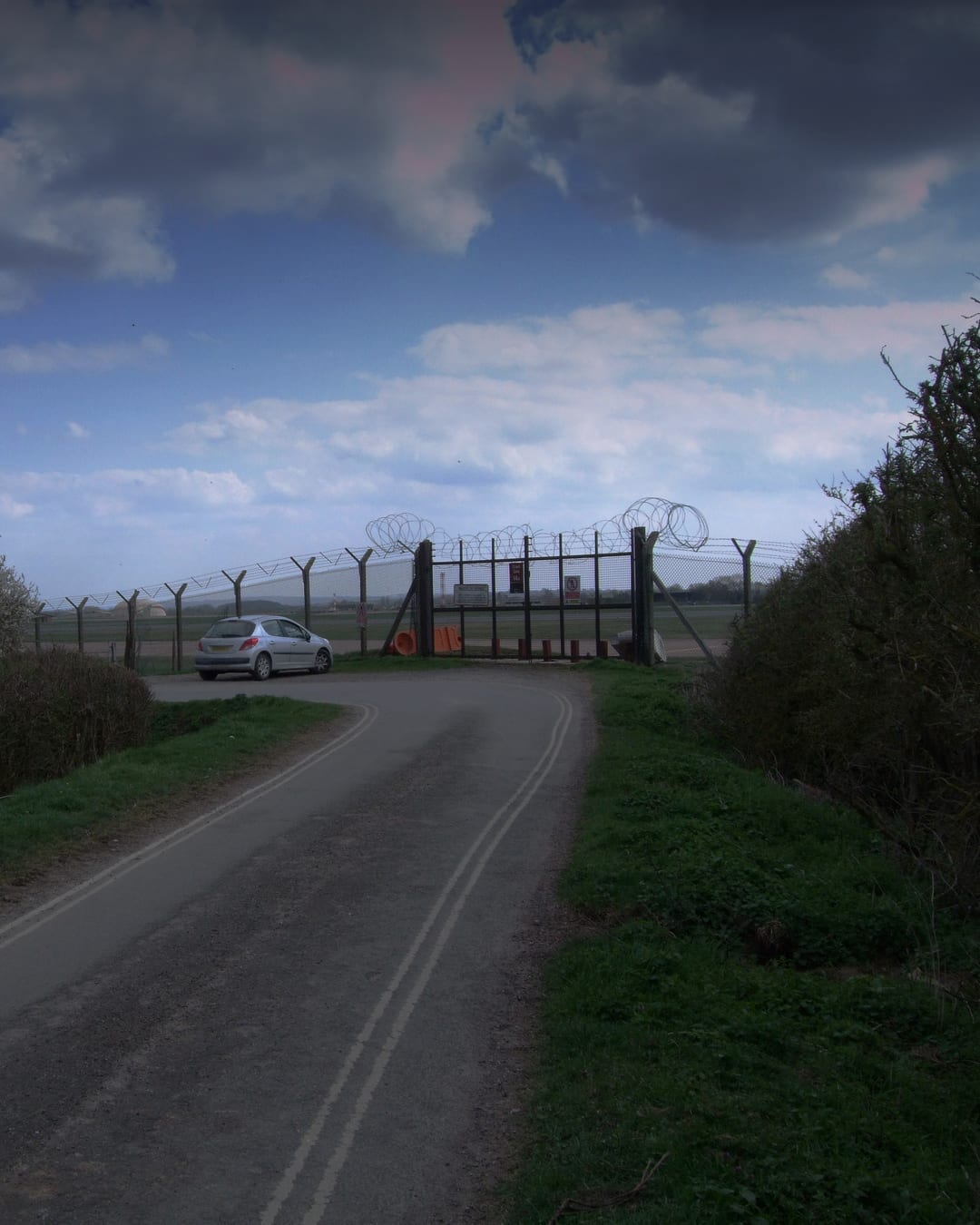
Image: Gate at RAF Fairford — Vieve Forward / Geograph Britain and Ireland, CC BY-SA 2.0.
Why it matters
The update changes the scale of the story. A counter-terror arrest near a U.S.-used airbase after reports of suspicious vans is serious on its own. But a confirmed viable explosive device would be a different factual claim from an investigation in which vehicles are examined, suspects are bailed, and no charges are announced.
RAF Fairford has a long U.S. Air Force role and has recently been used in the wider Middle East security context. That strategic background explains the sensitivity around the base and the speed of the response. It does not prove what the five suspects intended or whether any outside actor was involved.
The case also shows why early security reporting needs constant revision. Initial suspicions can justify arrests and cordons without proving the most serious version of a claim. The public record now supports a narrower version: suspected offences are still under investigation, but a major explosives scenario is no longer supported by the available reporting.
What to watch next
The next meaningful updates are whether Counter Terrorism Policing publishes a fuller forensic account, whether the bail conditions change, whether any suspect is charged, and whether police narrow or drop any line of inquiry.
For now, the strongest version is limited: five men were arrested on suspicion of explosives and terrorism-preparation offences near RAF Fairford; three vehicles were examined by military and forensic experts; the suspects were released on police bail; and public reporting points away from a major viable-explosives find, while the investigation continues.
NoDechev verdict
PARTIALLY CONFIRMED: public reporting supports the claim that the early explosives threat has been significantly narrowed after forensic and military checks, and that a major explosives find can probably be ruled out. Caveat: no accessible official statement reviewed here gives the exact forensic phrase "not viable explosives" or lists the tested materials.